The path to education
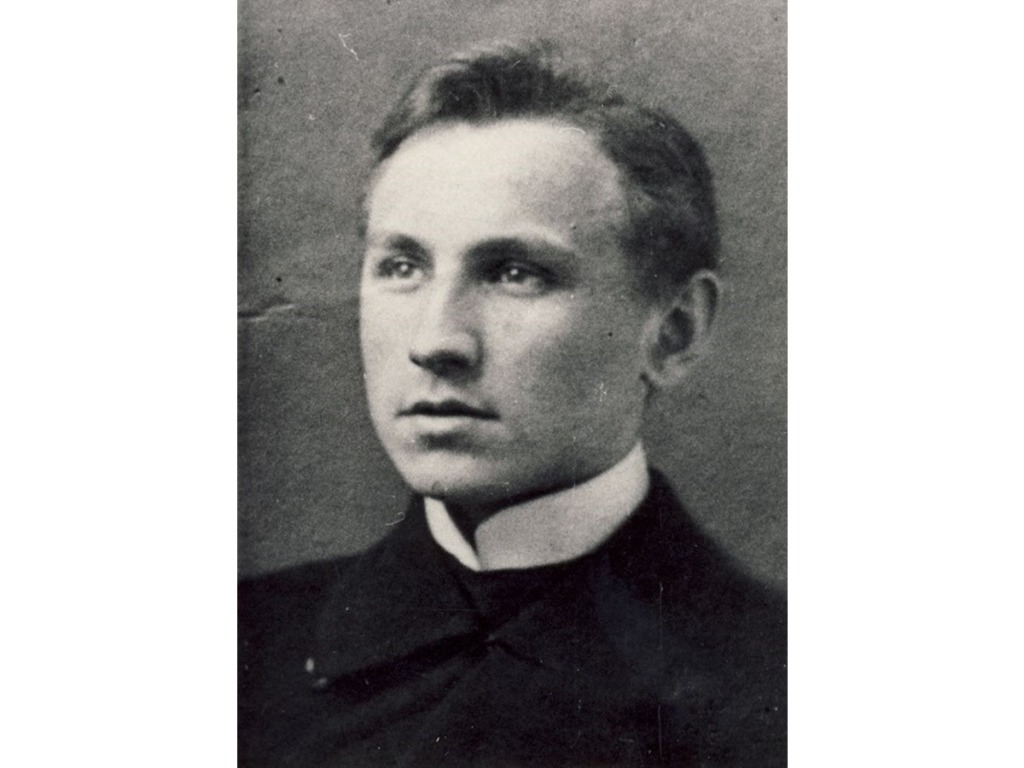
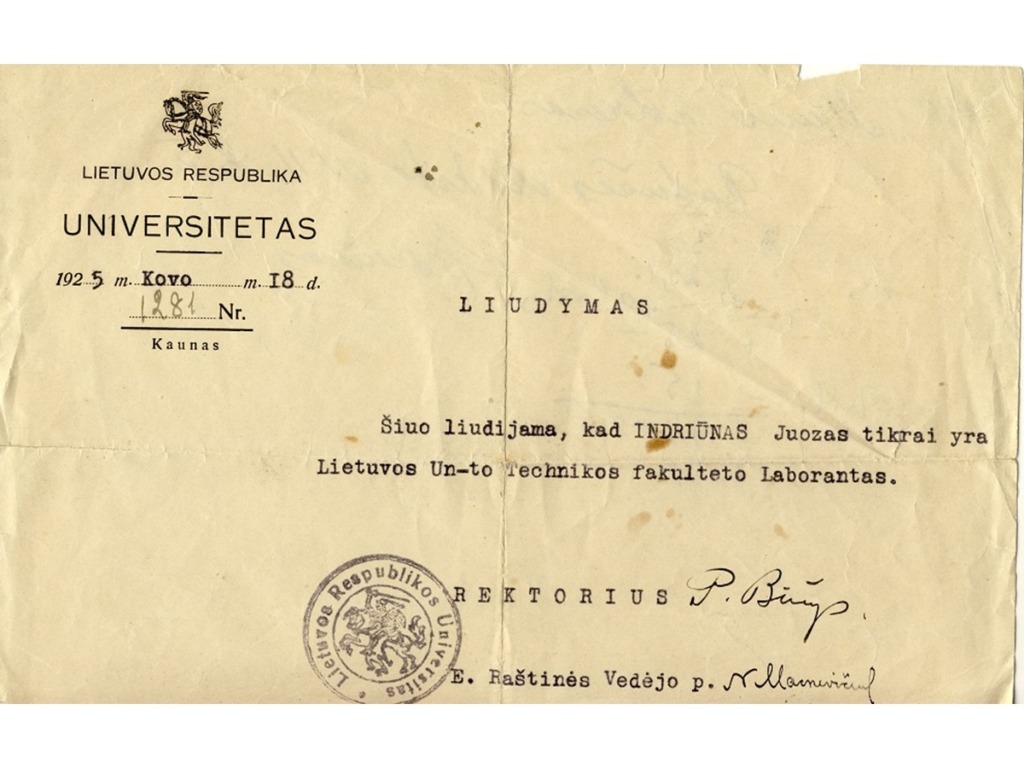
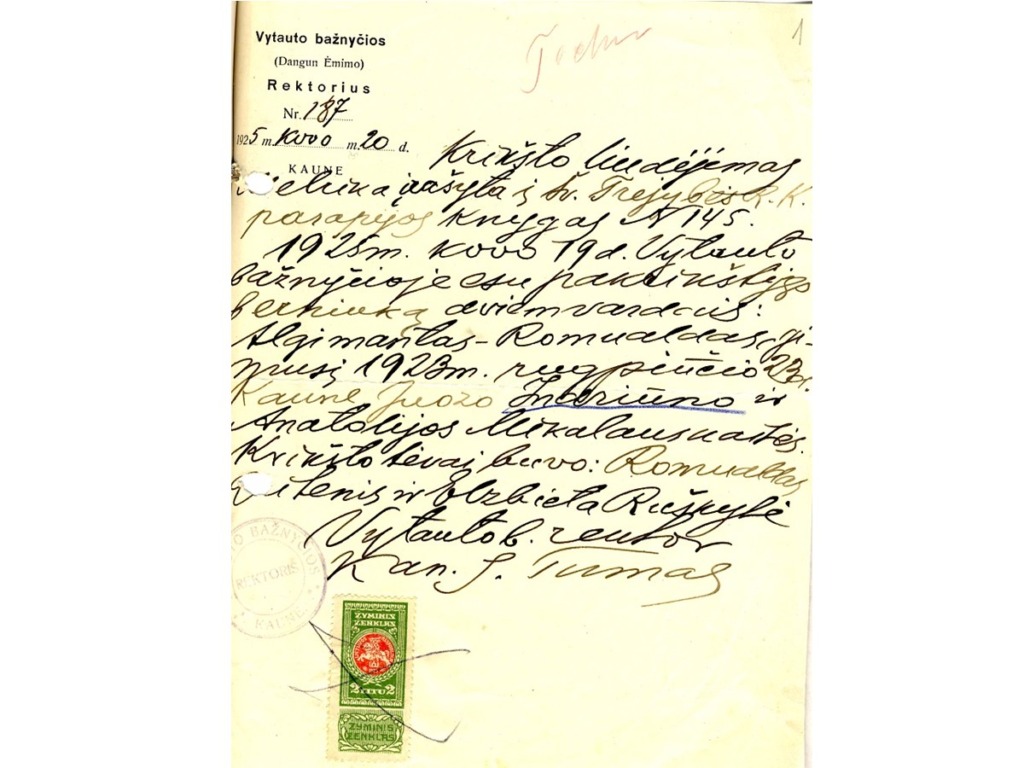
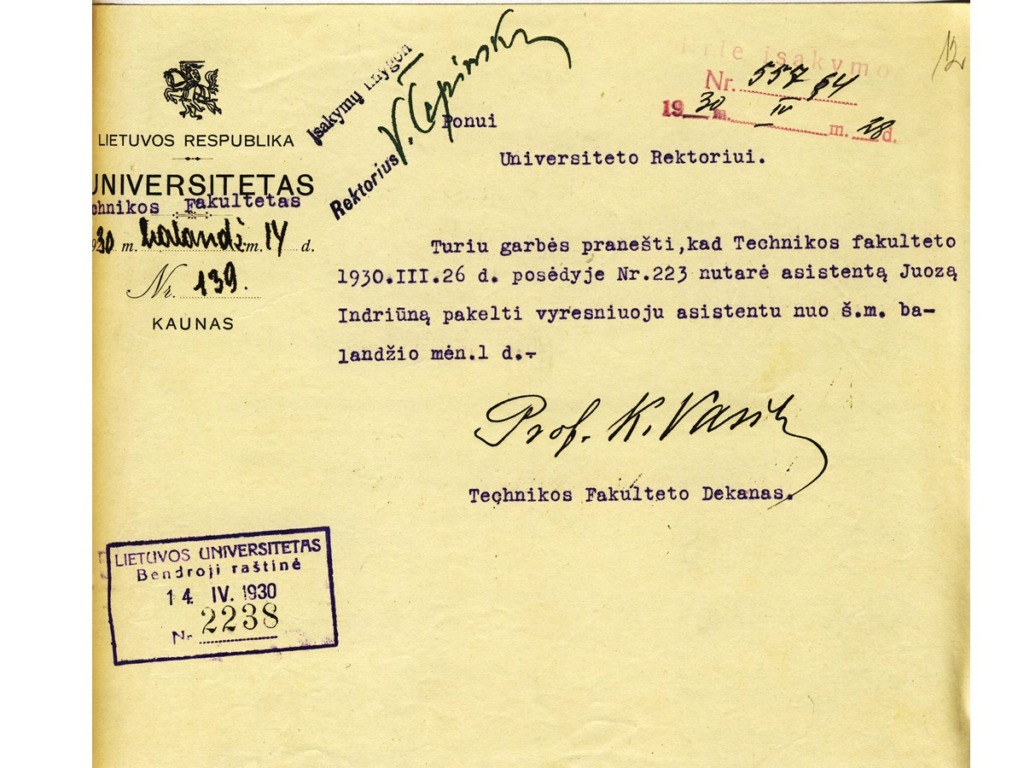
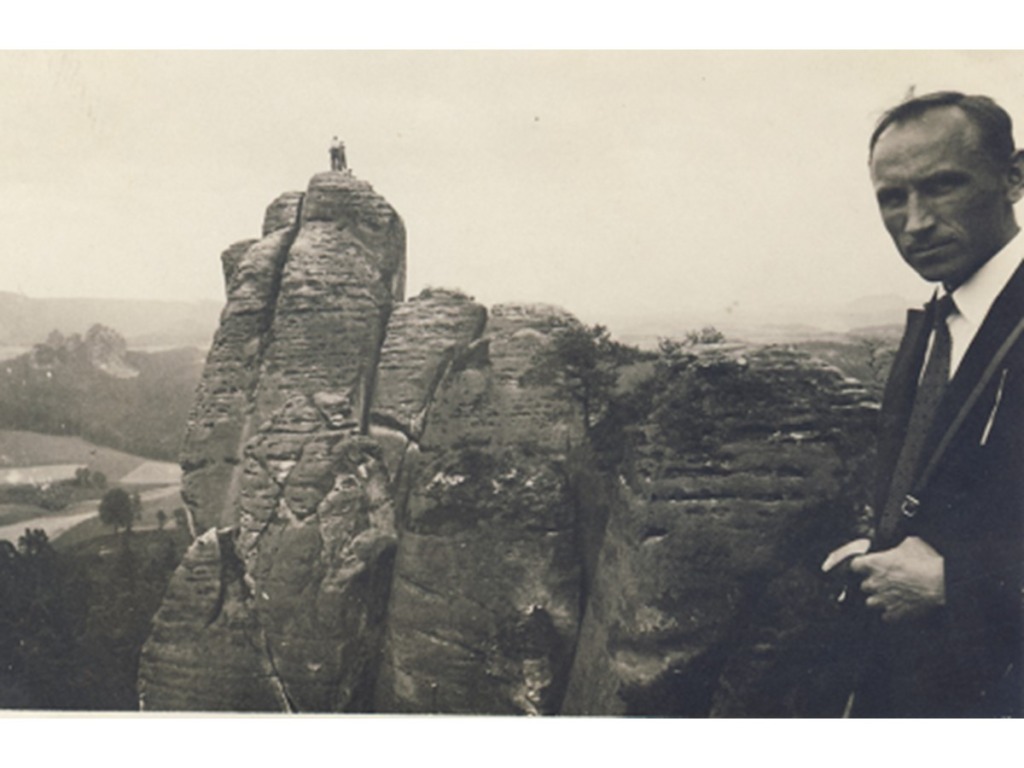
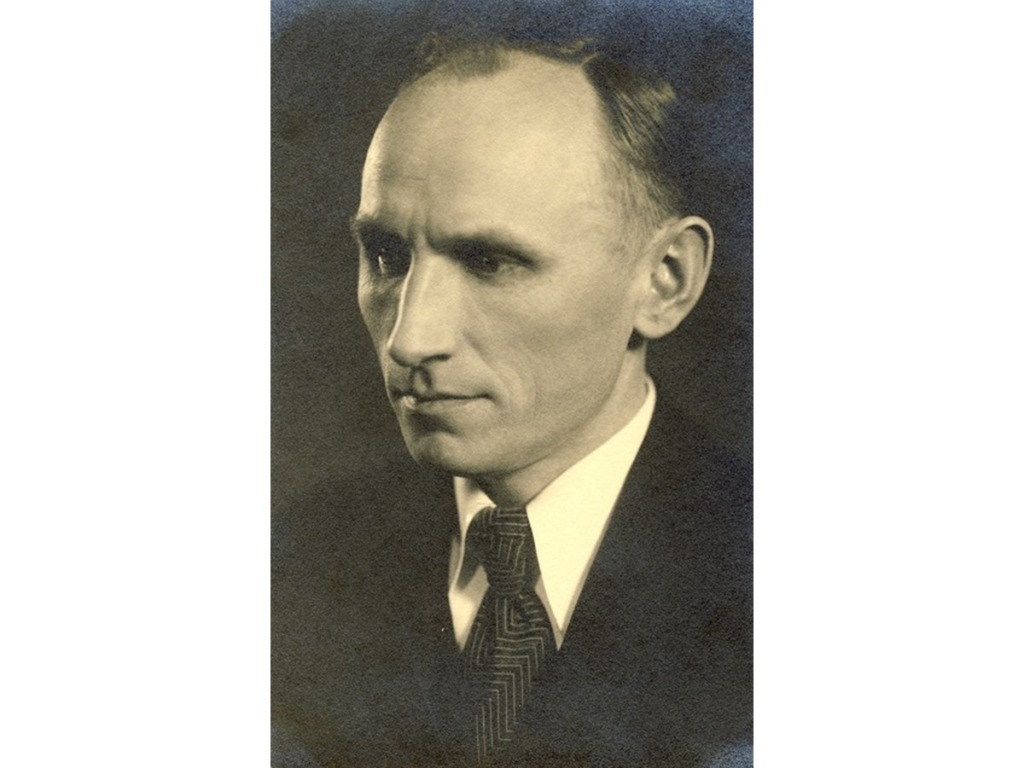
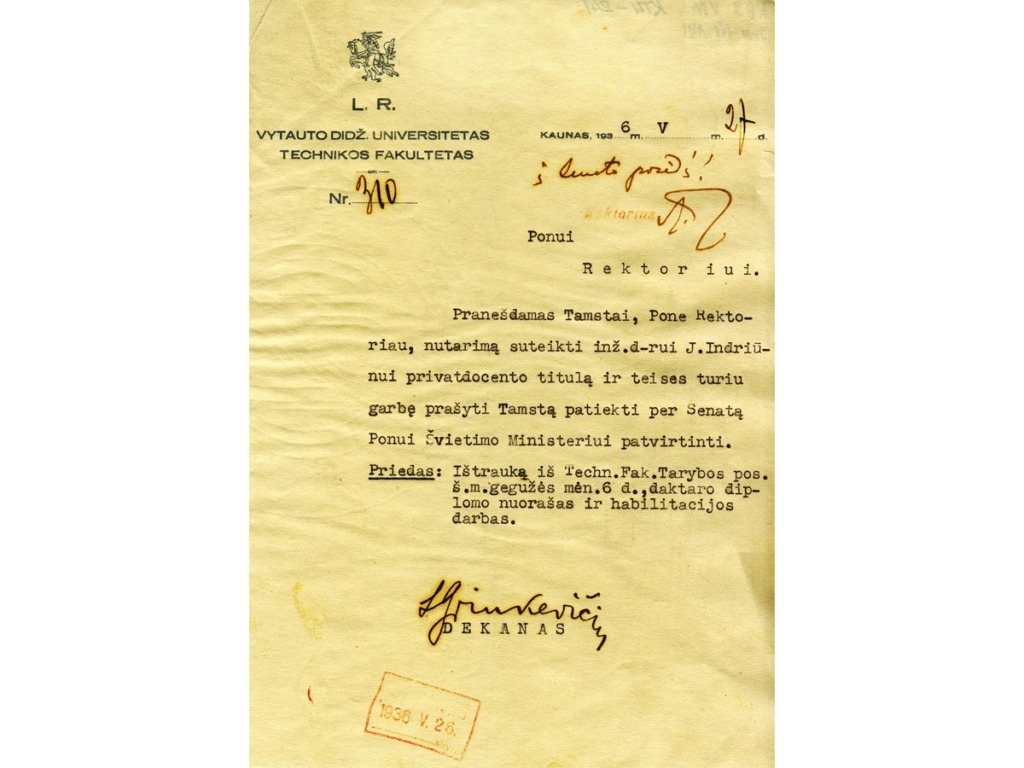
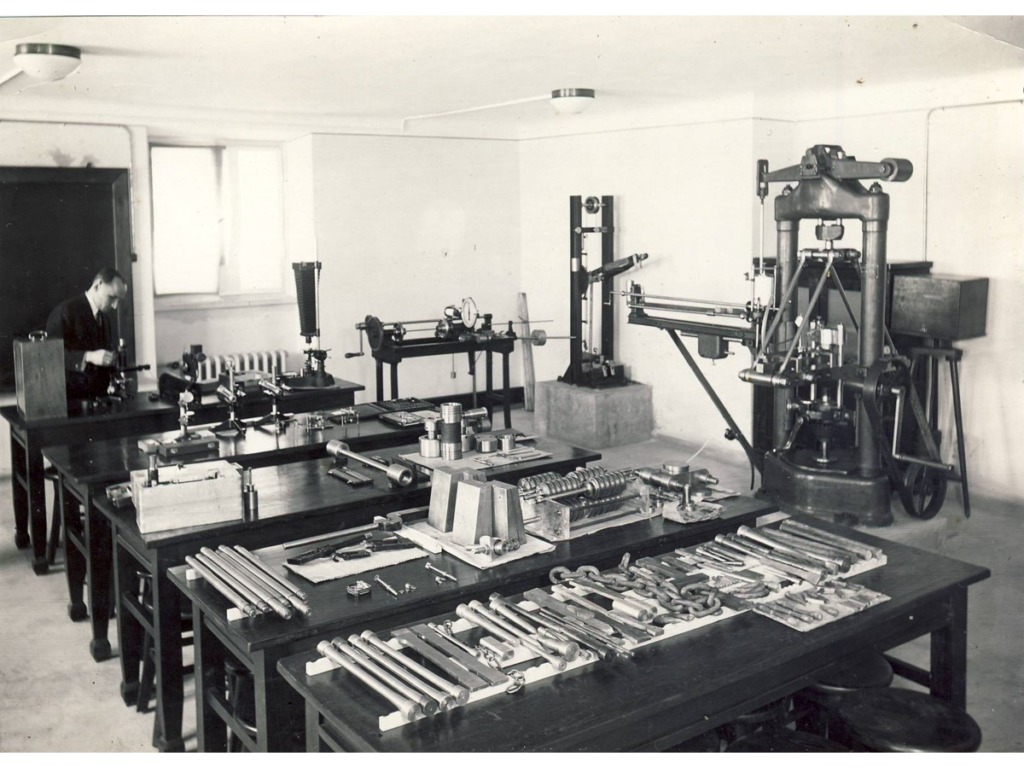
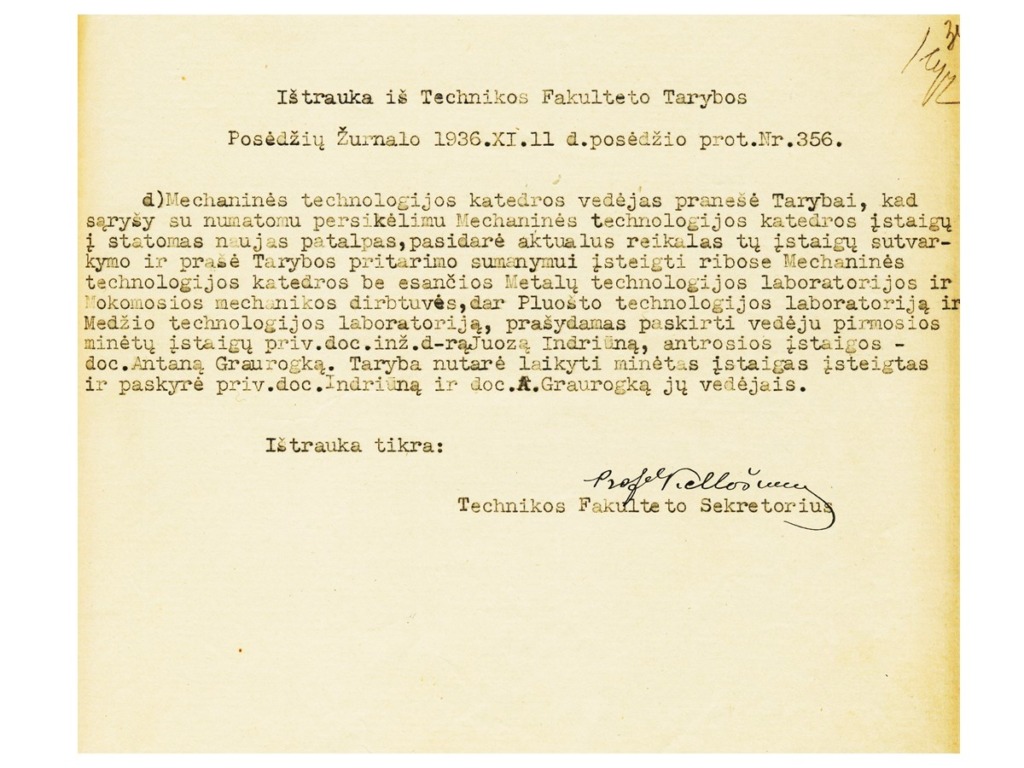
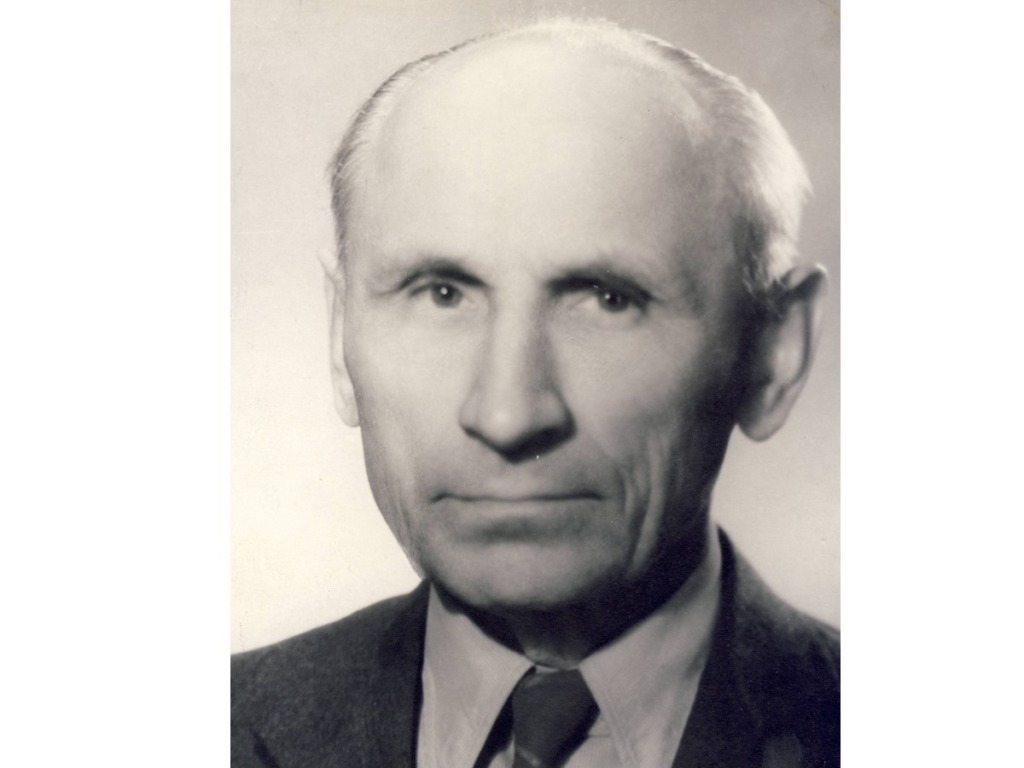
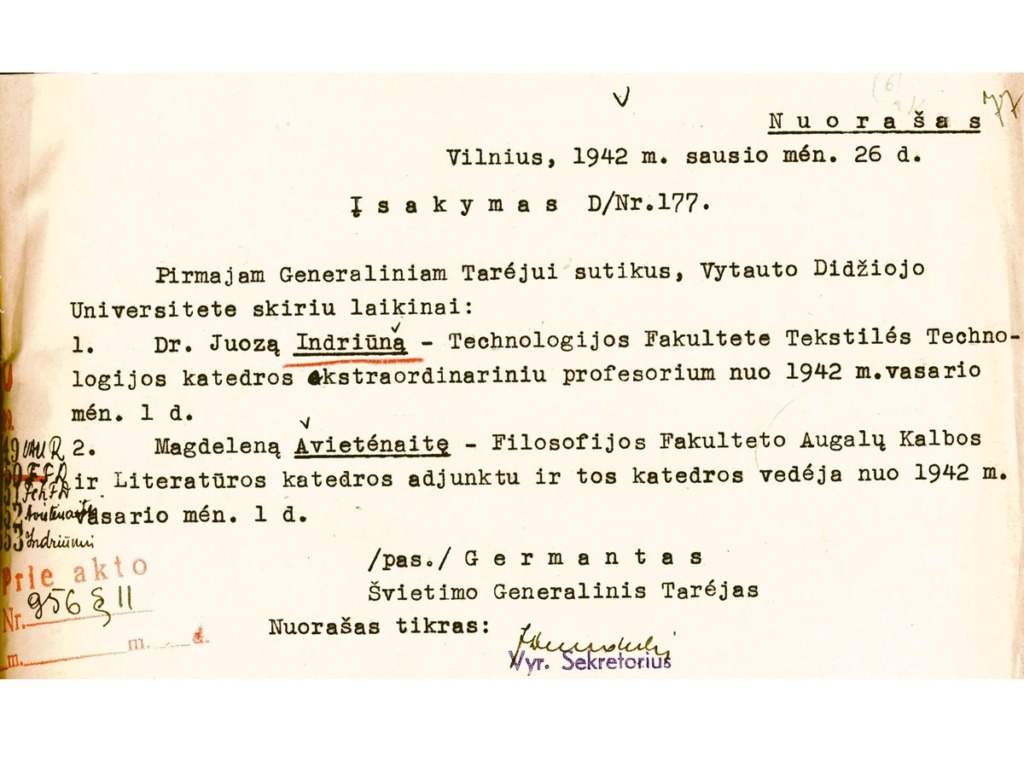
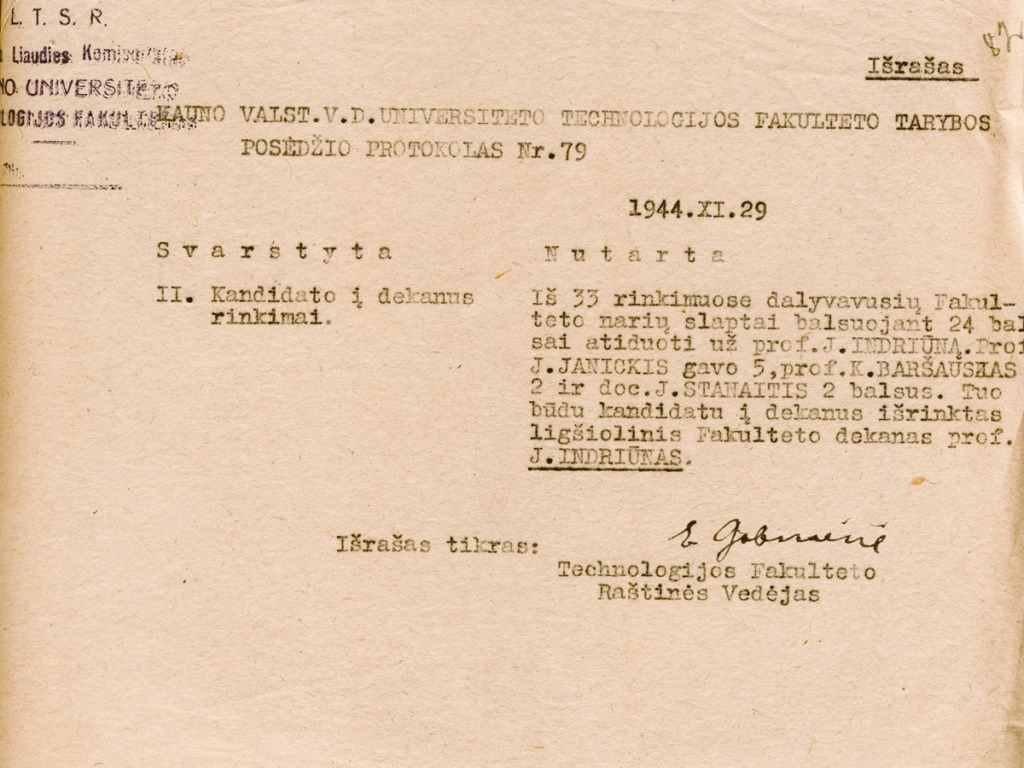
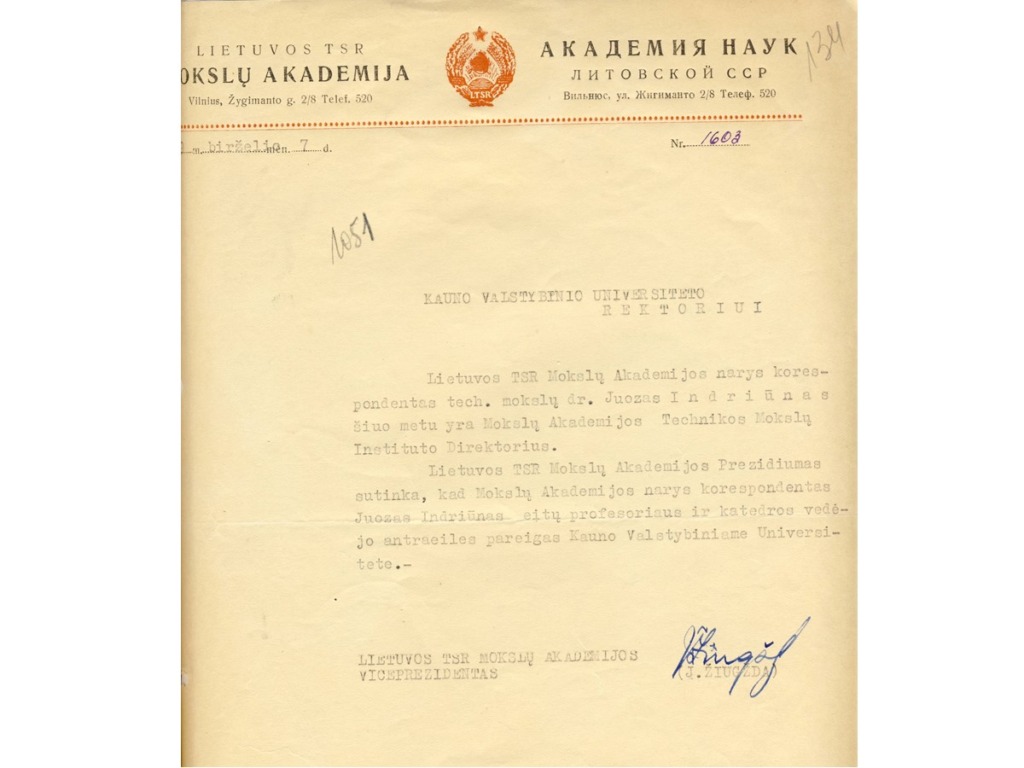
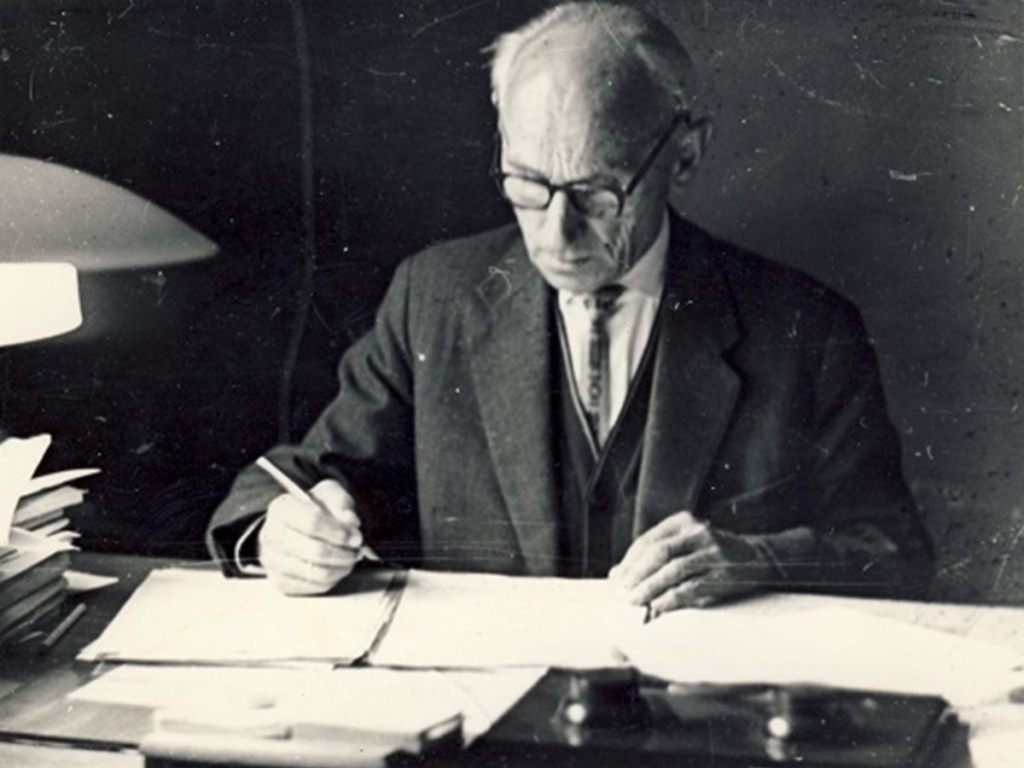
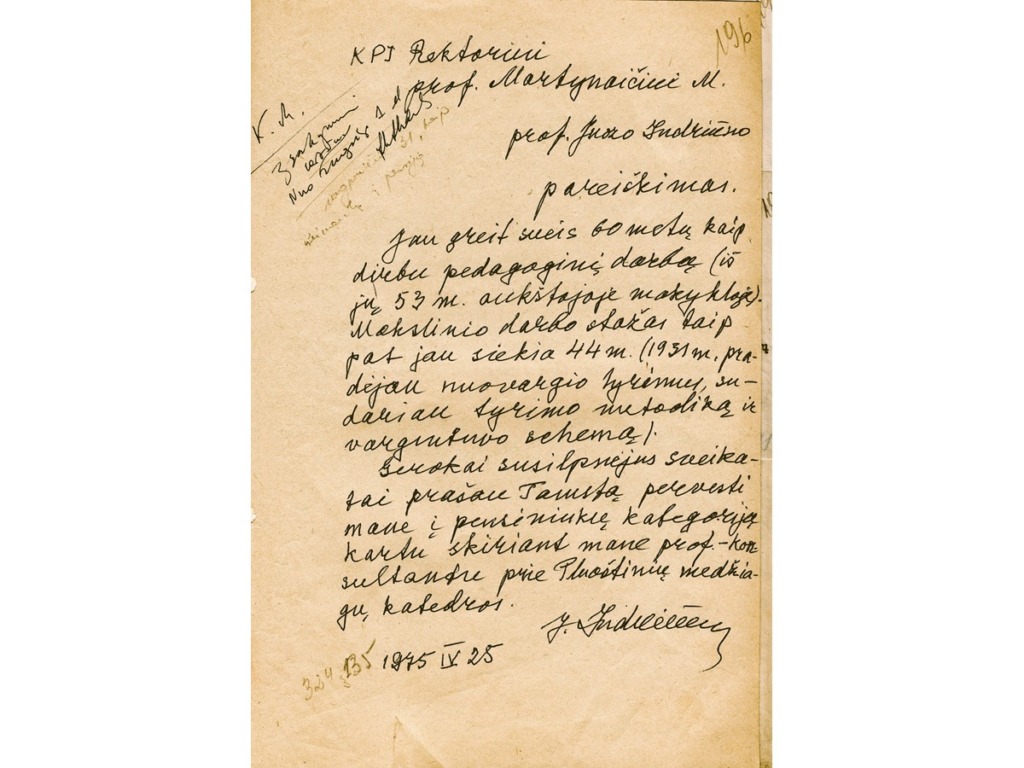
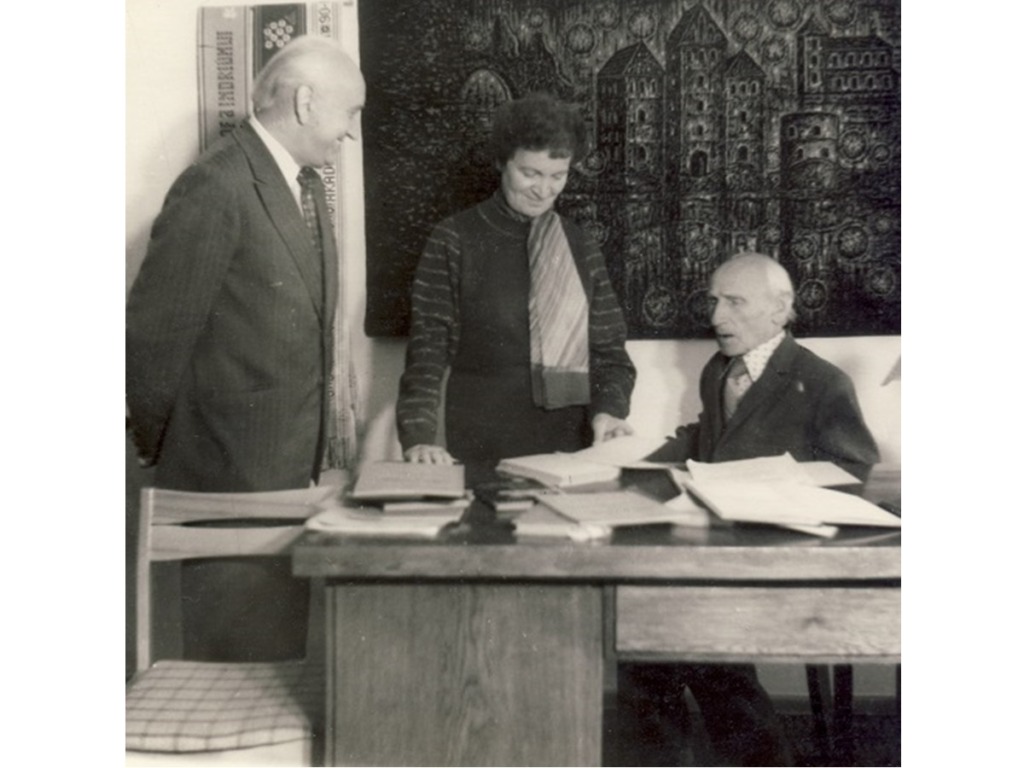
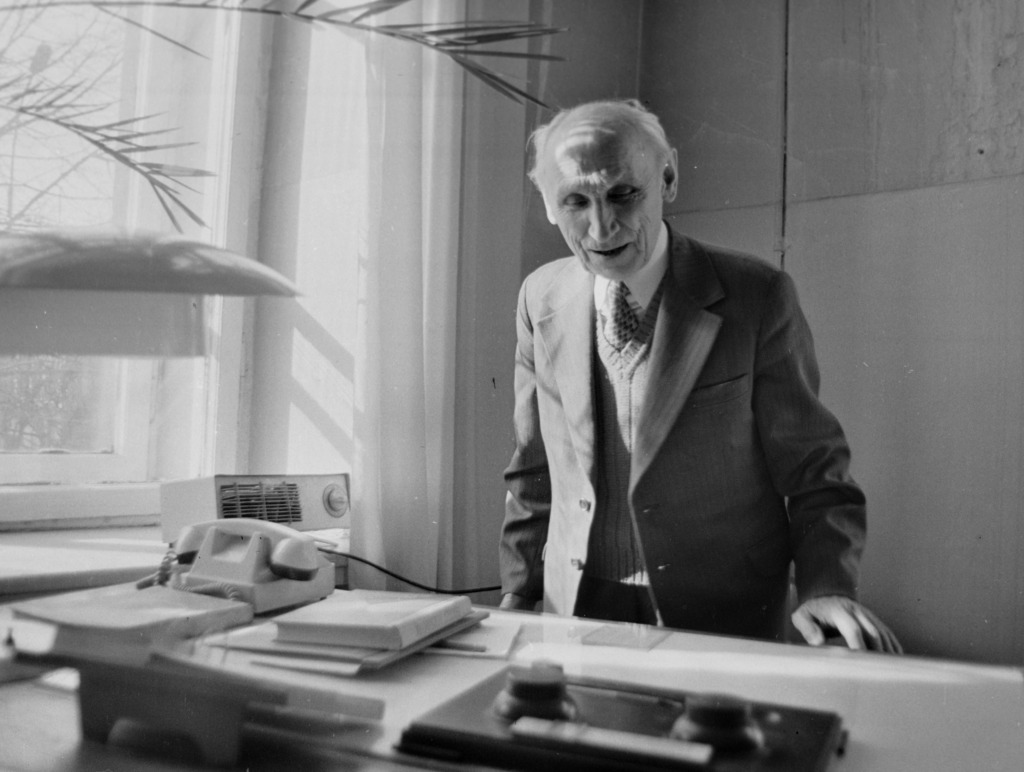
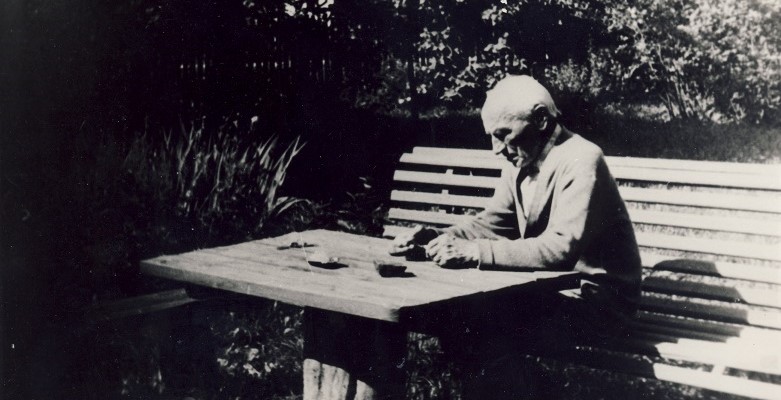
Juozas Indriūnas was born on January 26, 1896, in Bajoriškės (Rokiškis district). From 1908 to 1912, he attended Panemunėlis Primary School. In 1914, he graduated from the two-year school in Kupiškis (incomplete gymnasium). From 1914 to 1915, he worked as a government inspector at the Treugolnaja rubber factory in St. Petersburg and attended private courses to obtain his high school diploma. From 1915 to 1916, he taught at Pineva Elementary School. In 1916, he was arrested by the German occupation authorities for publishing illegal Lithuanian press and distributing leaflets, and was imprisoned in a prisoner-of-war camp in Gruntal, Germany, until 1918. From 1918 to 1920, he worked as a primary school teacher in Žardeliškės. In 1920, he was an auditor at the Higher Courses in Kaunas. In 1921, he passed his final exams as an external student and in 1922 was accepted as a student at the Faculty of Technology at the University of Lithuania. In 1929, he obtained a degree in engineering technology. In 1930–1931, he specialized at the technical universities of Stuttgart and Dresden. While still a student, he began working at the university. In 1922, he was appointed laboratory assistant at the Department of Construction Mechanics, where he actively assisted Prof. K. Vasiliauskas in setting up a materials resistance laboratory. In 1929, he was transferred to the position of assistant, and in 1930, to the position of senior assistant. In 1930, on the initiative of J. Indriūnas, a textile materials research laboratory was established at the materials resistance laboratory. In 1936, he defended his dissertation “Wool fibers bend and tire.” He was awarded a doctorate in engineering, and in 1937, he was awarded the title of associate professor. In 1937, on his initiative, a fiber technology laboratory was set up in the premises of the University’s Institute of Physics and Chemistry. In 1941, the Department of Textile Technology was established at the University, and Juozas Indriūnas was appointed professor and head of the department.
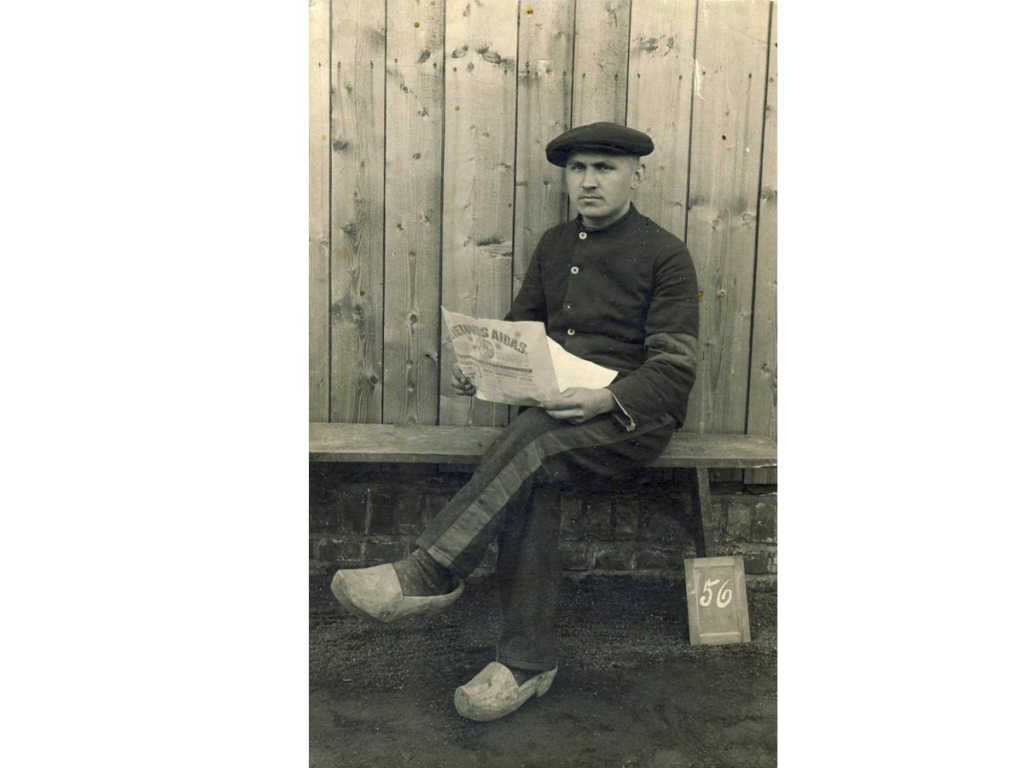
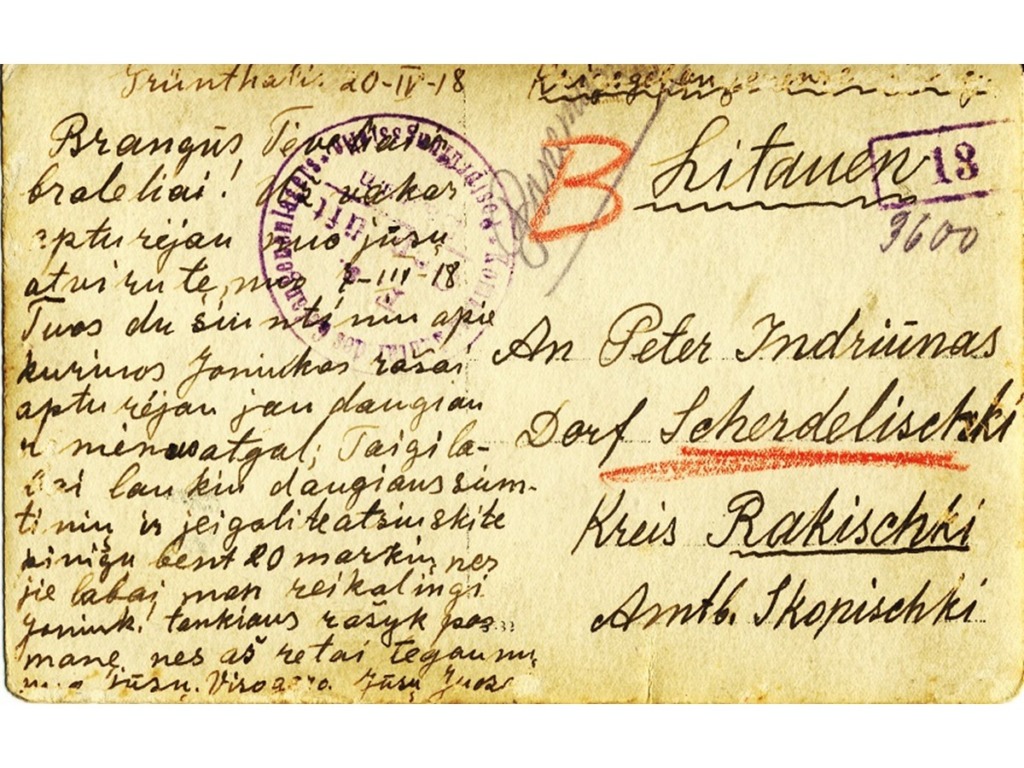
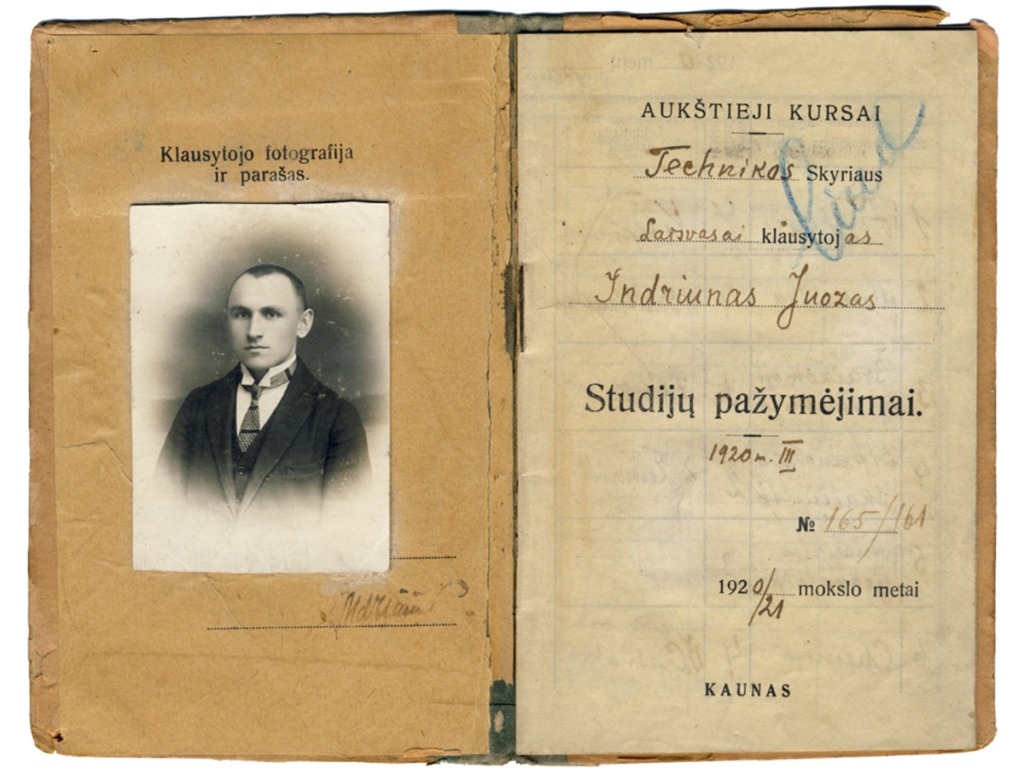
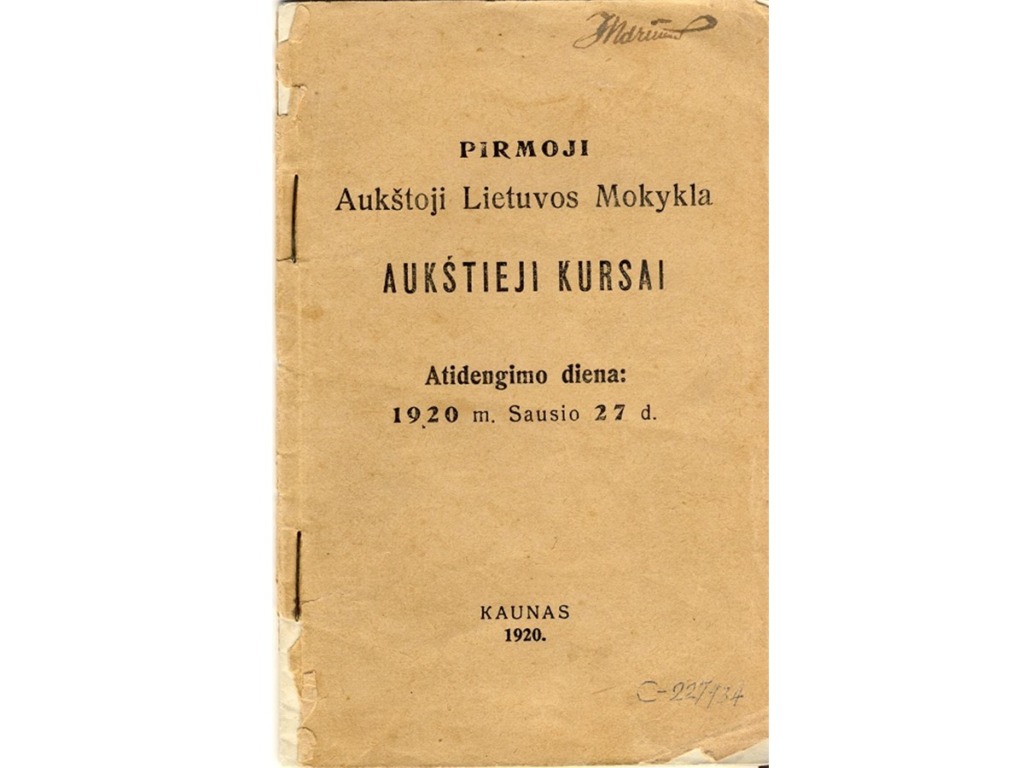
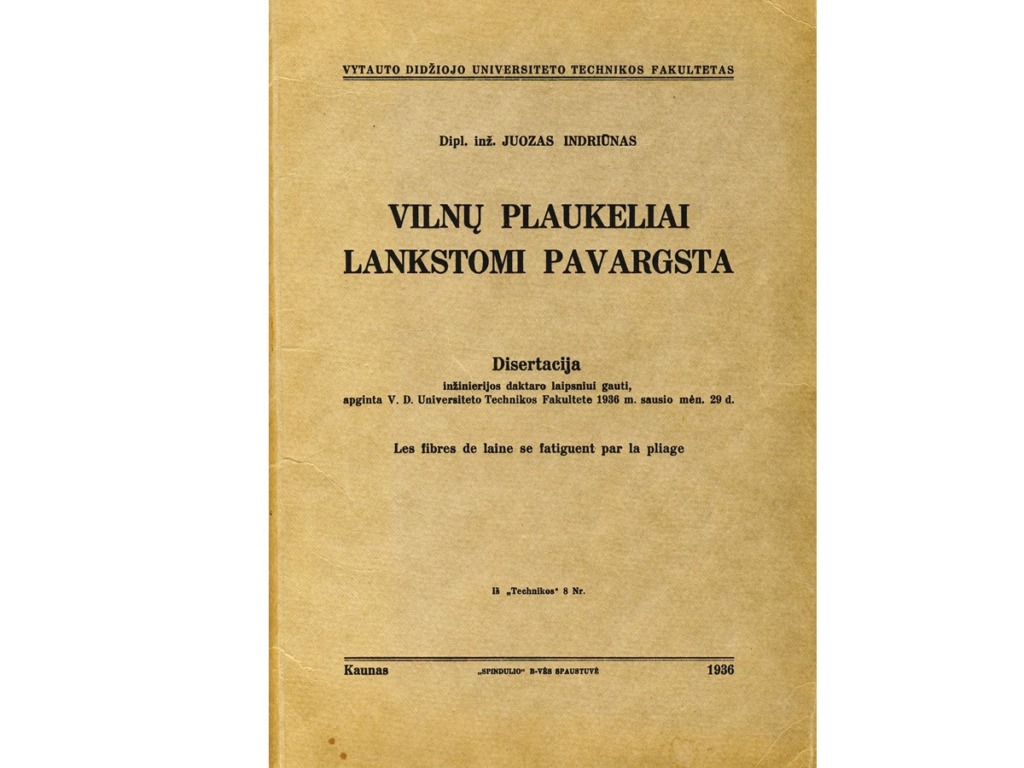
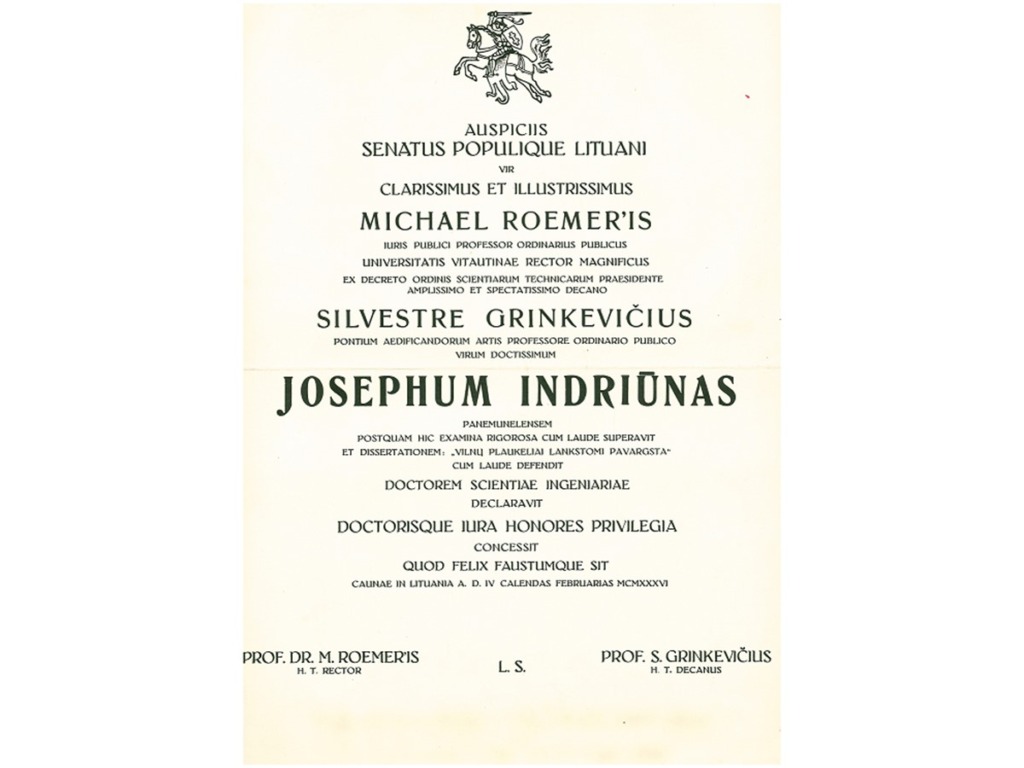
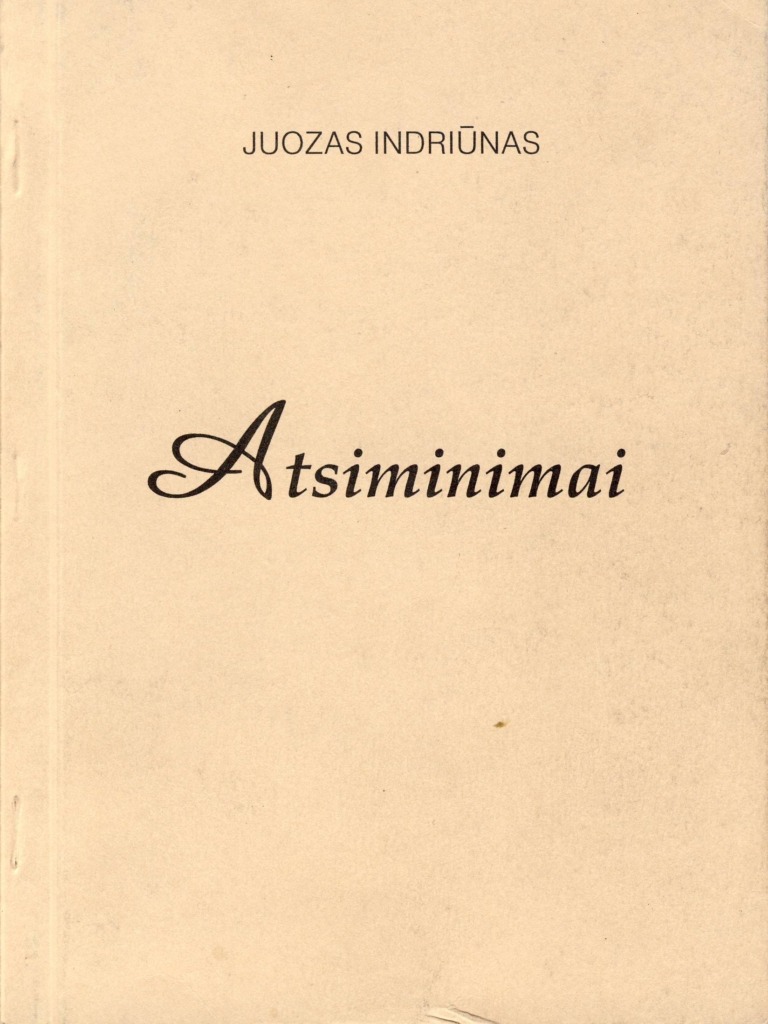
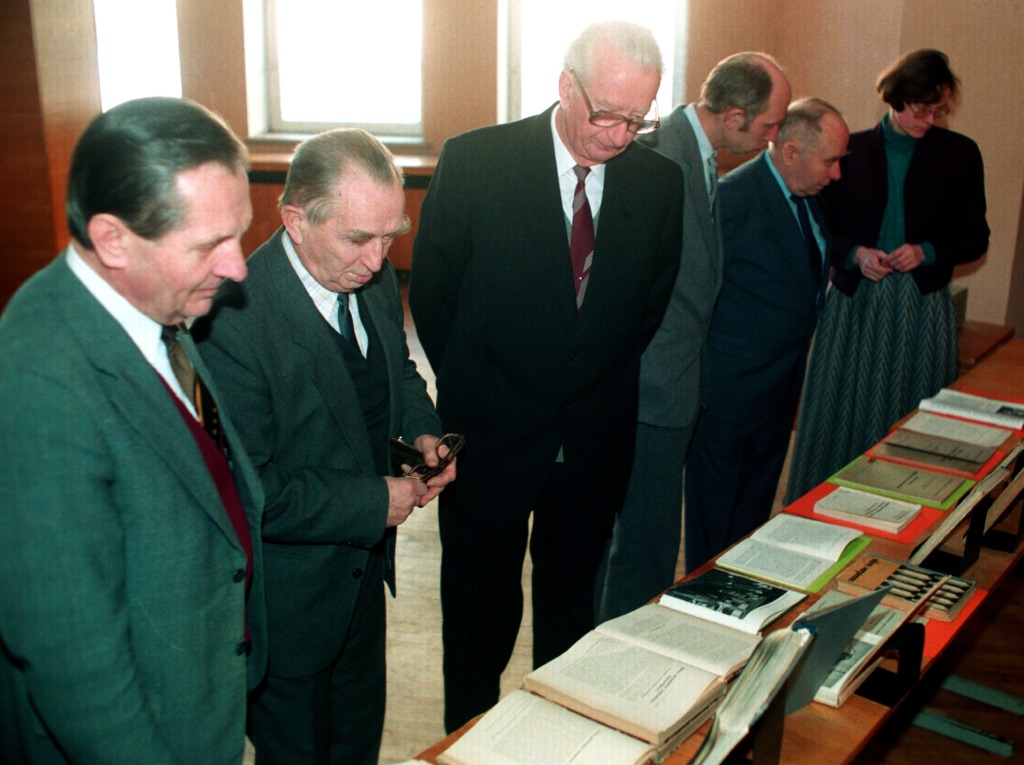
J. Indriūnas’ path to science is evidenced by personal documents that have found their way into the museum: a certificate of attendance as an auditor of advanced courses, which was quite rare in Lithuania in 1920–1921, the first doctoral dissertation in technical sciences defended at Vytautas Magnus University with the beautiful Lithuanian title “Vilnų plaukeliai lankstomi pavargsta” (The Waves of Vilnius Grow Weary), a copy of his diploma, and more. Among them is a special photograph-postcard taken in the spring of 1918 at the Gruntal prisoner-of-war camp in Germany. In the photograph, J. Indriūnas is pictured sitting on a bench wearing prisoner’s clothes and clogs, with the prisoner number “56” placed next to the bench, holding a copy of the newspaper Lietuvos aidas in his hand. It has been determined that this is the March 26, 1918 issue of Lietuvos aidas, which contains the article “Lithuania – an Independent State.”The article reports that on March 23, a delegation authorized by the Lithuanian Council presented the German Chancellor with a notification of the Act of Independence proclaimed by the Lithuanian Council, requesting recognition of the Lithuanian state. On the other side of the photograph is a postcard in which J. Indriūnas writes to his parents and brothers on April 20, 1918, about two parcels he has received and asks them to send more parcels and money, which he desperately needs. The postcard bears witness to one of the most difficult trials of J. Indriūnas’ life – his arrest and imprisonment in a German prisoner-of-war camp during World War I. He writes about this in his memoirs, published in 1996. In the autumn of 1915, J. Indriūnas established a Lithuanian primary school in the village of Piniava near Panevėžys, along with courses for adults and a choir, and organized performances. While still a student, J. Indriūnas joined the secret socialist organization Aušrininkai (named after the magazine Aušrinė), and as a teacher he established a secret group of the Progressive Youth Union of Aukštaitija, published the newspaper Liuosas kelias, and published and distributed leaflets. For one proclamation urging people to hide from being drafted into the occupiers’ labor battalions, J. Indriūnas was arrested in December 1916, imprisoned, and later sent to the Gruntal prisoner camp. He escaped with a friend, but after three days he was returned to the same camp. Living in the prison camp, J. Indriūnas founded a primary school for his fellow Lithuanians who were illiterate or semi-literate. The Lithuanian prisoners received some food and books from the Lausanne Lithuanian Committee, established in Switzerland to help victims of the war. J. Indriūnas did not return to Lithuania until the autumn of 1918.