Skip to content

The First Woman to Earn a Doctorate in Lithuania. Prof. Vaclova Zelionkaitė Turns 100

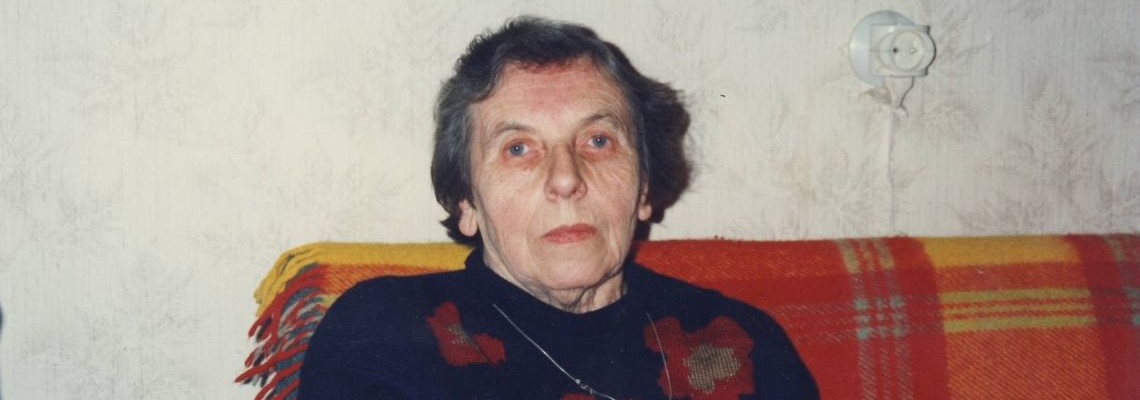
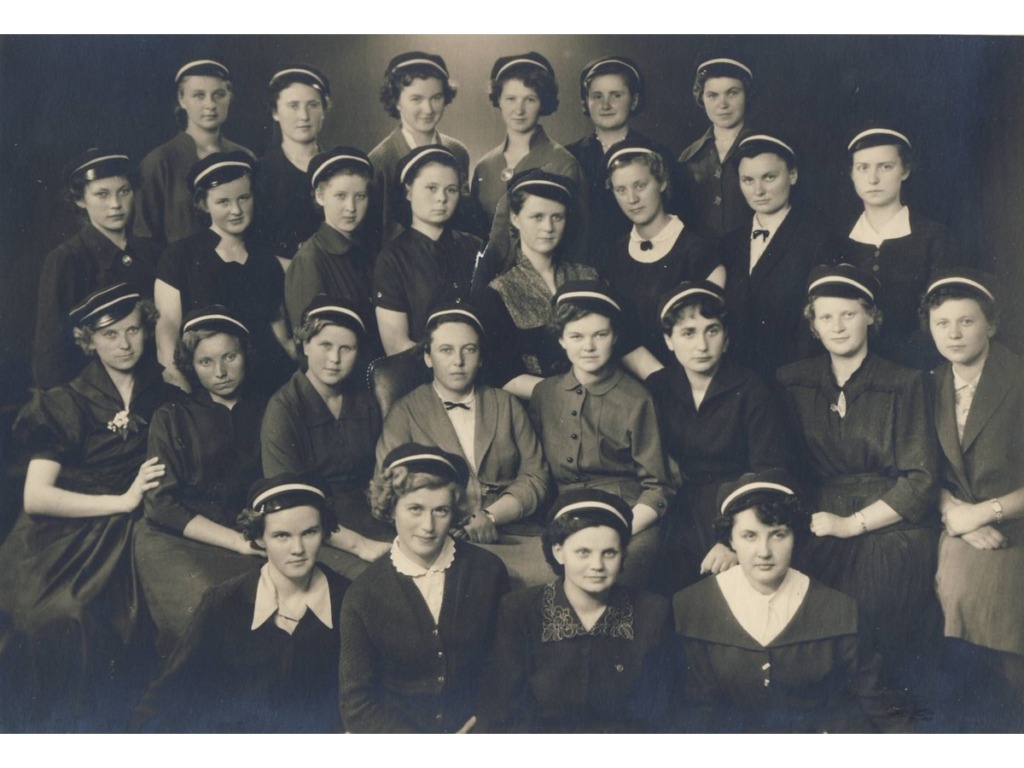
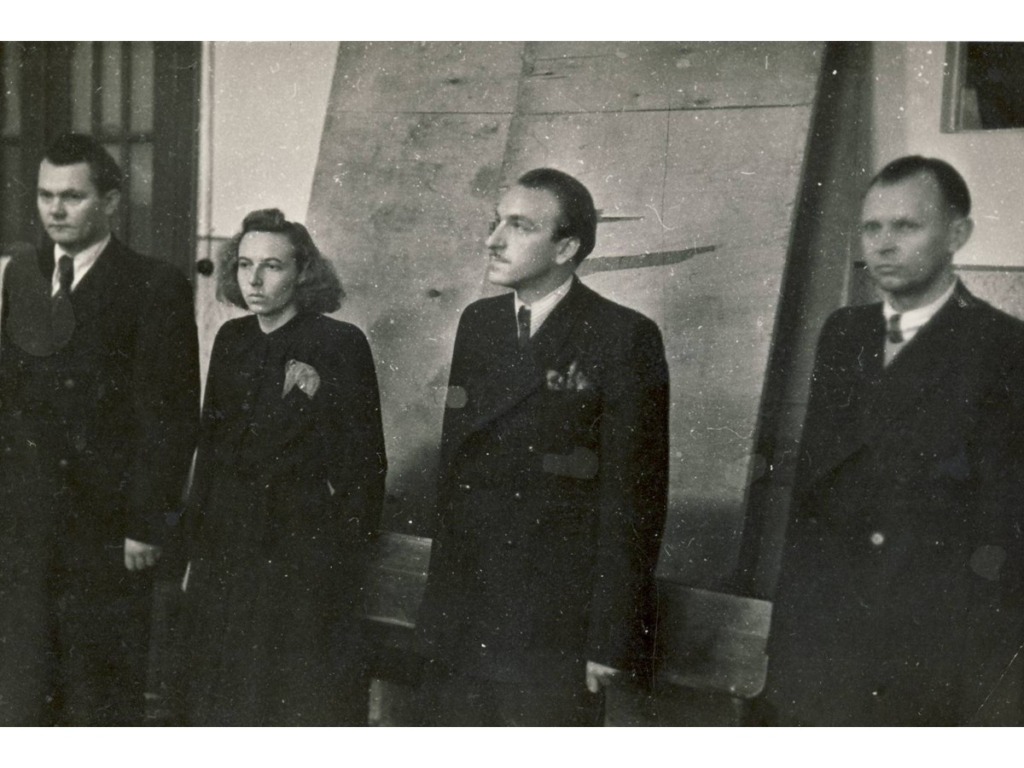
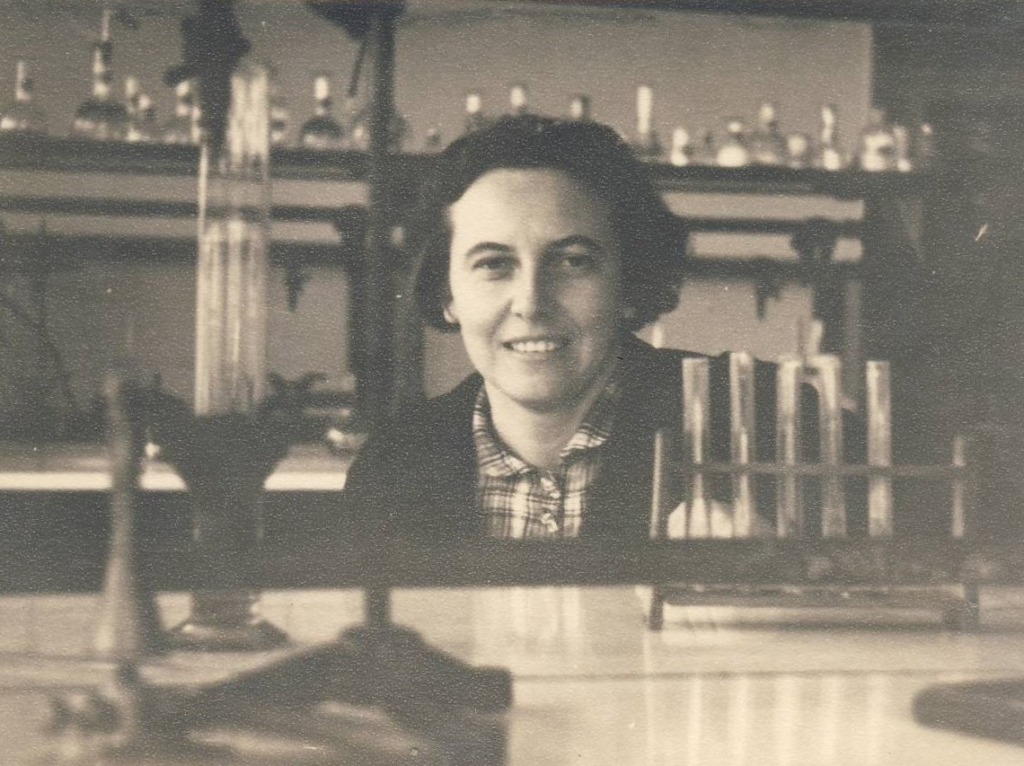
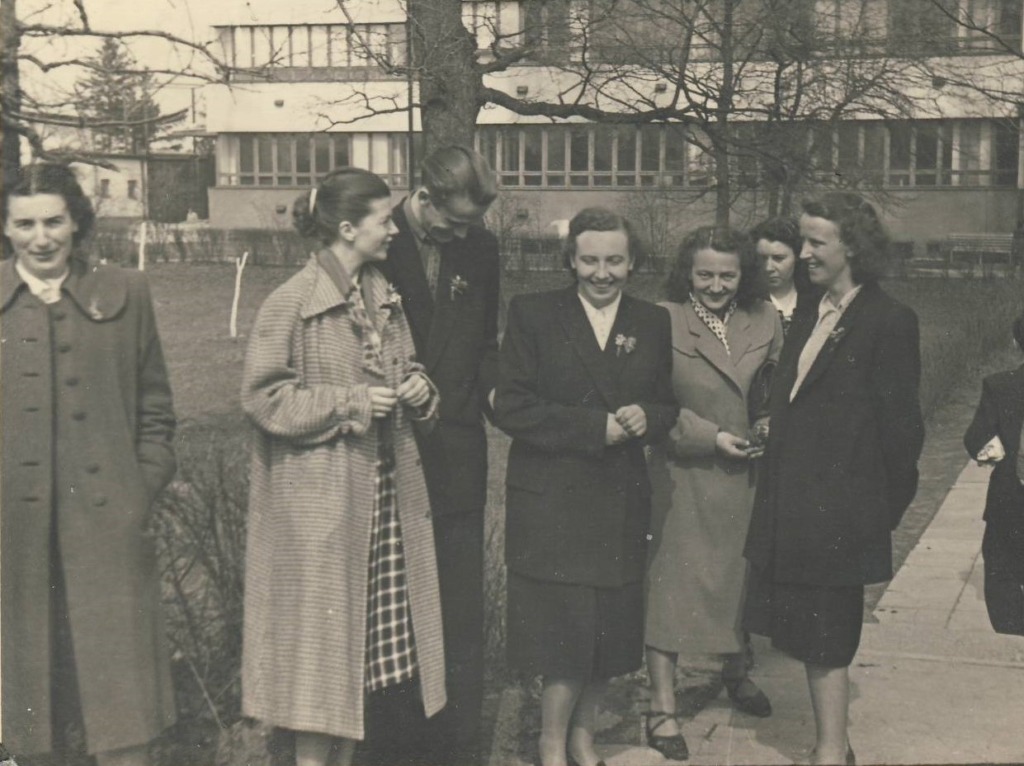
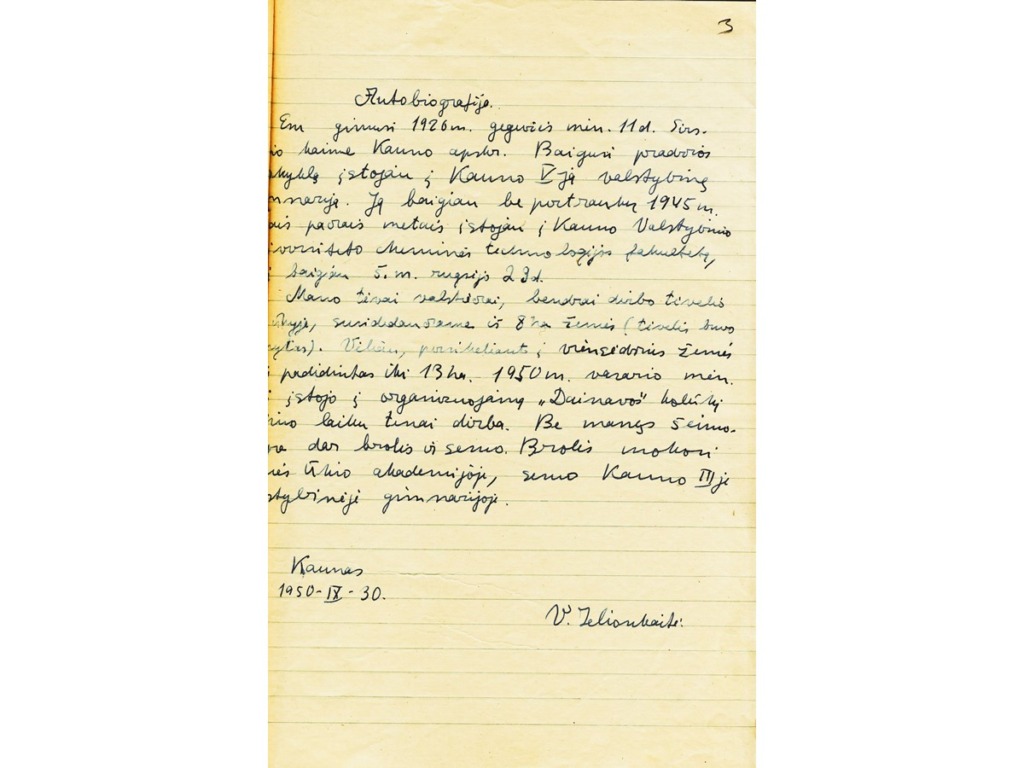
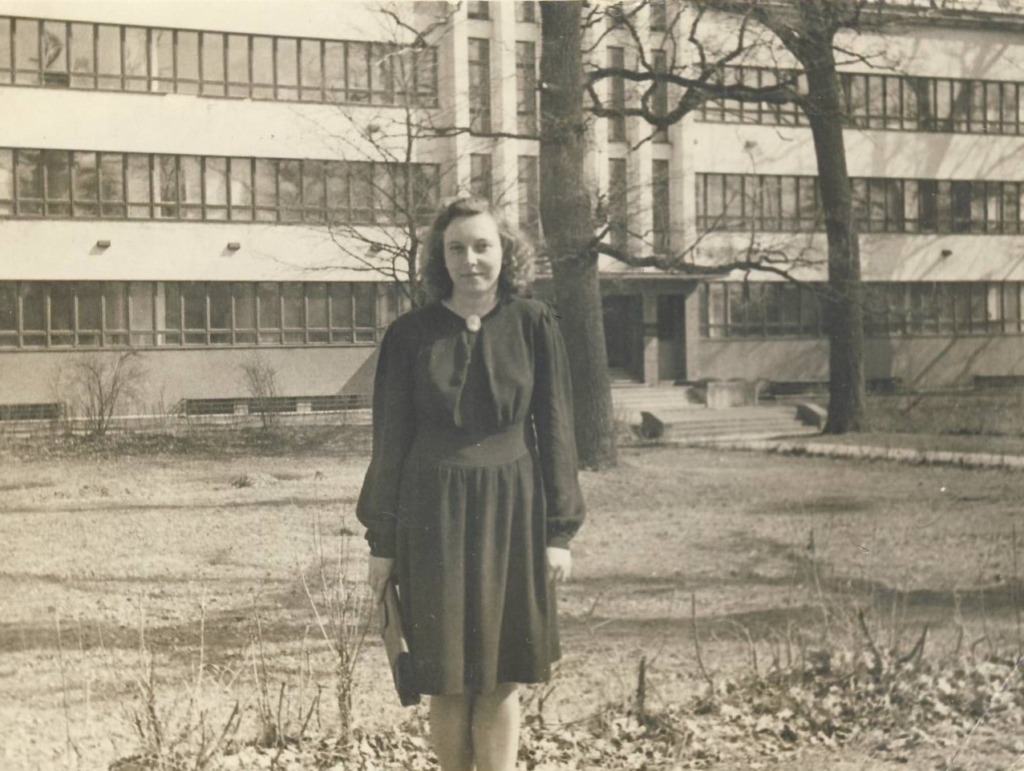
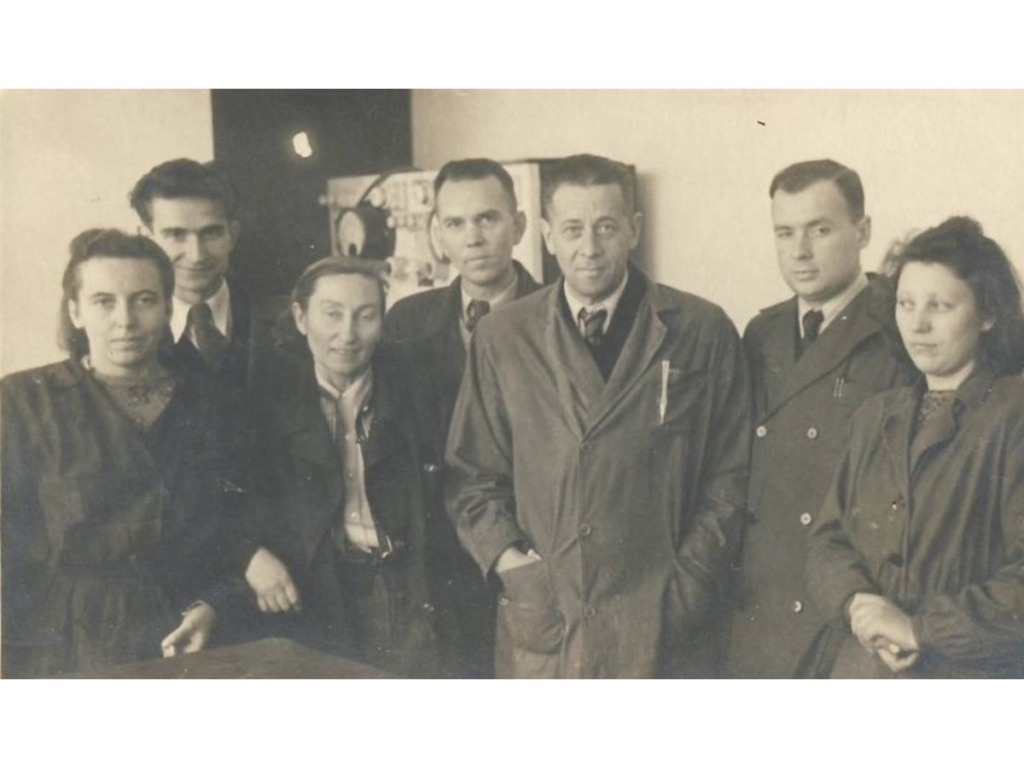
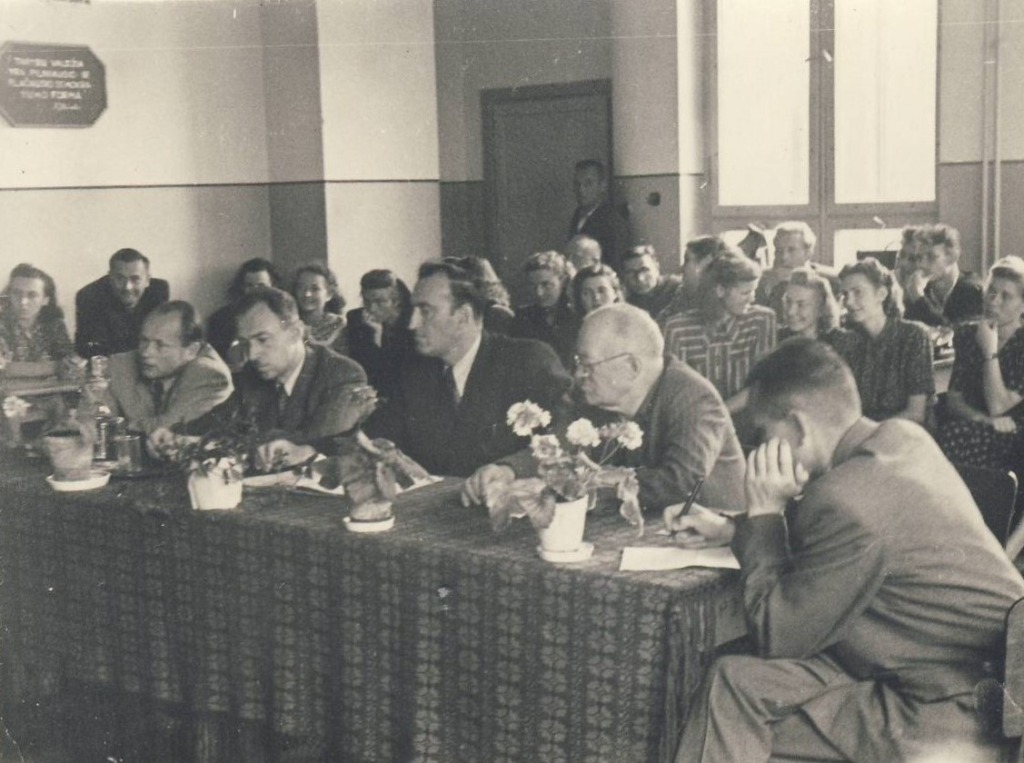
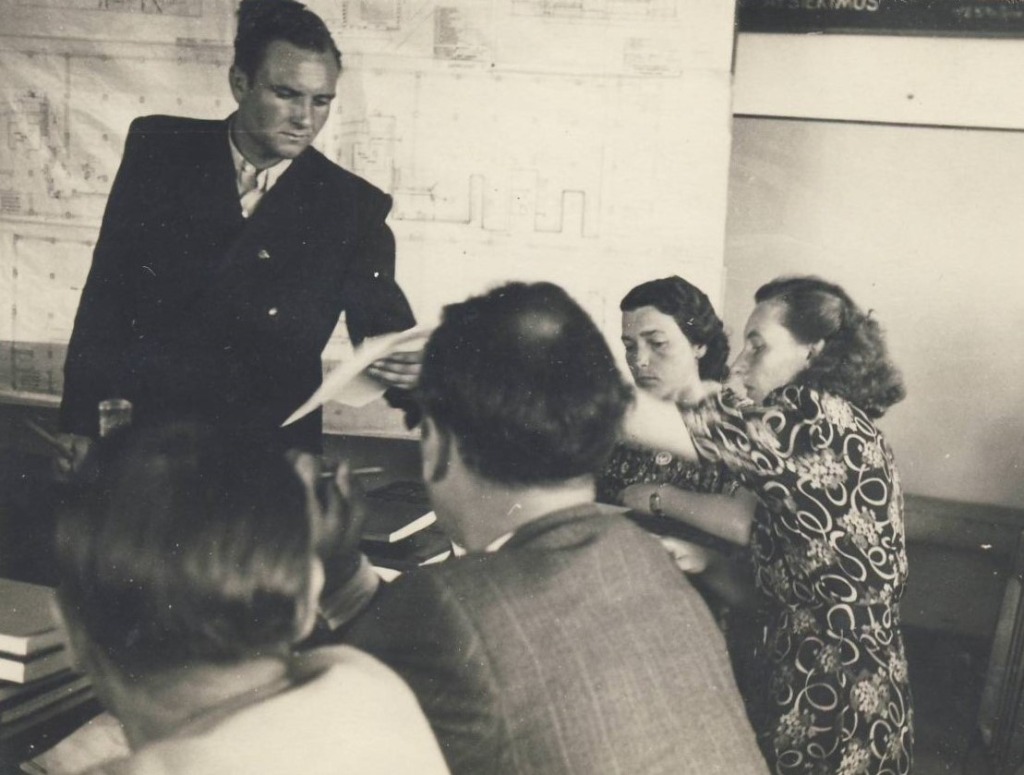
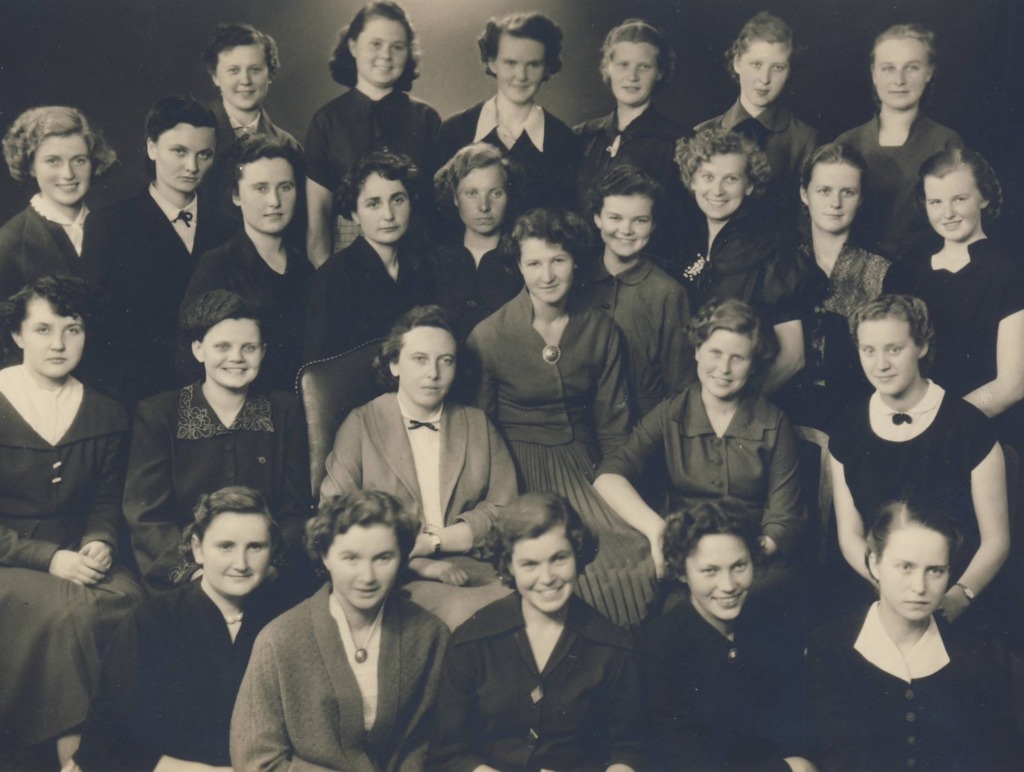
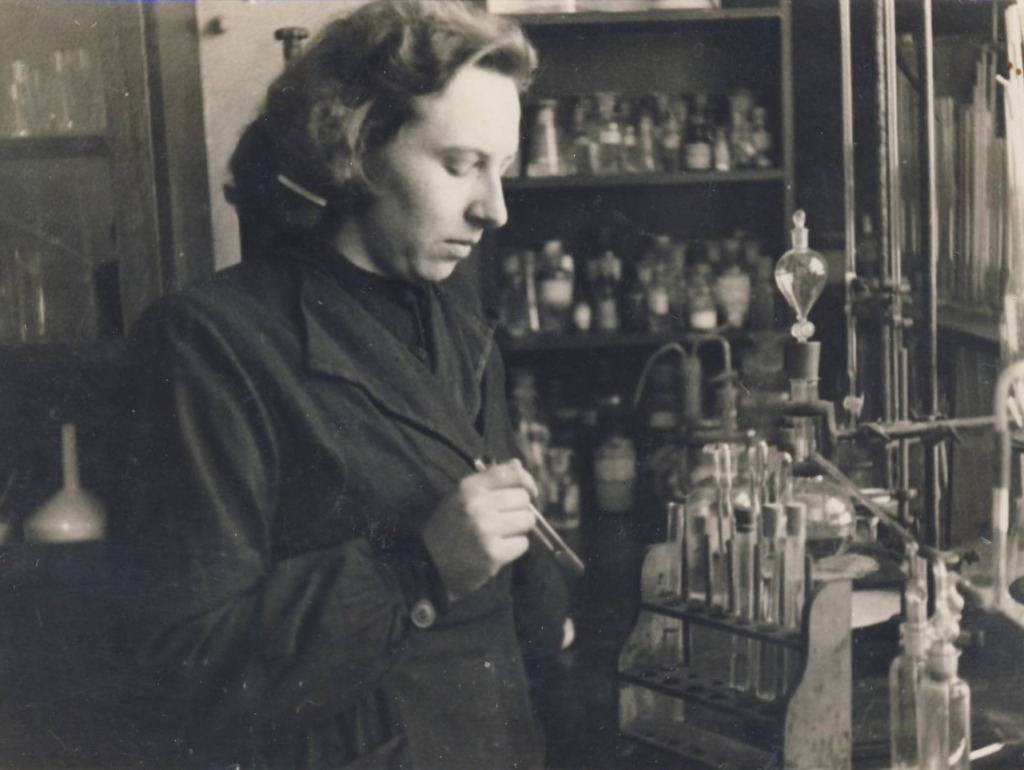
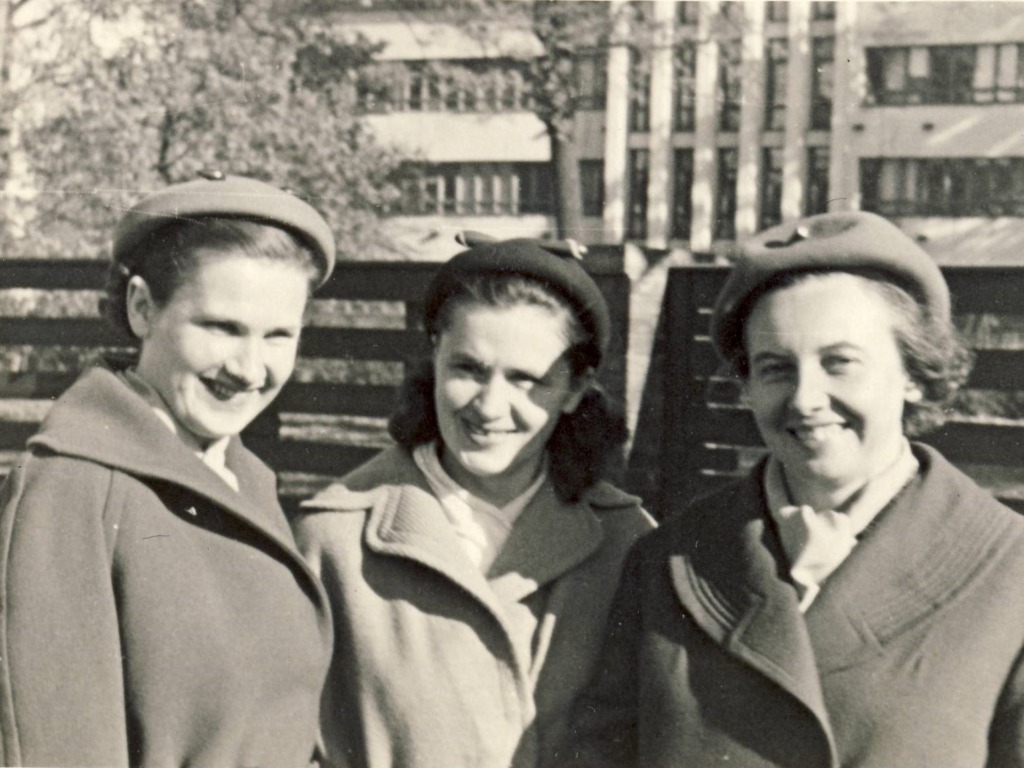
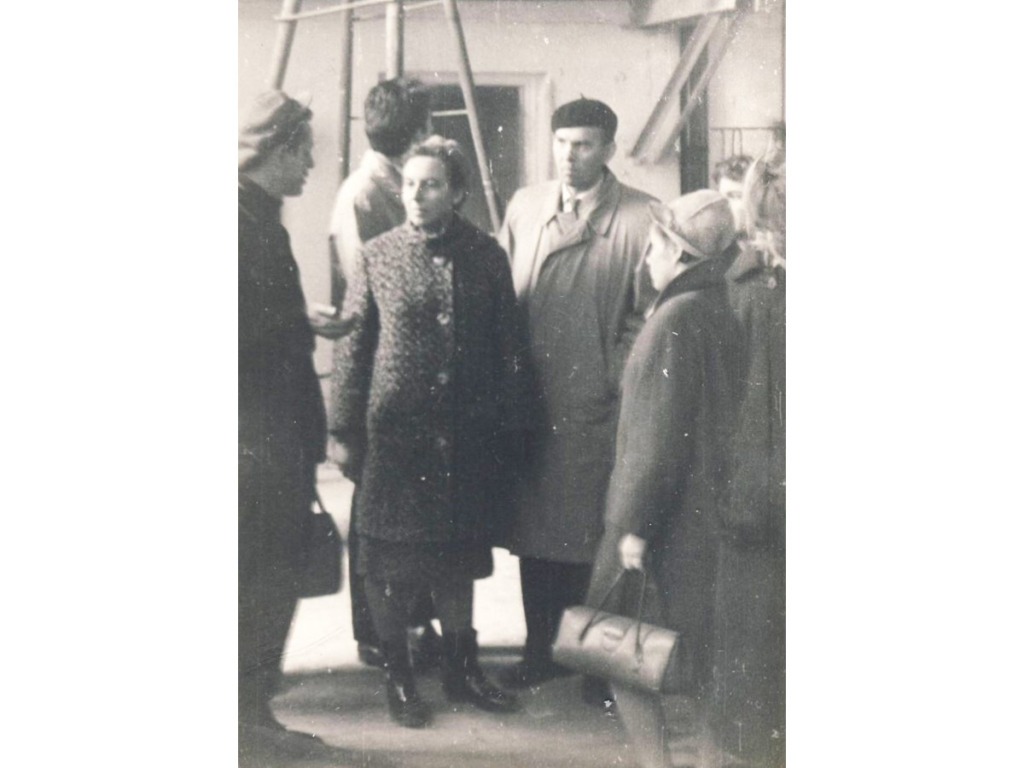
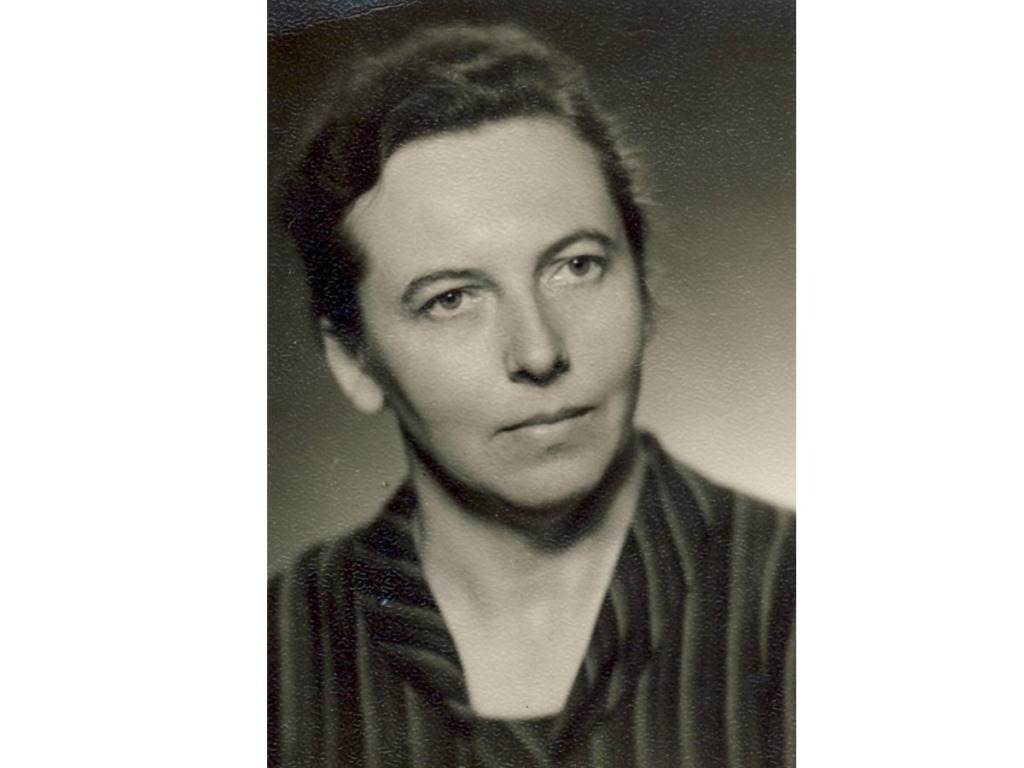
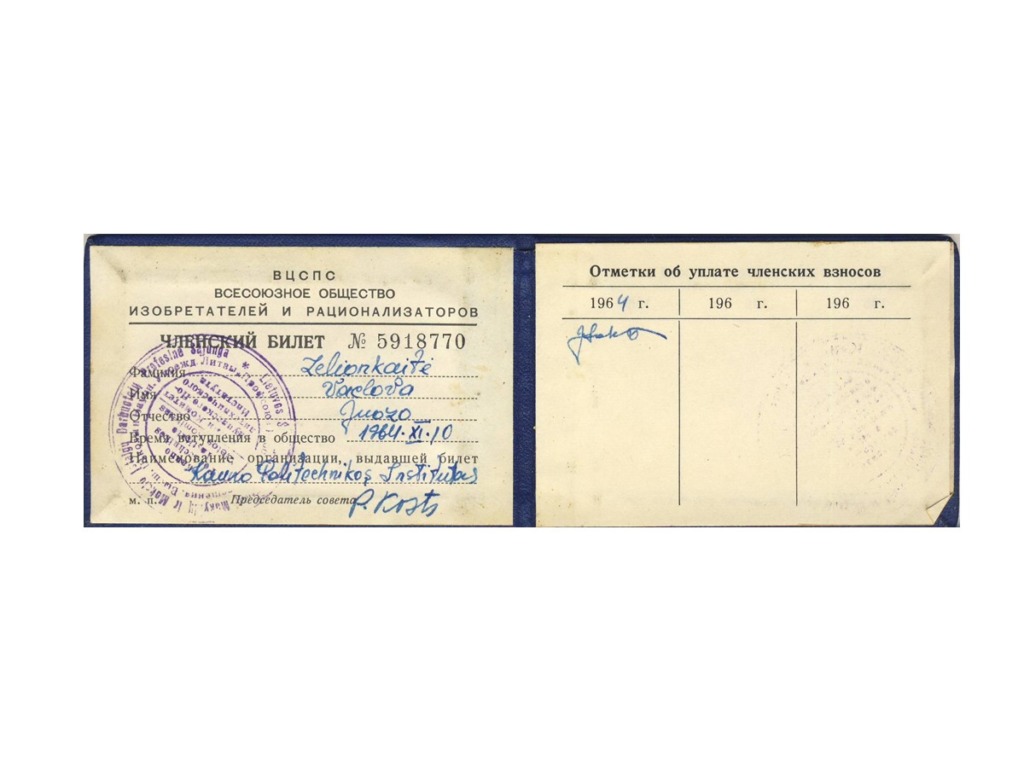
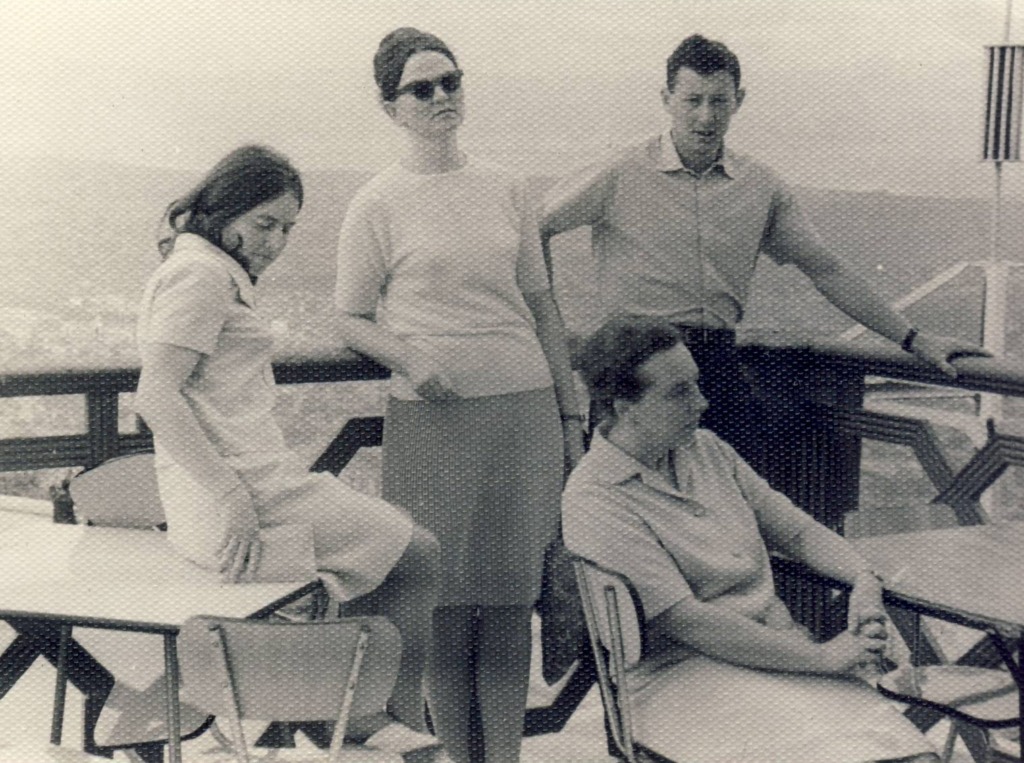
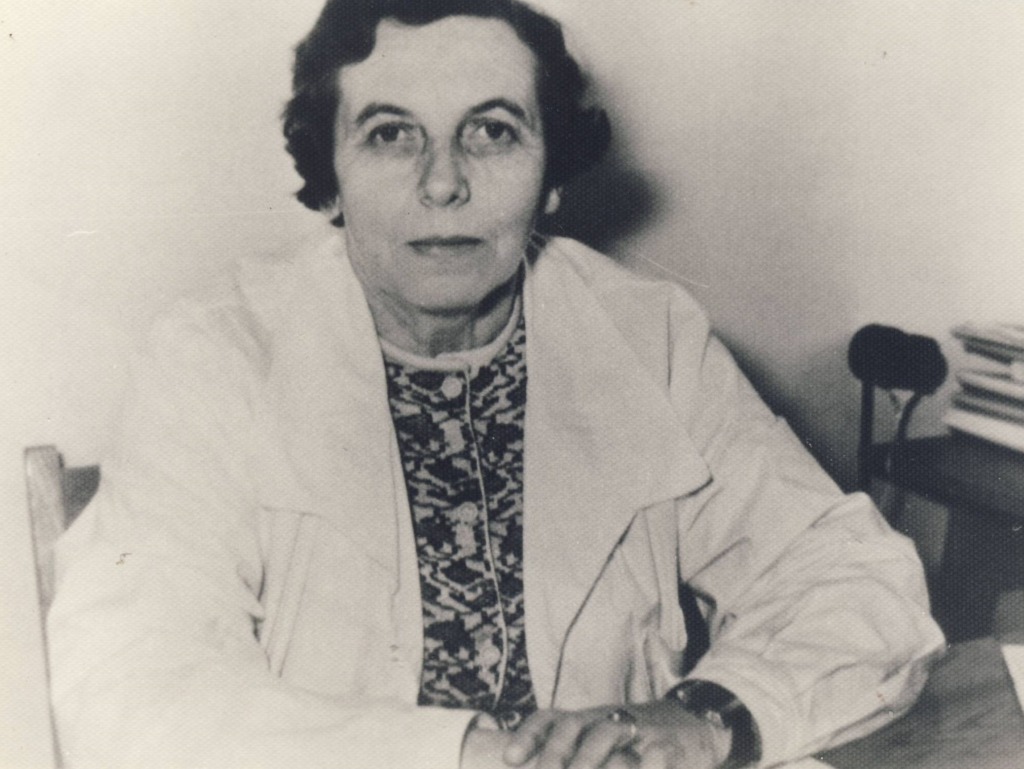
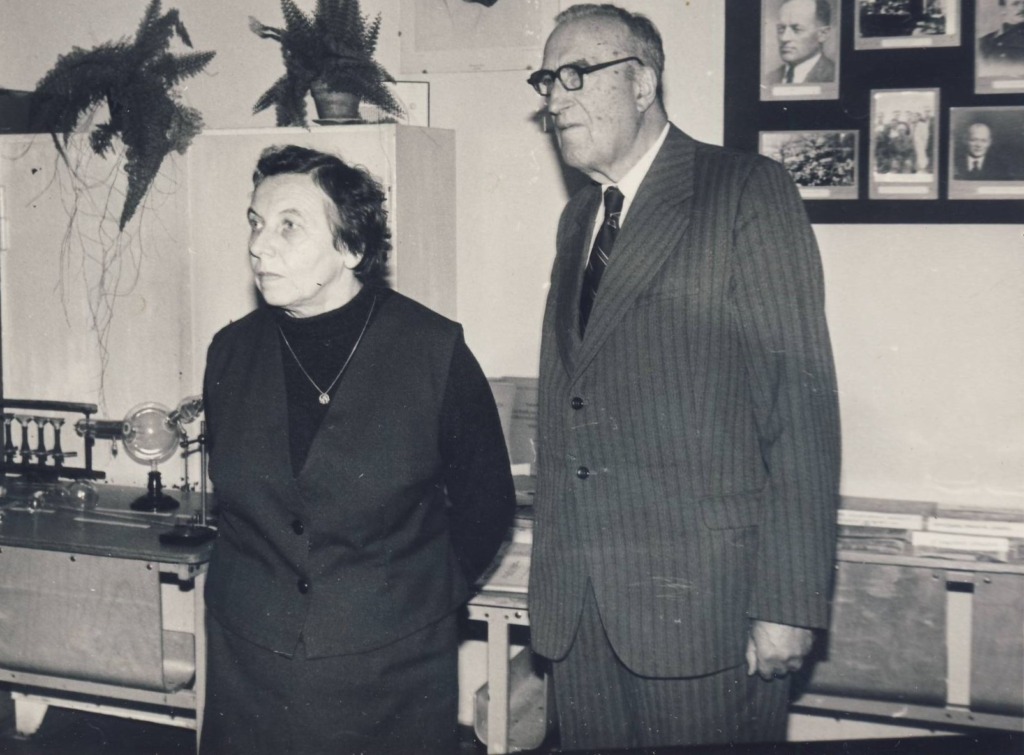
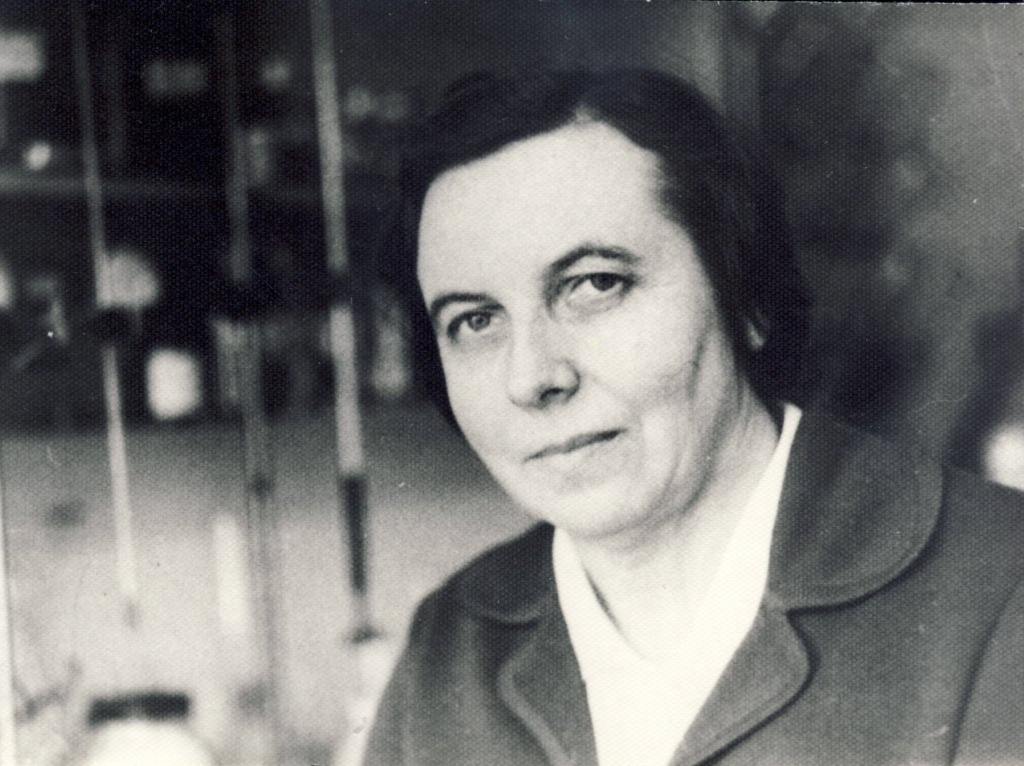
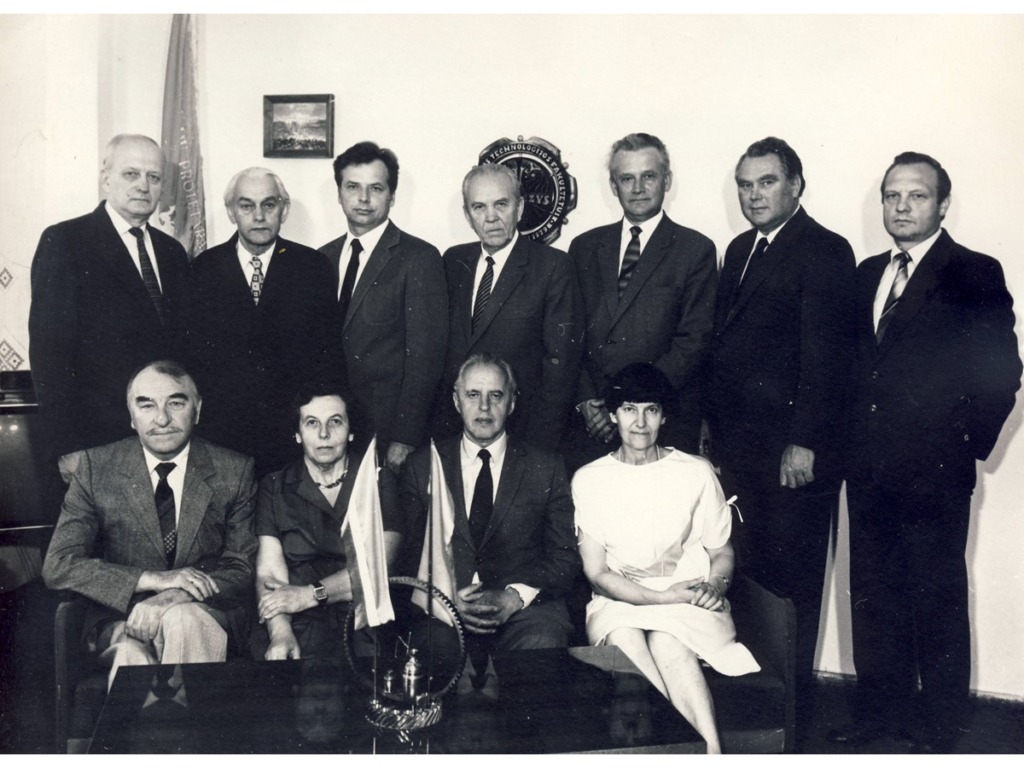
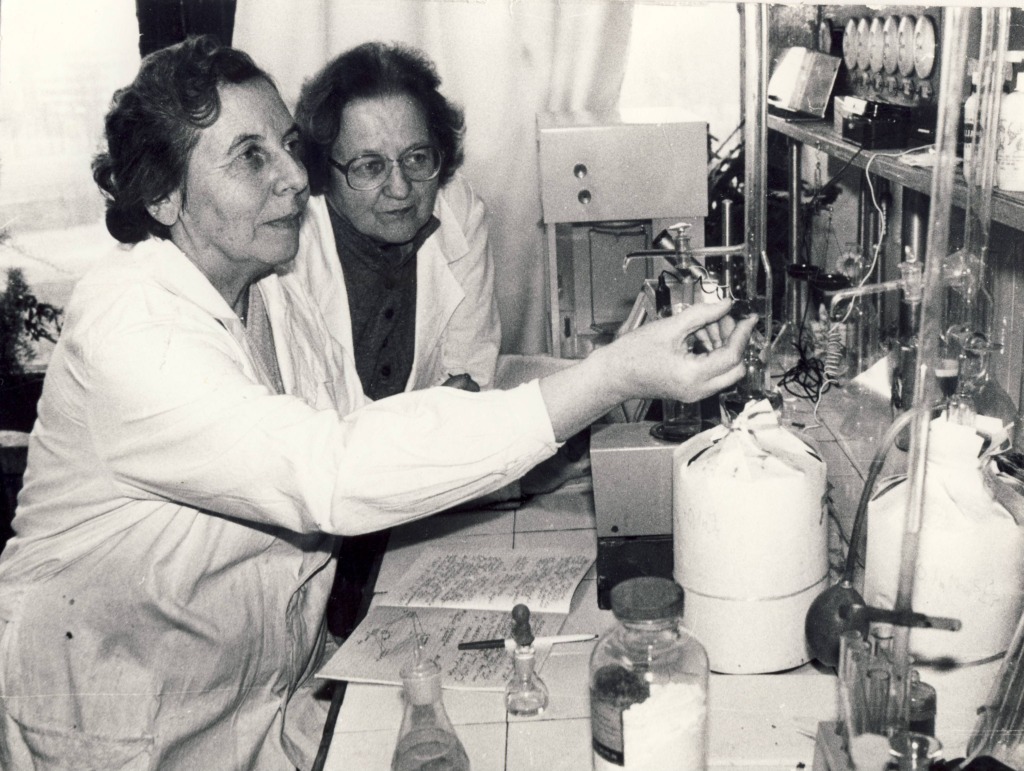
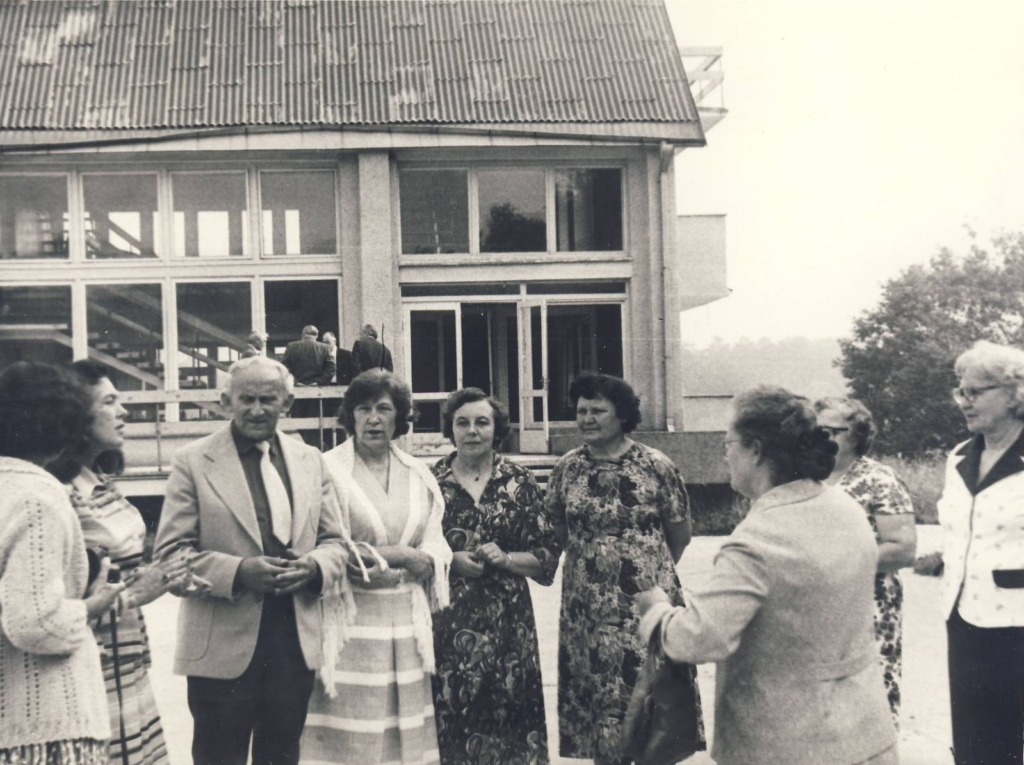
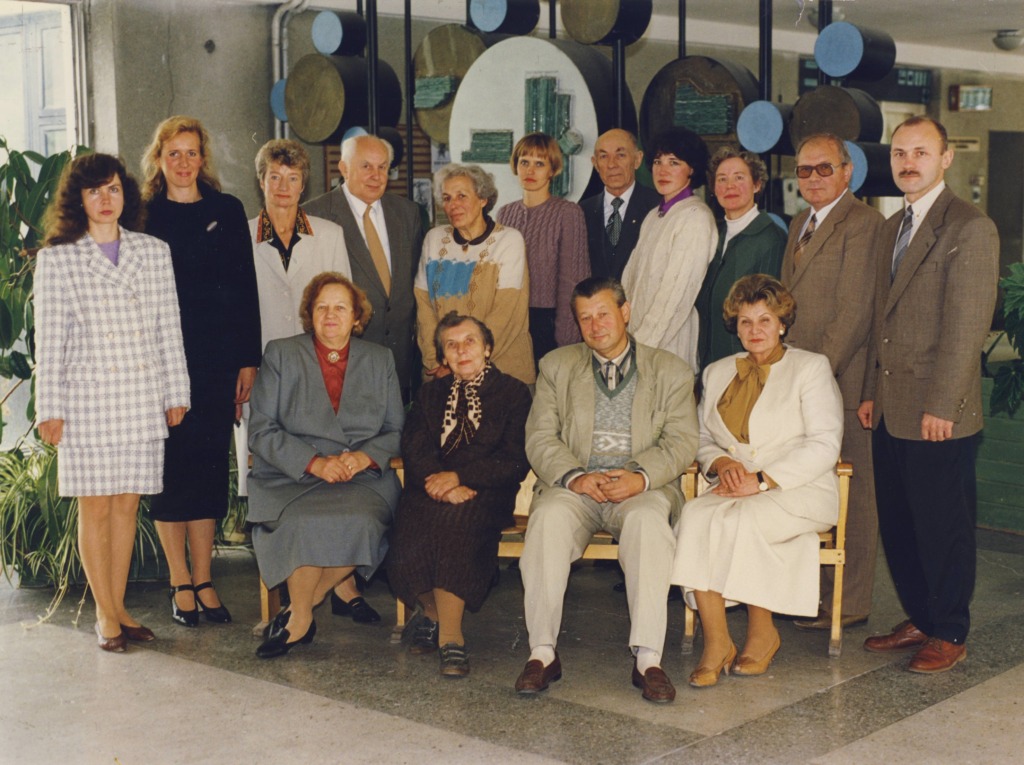
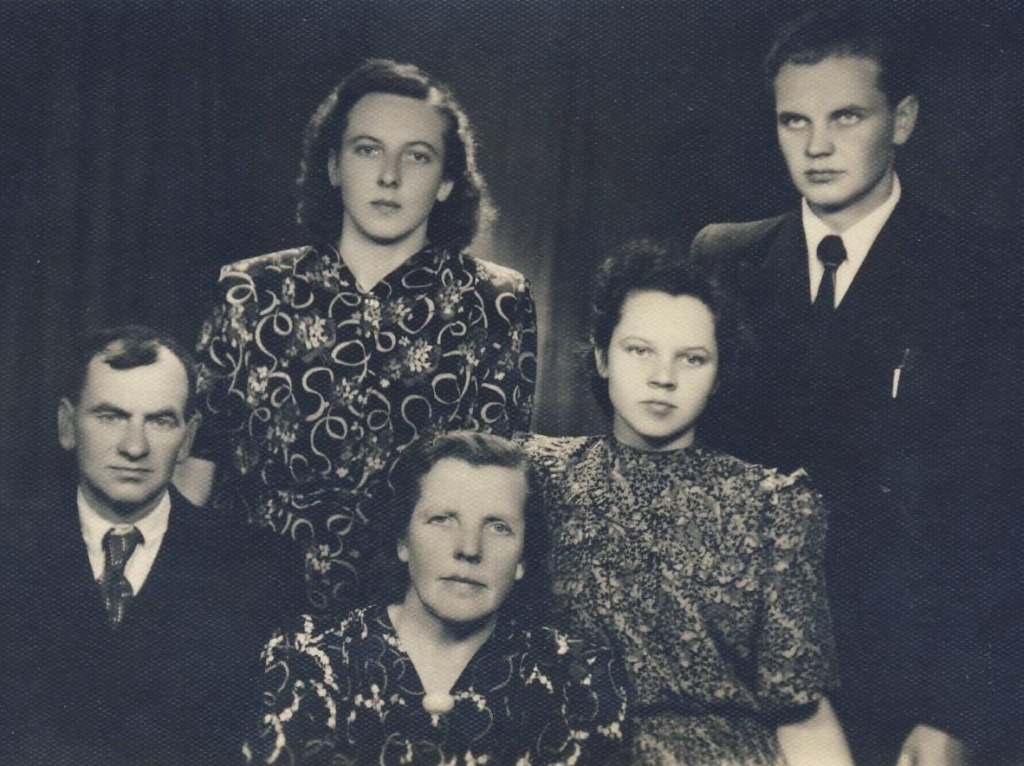
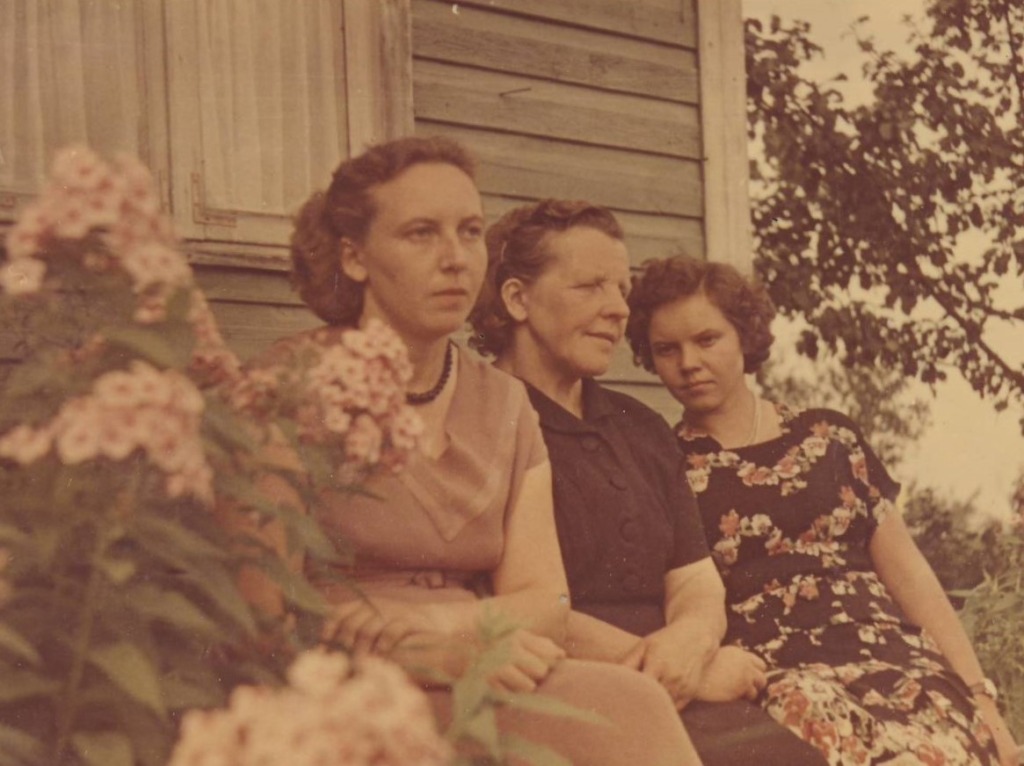
On May 11, 2026, we will celebrate the 100th anniversary of Vaclova Zelionkaitė, a chemist, professor, habilitated doctor, recipient of the State Prize, and head of the Department of Inorganic Chemistry. To mark the occasion, the KTU Museum has organized a virtual exhibition “The First Doctor of Science in Lithuania. Prof. Vaclova Zelionkaitė – 100,” featuring photographs from the KTU Museum, the Department of Inorganic Chemistry at the KTU Faculty of Chemical Technology, and the professor’s relatives.

She Chose the Path of a Scientist

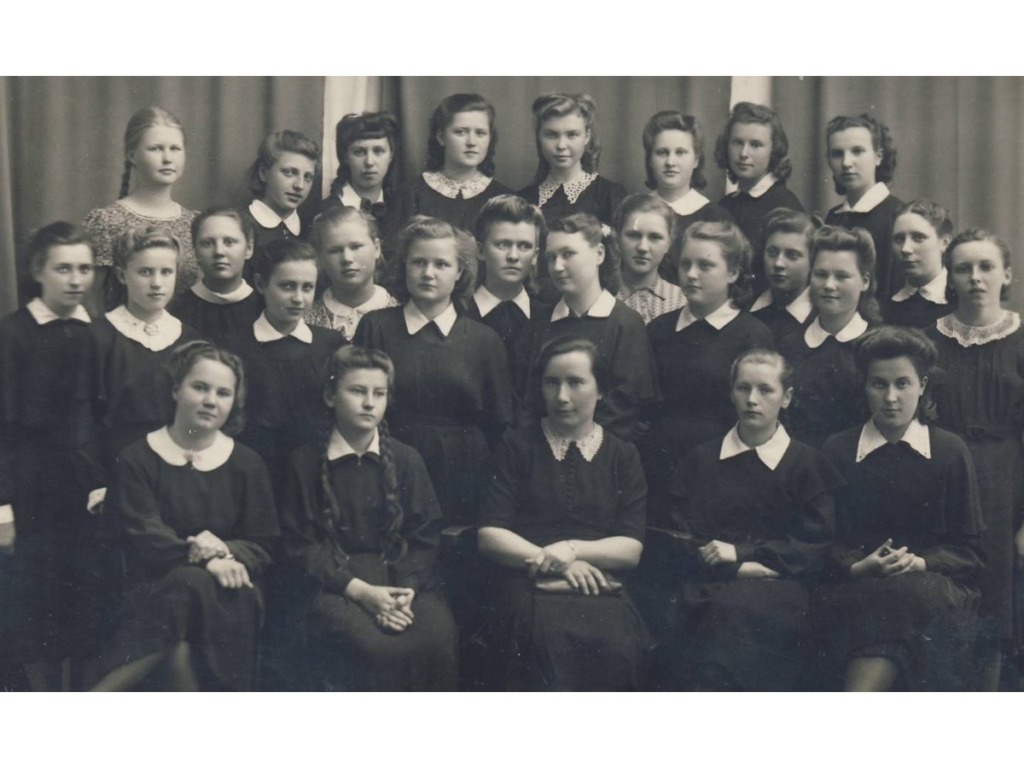
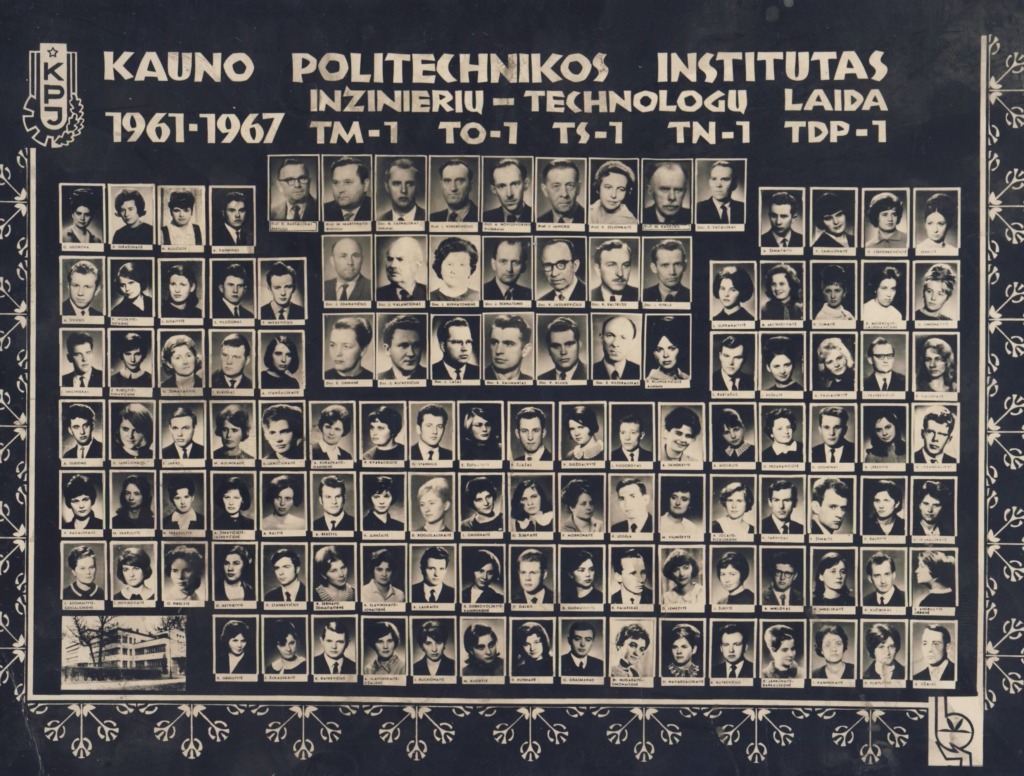
Vaclova Zelionkaitė was born on May 11, 1926, into a peasant family in the village of Girstupis, Pažaislis Parish, Kaunas County. After graduating from Kaunas 5th Gymnasium, in 1945 she enrolled in the Faculty of Chemical Technology at Kaunas State Vytautas the Great University (renamed Kaunas Polytechnic Institute in 1951), and upon graduating in 1950, she was invited to work as an assistant in the Department of Physical Chemistry. While still a student, under the guidance of Academician Jonas Janickis, she began her scientific work. In her memoirs about Prof. J. Janickis, V. Zelionkaitė wrote:

“I chose to verify the data of Italian scientists Marino and Skvintani on the formation of tetravalent manganese selenite. <…> We determined that these pink or purple crystals are indeed a tetravalent manganese compound obtained by fusing selenium dioxide with manganese dioxide, and we investigated the chemical properties of this compound. Once, perhaps we overdid it with the temperature, or maybe I didn’t seal the tube properly, but we heard a loud “boom” and the entire mixture ended up on the wall, while the tube furnace cracked. Perhaps this prompted us to find a simpler method for producing this compound, from solutions <…>.”

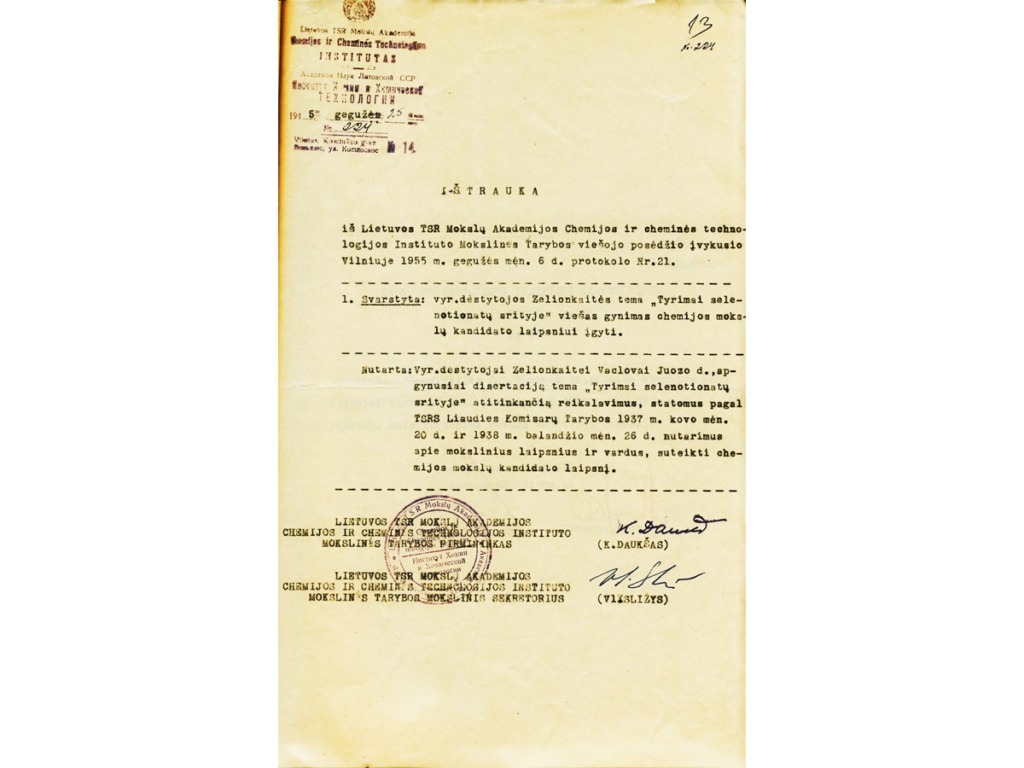
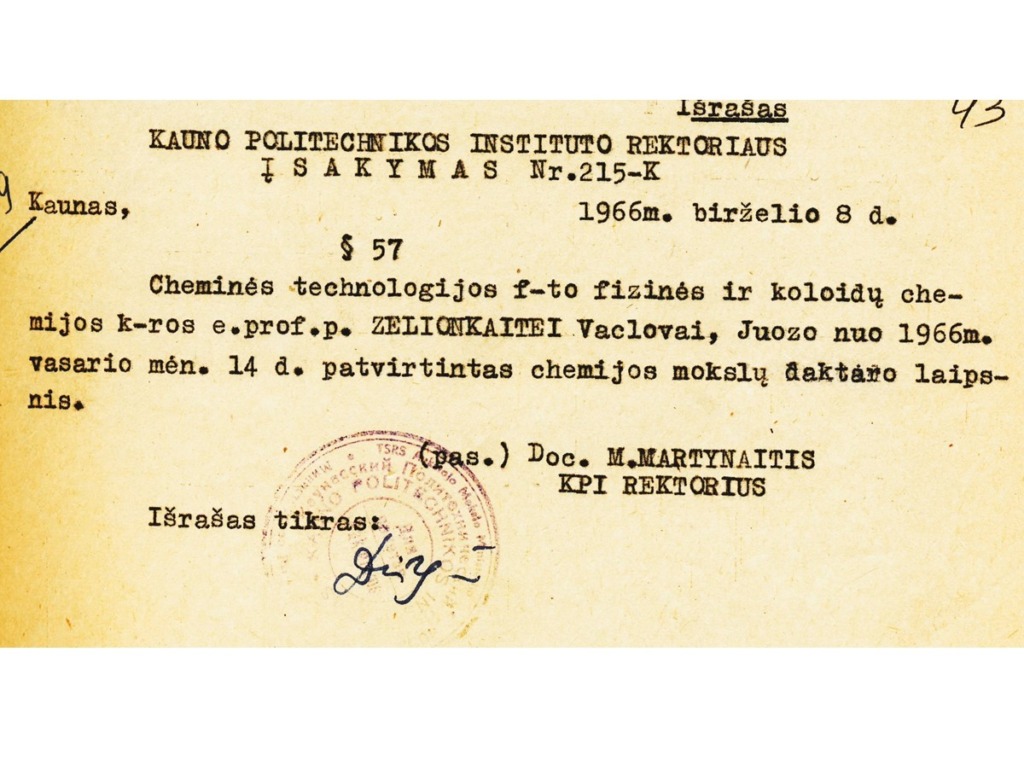
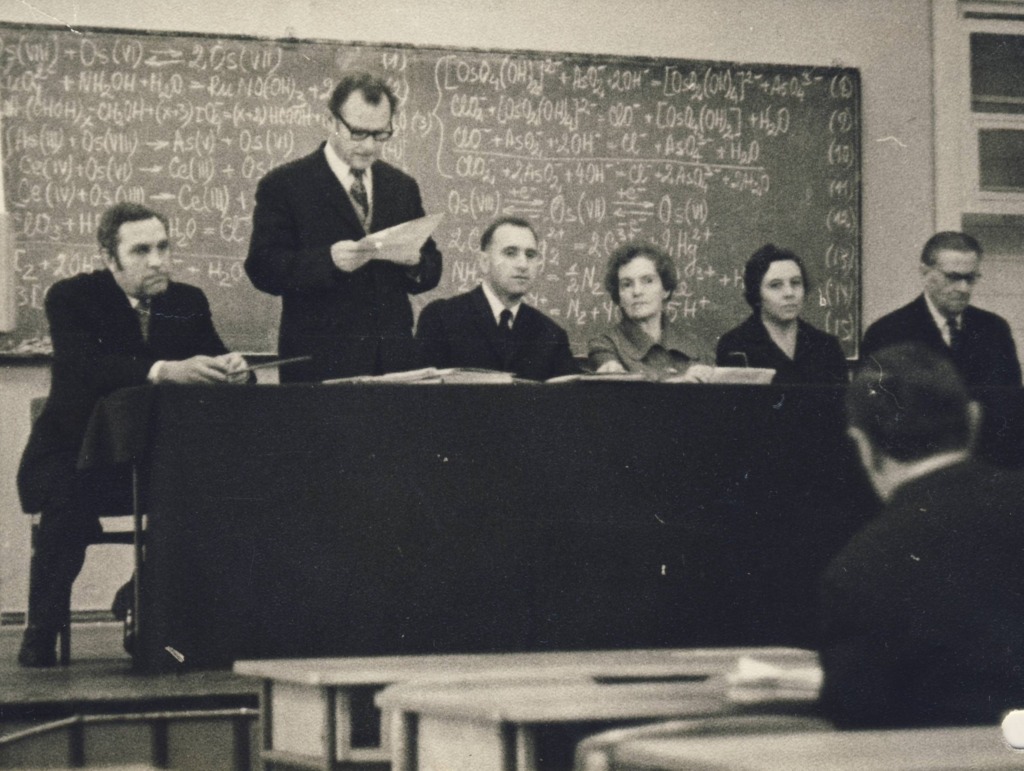
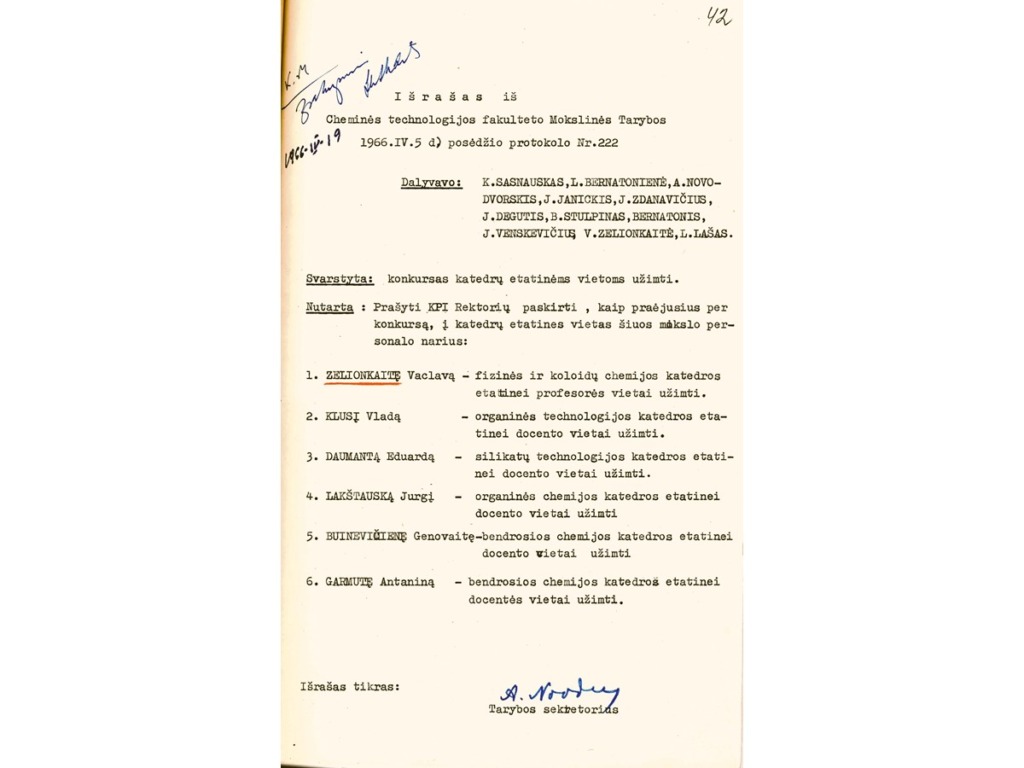
In 1955, V. Zelionkaitė defended her dissertation and was awarded the degree of Candidate of Chemical Sciences (now Doctor of Chemical Sciences), and in 1958, she was appointed Associate Professor. In 1964, she defended her doctoral dissertation in chemistry (equivalent to a habilitated doctorate as of 1993), titled “Research in the Field of Selenium Oxygen Acids.” She was the first woman in Lithuania to receive a doctoral degree. In 1968, she was awarded the title of professor. That same year, V. Zelionkaitė and a group of colleagues received a national award for their scientific work; in 1974, she was awarded the title of Distinguished Scientist of the Republic.

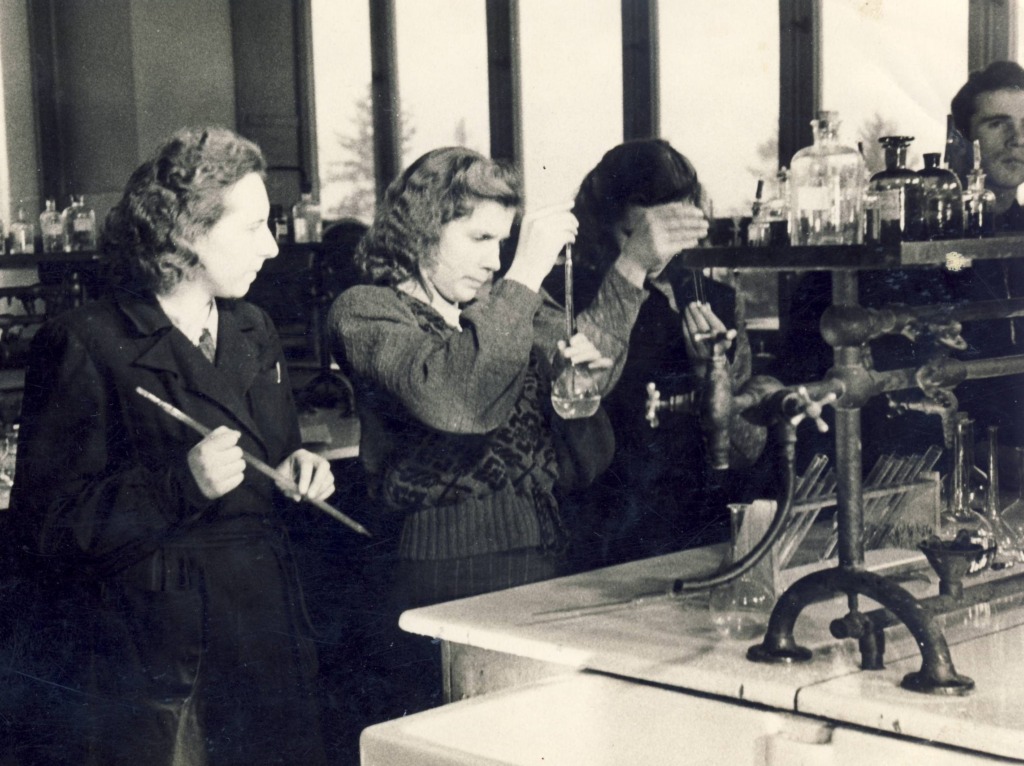
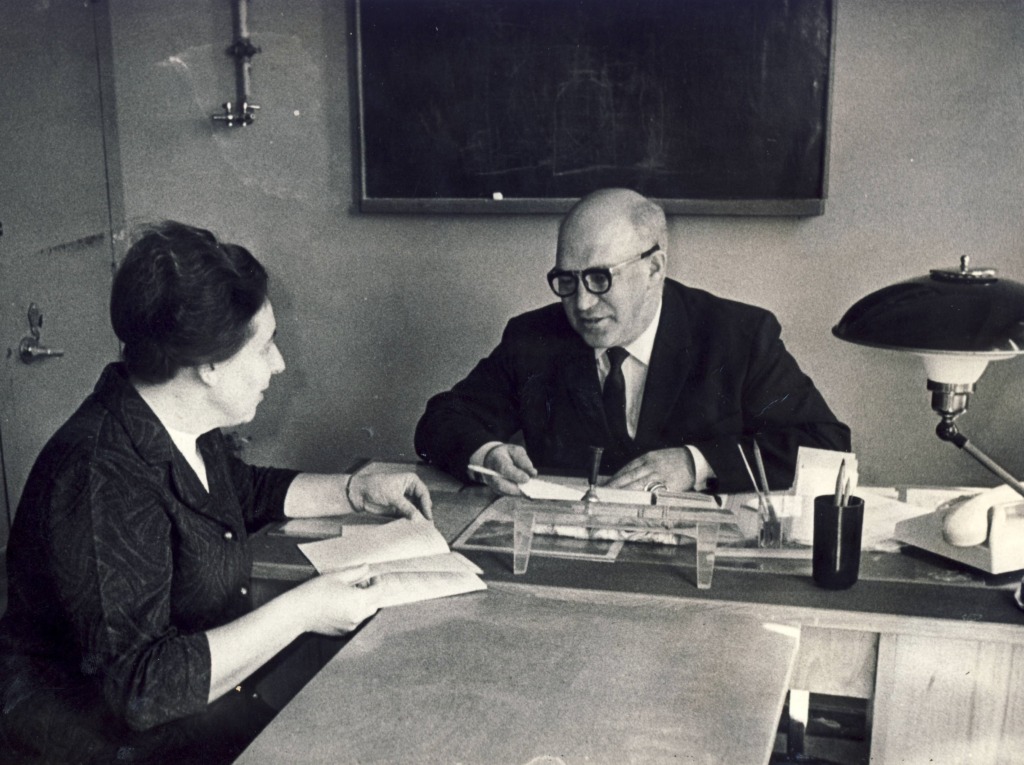
Prof. V. Zelionkaitė worked at the Department of Physical Chemistry until 1969. In this department, she taught courses in physical and colloid chemistry to students majoring in food technology, and courses on sulfuric acid and bound nitrogen technologies to students majoring in inorganic materials and chemical fertilizers; she led laboratory work in these disciplines, supervised diploma projects, and oversaw industrial internships. Prof. V. Zelionkaitė supervised the research work of 15 graduate students and colleagues. The scientific results obtained were summarized in dissertations or applied in production. She also supervised students’ scientific or educational research projects every year. In her memoirs, V. Zelionkaitė wrote about her work at this department:

“It was a very friendly group. It reminded me of the Dresden University of Technology, where Prof. J. Janickis had studied and about which he spoke at length. No one stuck to strict work schedules, but we worked until dusk. Between lectures and individually supervised lab work, there was still time to play a game of chess <…>.”
Head of the Department of Inorganic Chemistry

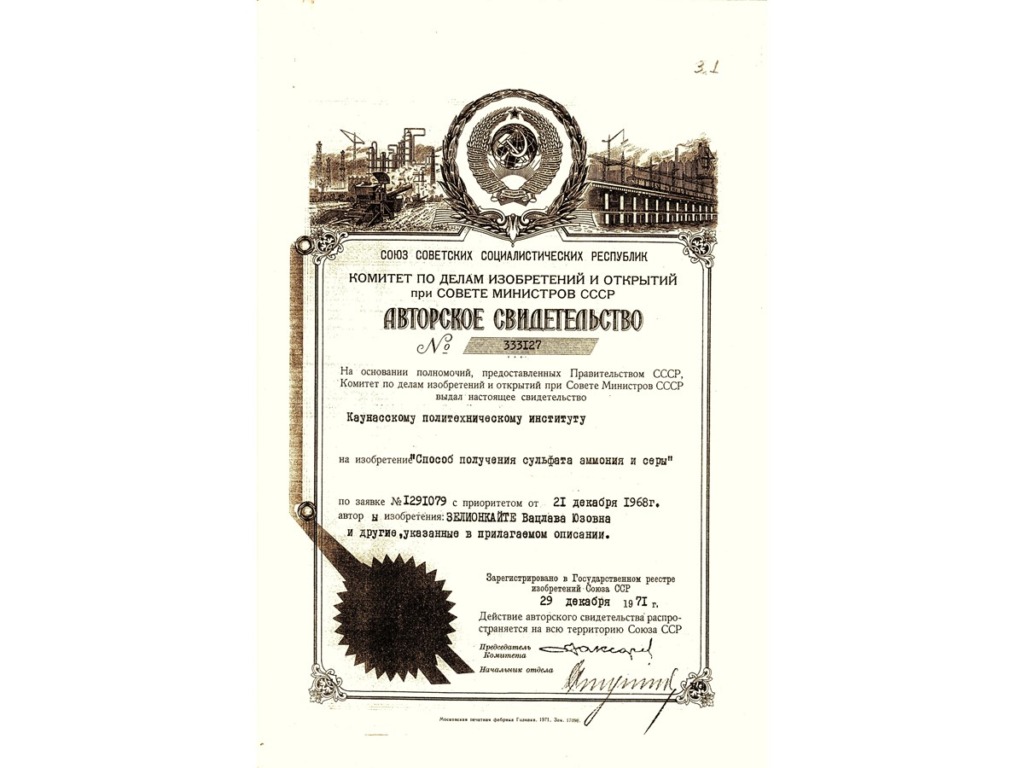
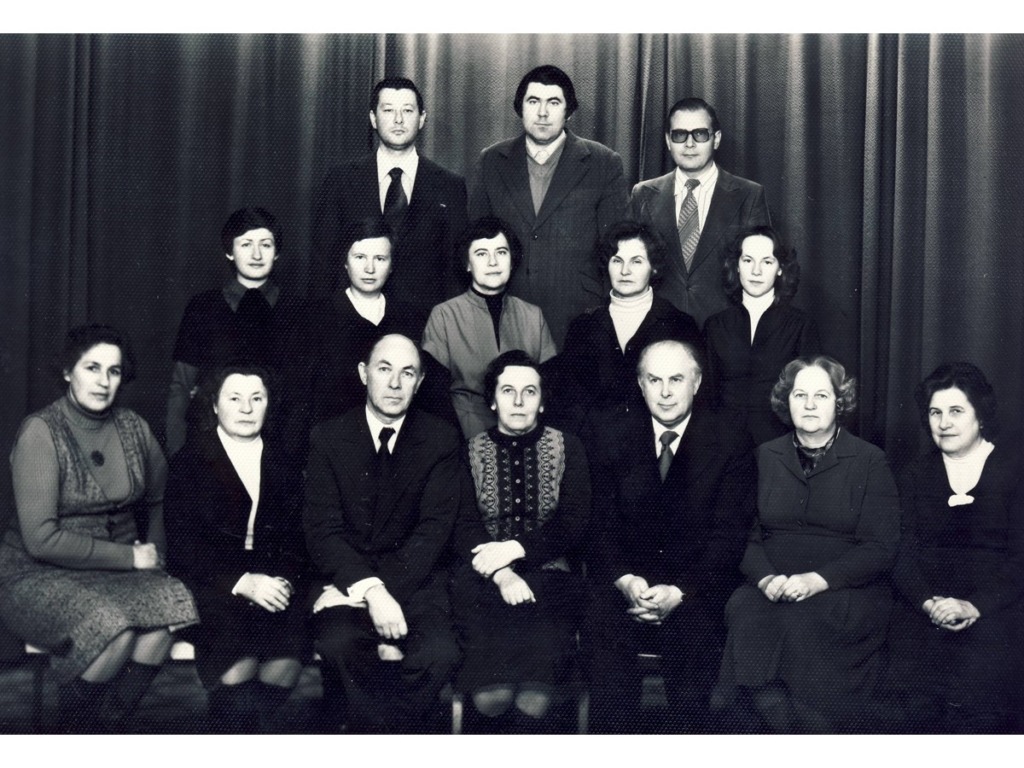
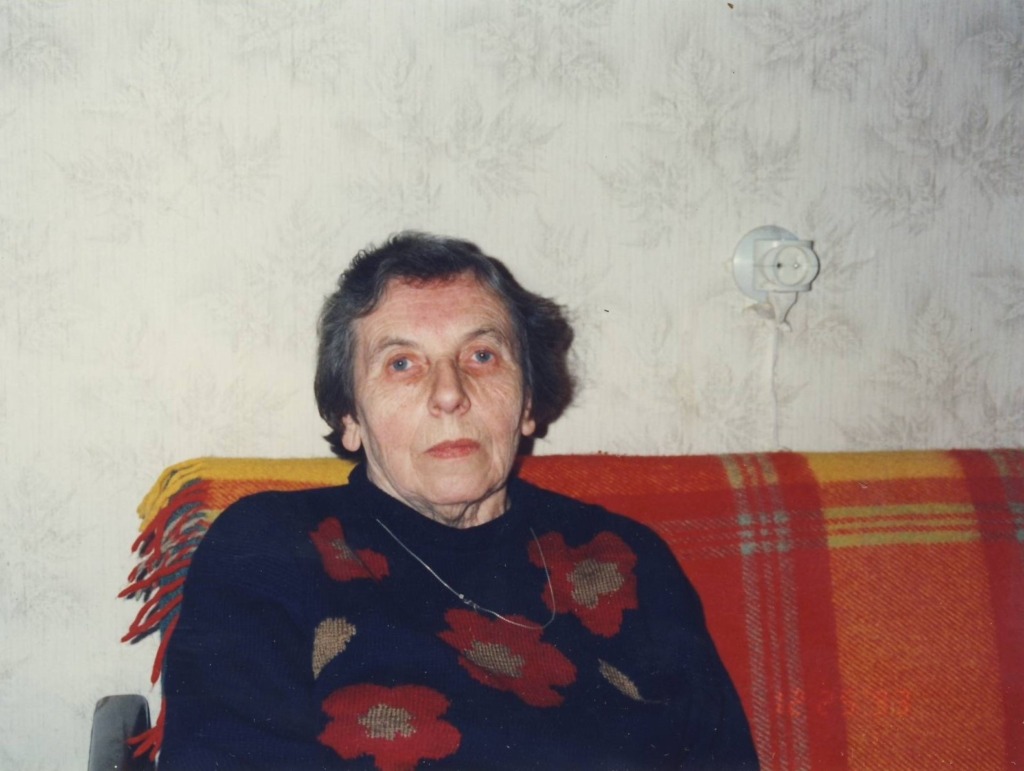
From 1969 to 1985, Prof. V. Zelionkaitė served as head of the Department of Inorganic Chemistry; she later became a professor in the department. In the Department of Inorganic Chemistry, she taught courses in general and inorganic chemistry and supervised laboratory and research work in these disciplines as well as in analytical chemistry. The main focus of Prof. V. Zelionkaitė’s scientific work was the chemistry of sulfur, selenium, tellurium, and arsenic compounds. Reactions were discovered that form oxygen acids containing these elements, and their properties and transformations were investigated. These compounds were isolated in the form of salts of sodium and potassium, as well as chromium and cobalt complex cations. Approximately 50 new inorganic compounds were obtained. Some of them are biologically active. Polythionates and selenopolythionates are sorbed by polyamides and other plastics. This allowed these compounds to be used in the preparation of conductive and semiconductive films on certain plastics. V. Zelionkaitė oversaw economic contracts with domestic and foreign (Polish) factories and research institutes. She prepared and published teaching materials: “Production of Sulfuric Acid” (1968), and, with co-authors, “Laboratory Work in Physical Chemistry,” “Lecture Notes on Inorganic Chemistry (Part I – 1972, Part II – 1975), “Laboratory Work in General and Inorganic Chemistry” (1972–1997 – 6 editions), and the textbook “General and Inorganic Chemistry” (1995). Together with her co-authors, she published over 150 scientific articles and received 7 copyright certificates. In 1992, the professor retired but continued her scientific work as a member of doctoral committees, advising former students, and reviewing colleagues’ scientific articles. Prof. V. Zelionkaitė passed away on August 13, 2017, and was buried in Kaunas. Her message to her colleagues remains in the department’s album:

“One of life’s greatest joys is creative work. When you go to work as if it were a celebration, you eagerly await the moment when you can put into practice or test the ideas you’ve been mulling over all night, discover a compound that no one has seen before, or observe a reaction that no one has ever carried out. You look forward to the moment when you can meet young people to whom you can pass on your knowledge, inspiring them with a desire to pursue progress, goodness, and beauty. I have lived such a life, and for it I am grateful to Fate. I wish such a life for those who will live after me.”
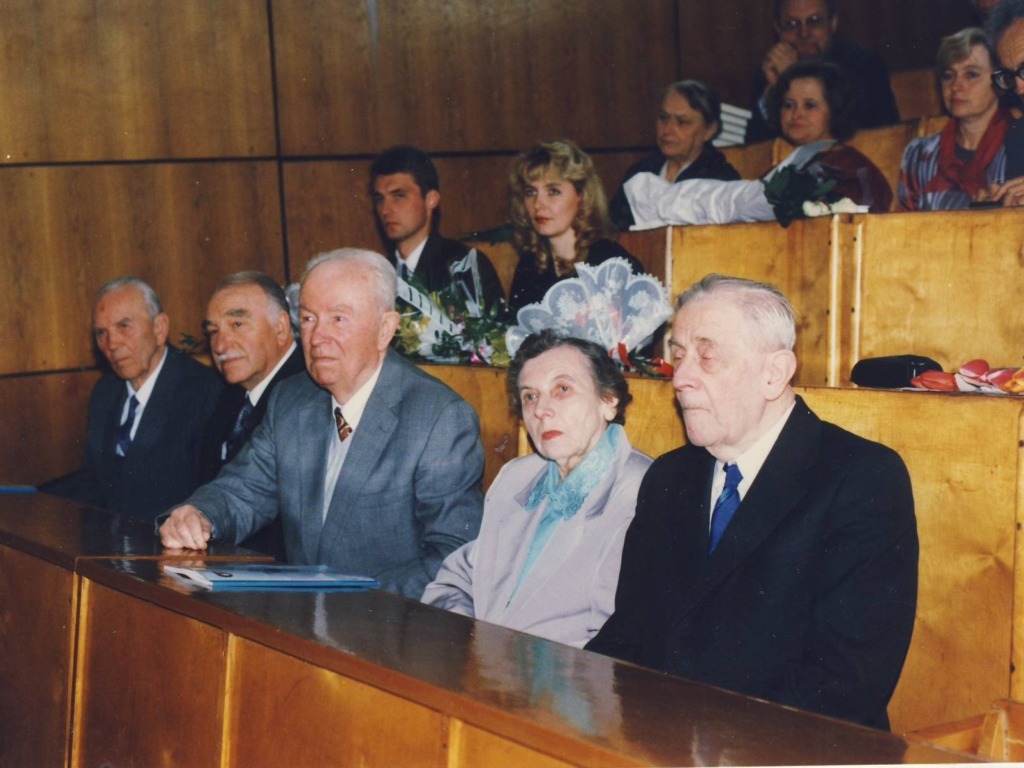
Leisure

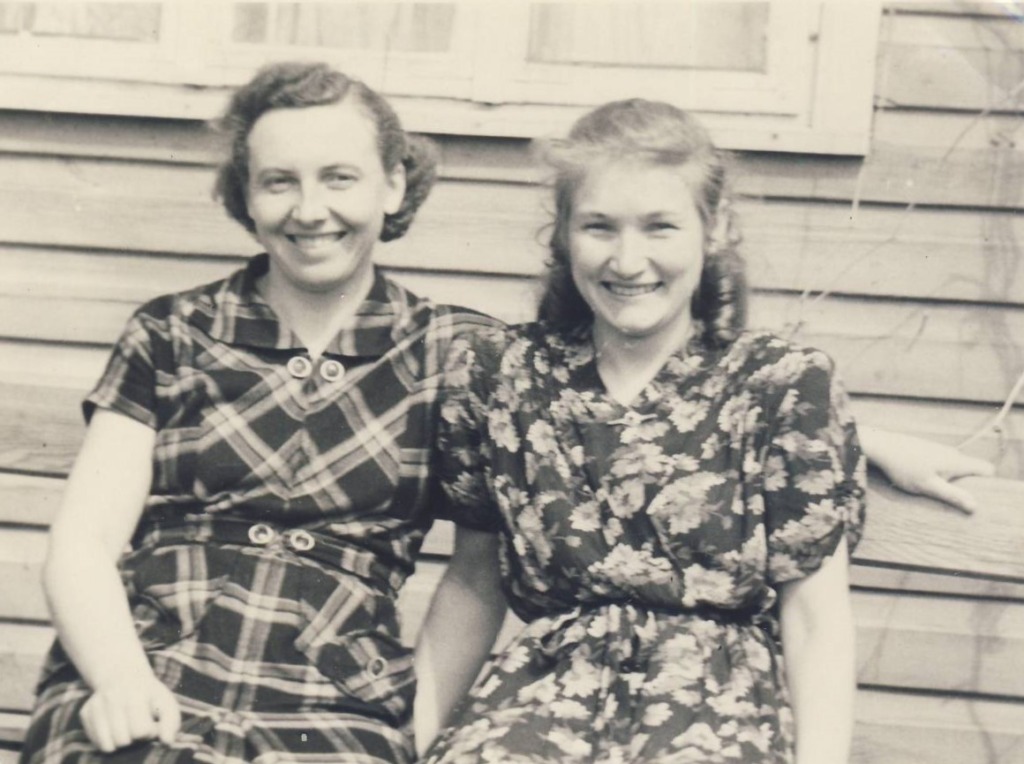
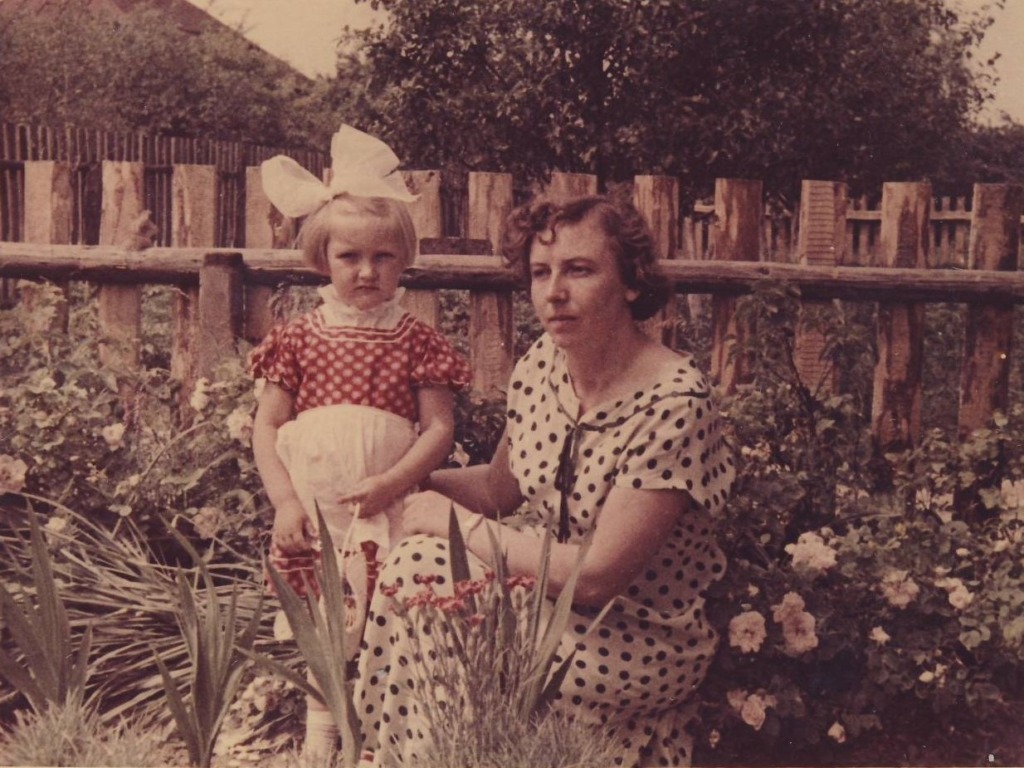
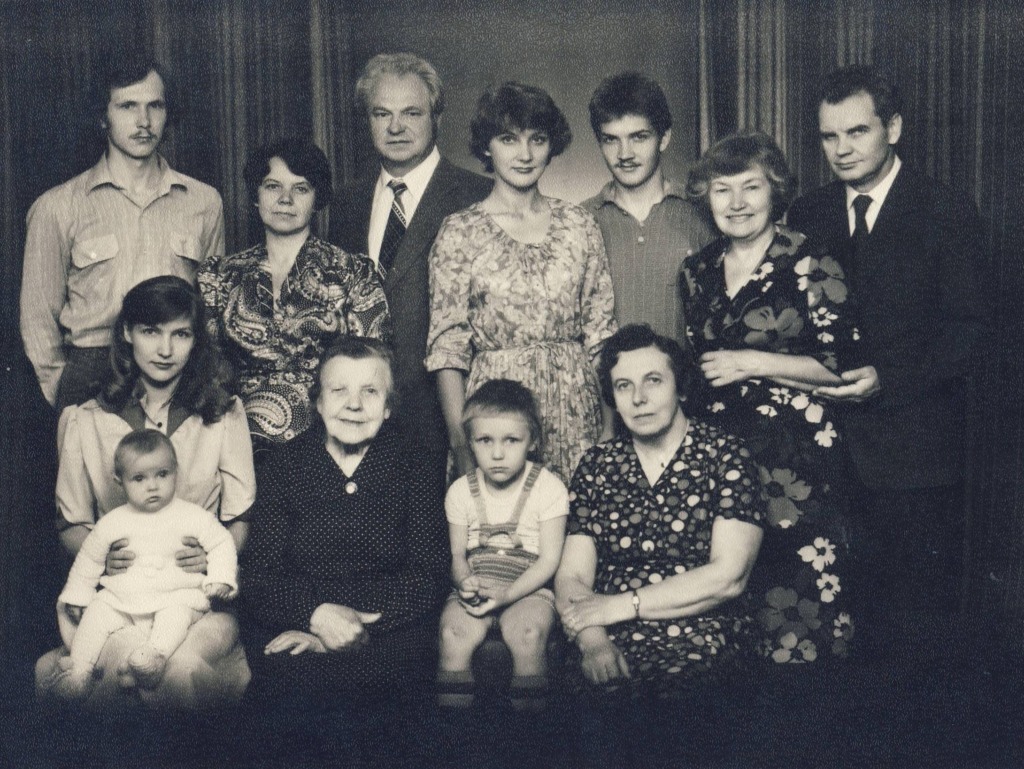
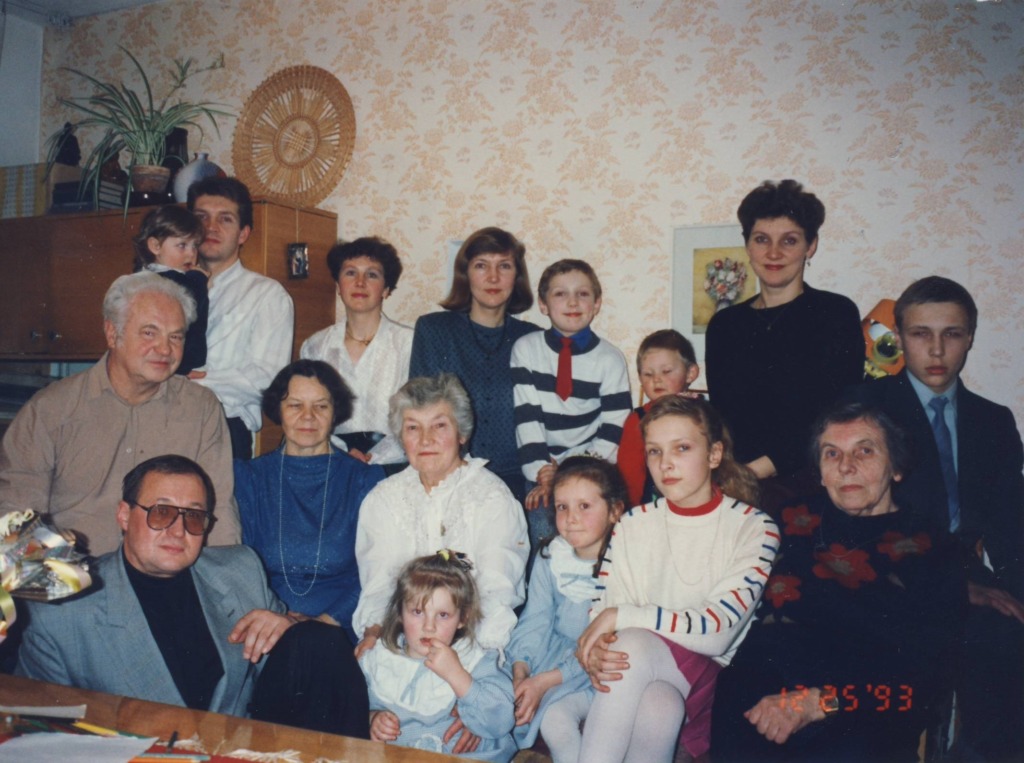
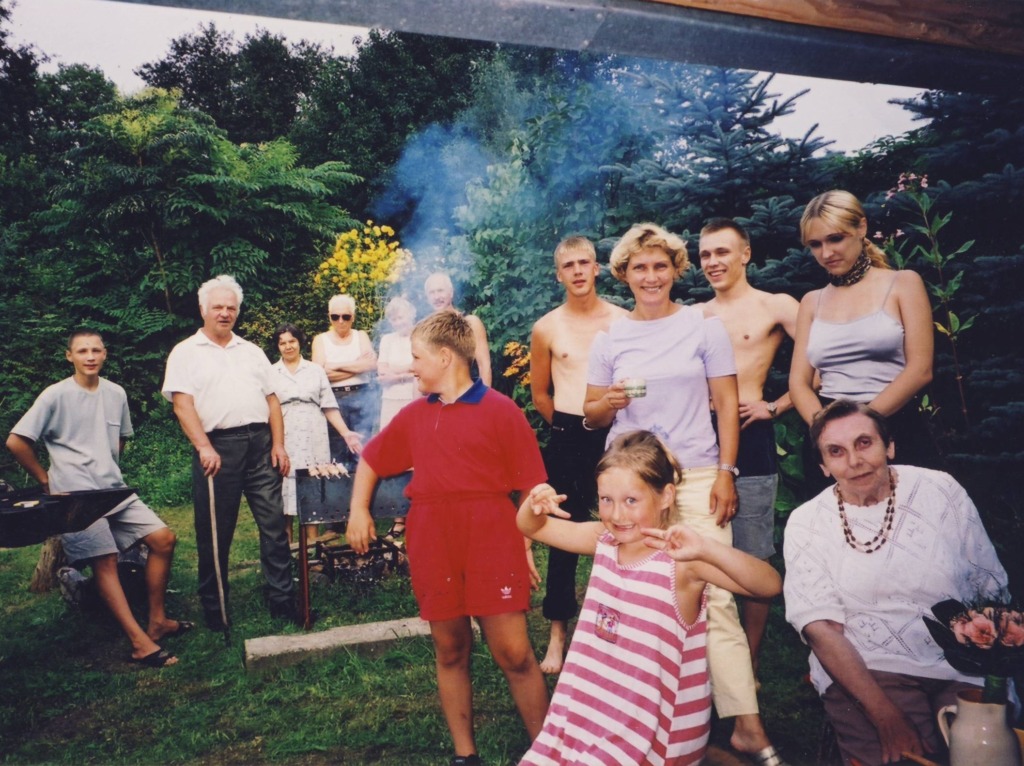
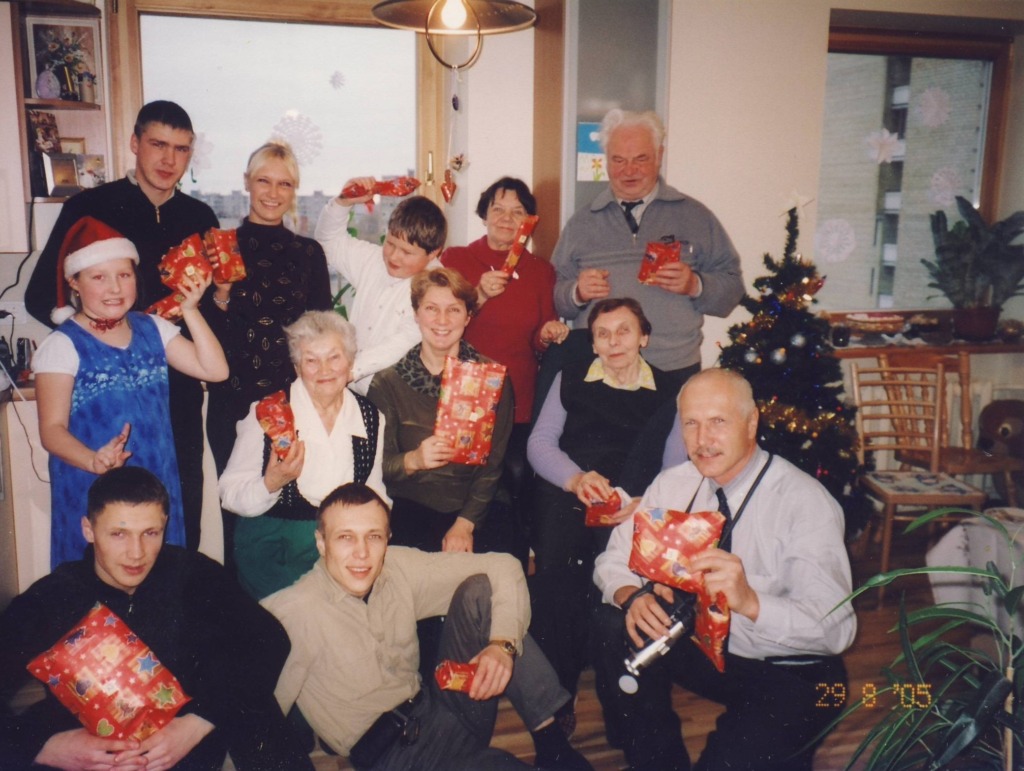
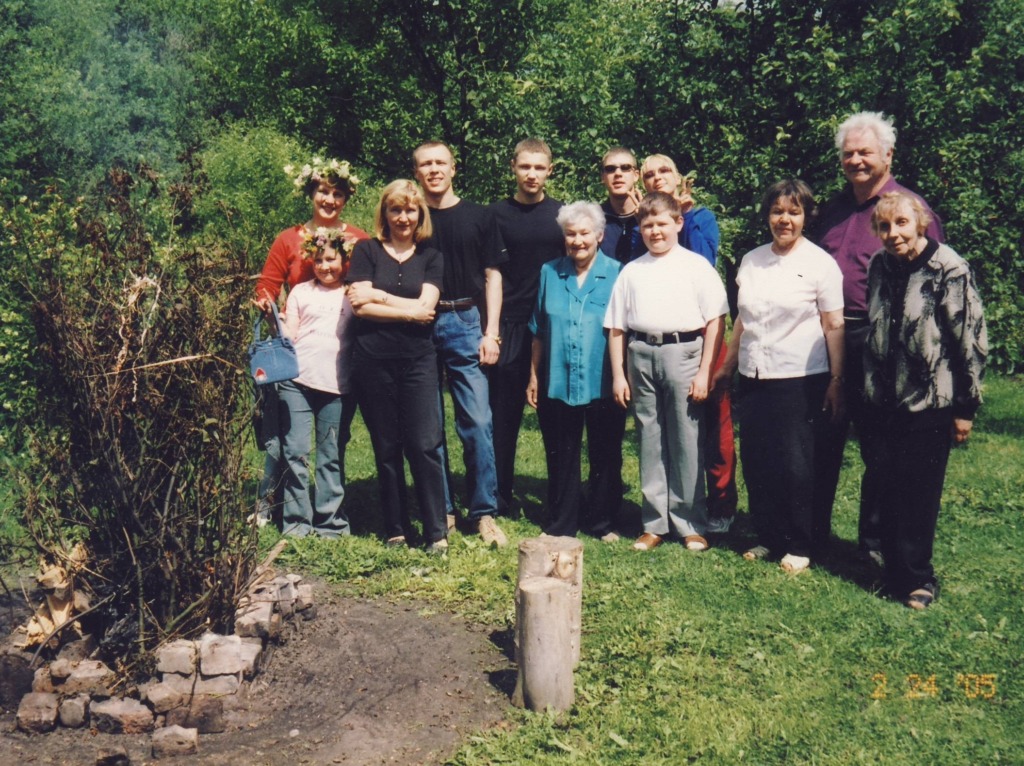
From an early age, V. Zelionkaitė read a lot, was an excellent student, and took an interest in the world, nature, animals, and plants. She always had something interesting to share and knew how to listen to others. To her loved ones, V. Zelionkaitė was a role model and a source of inspiration. She saw the positive, promising aspects of life, motivated others to engage in meaningful activities, and brought people together. Friends, colleagues, and relatives would often gather in the professor’s home and garden for pleasant get-togethers. After retiring, Prof. V. Zelionkaitė advised colleagues and students, wrote memoirs about former colleagues and relatives, and compiled summaries of scientific works.