Skip to content

140th Anniversary of the Organiser of the Lithuanian Higher Education Prof. Zigmas Žemaitis

140th Anniversary of the Organiser of the Lithuanian Higher Education Prof. Zigmas Žemaitis

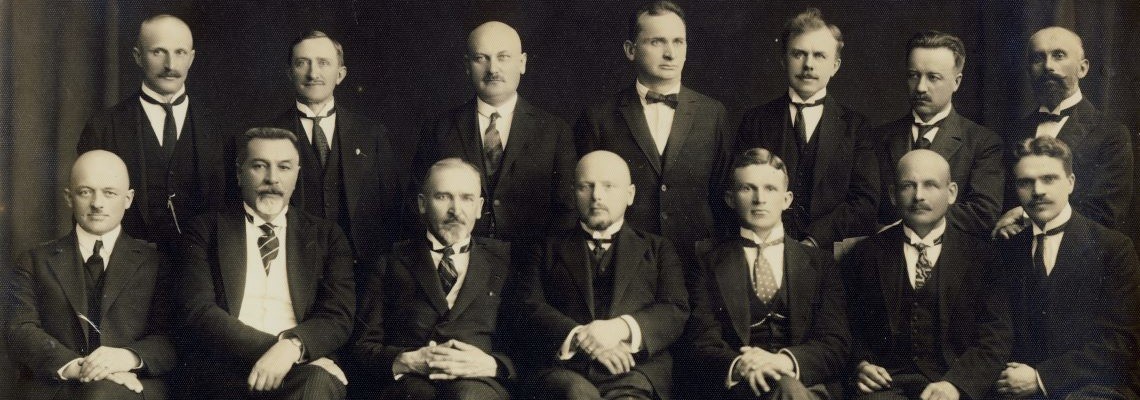
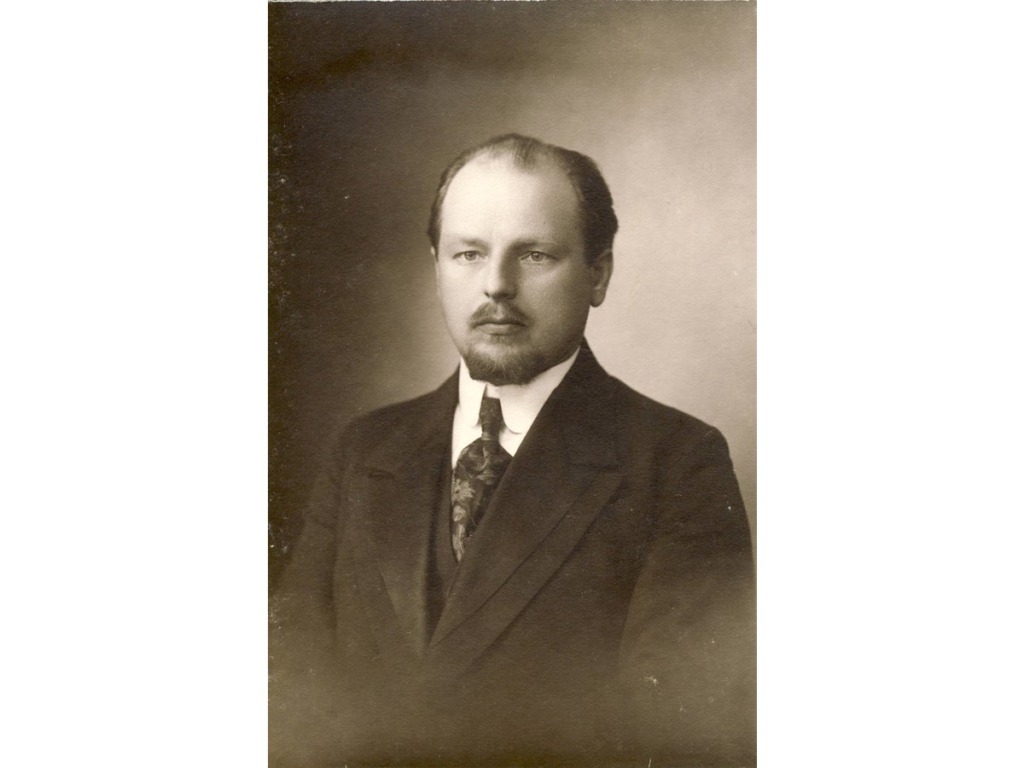
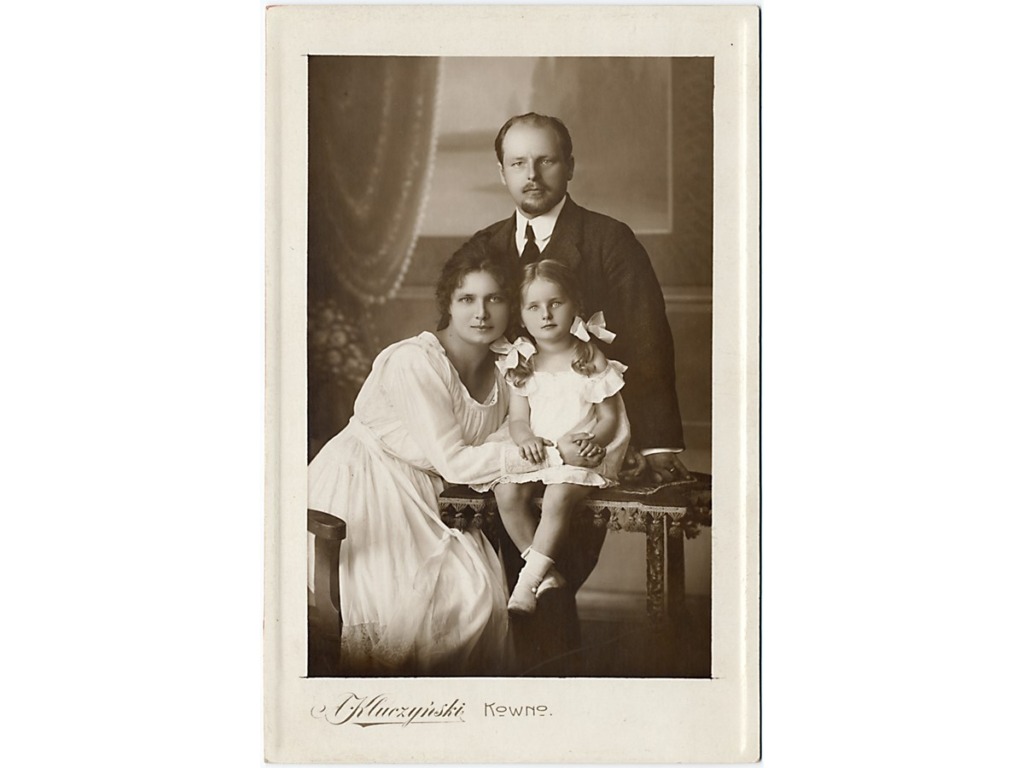
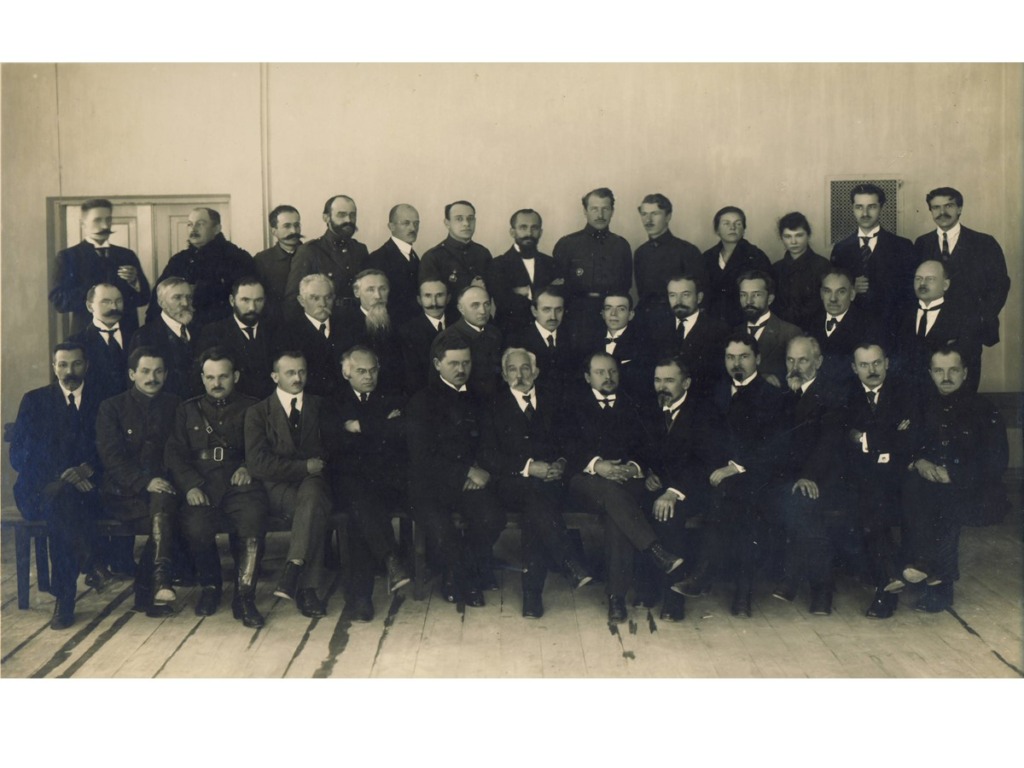
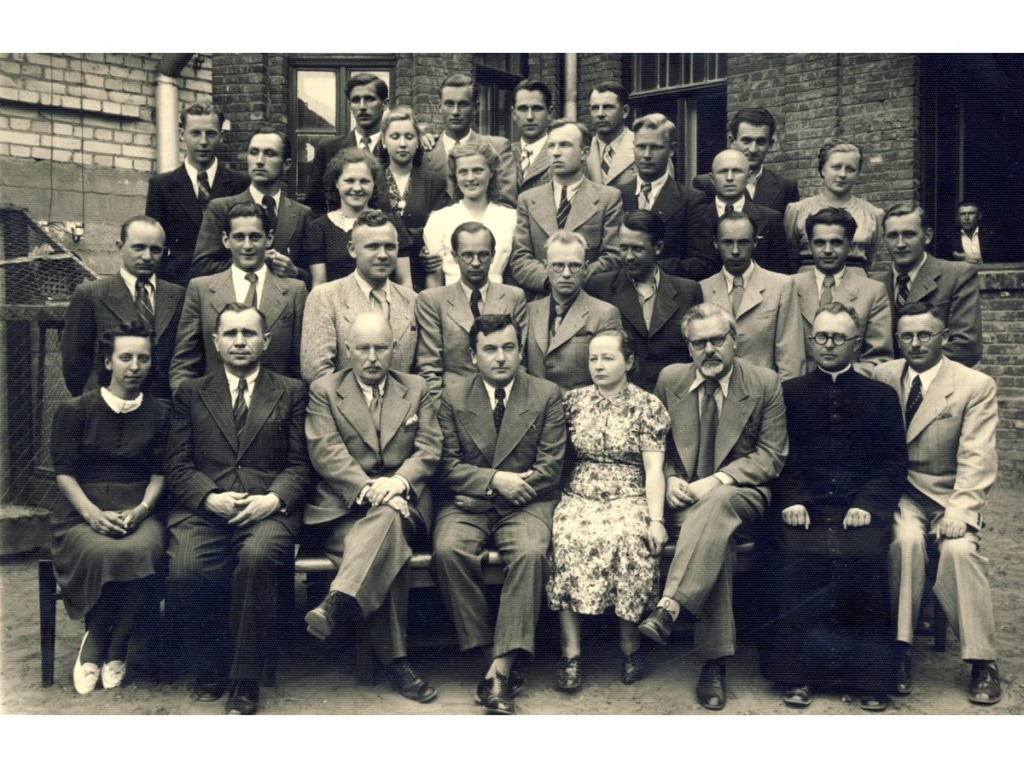
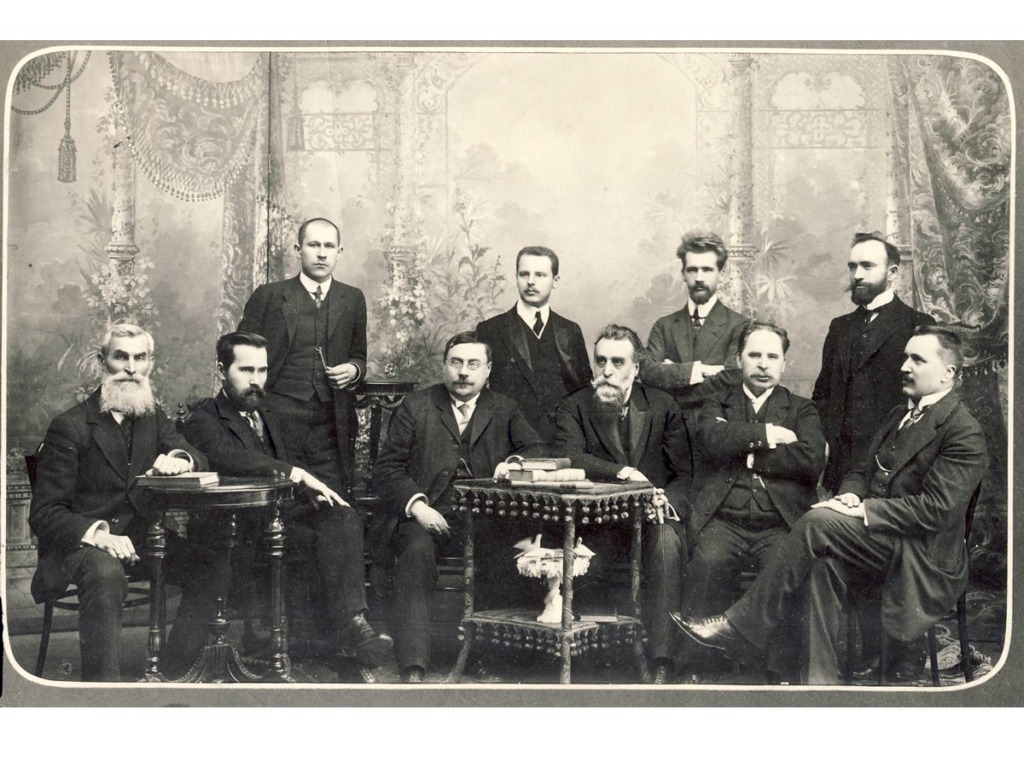
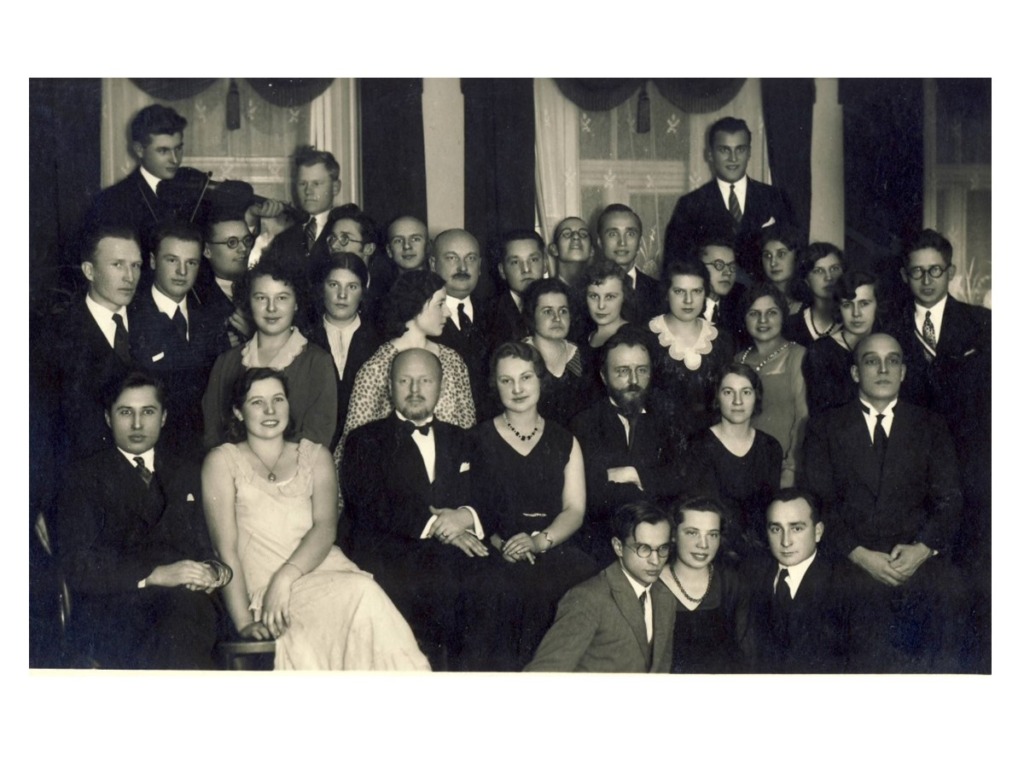
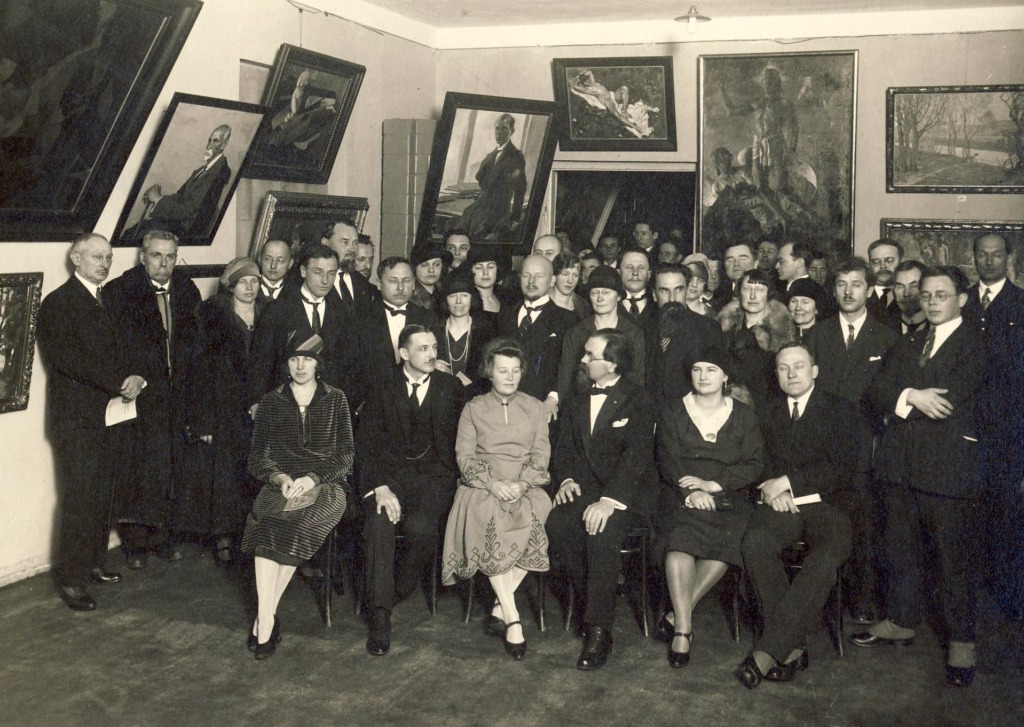
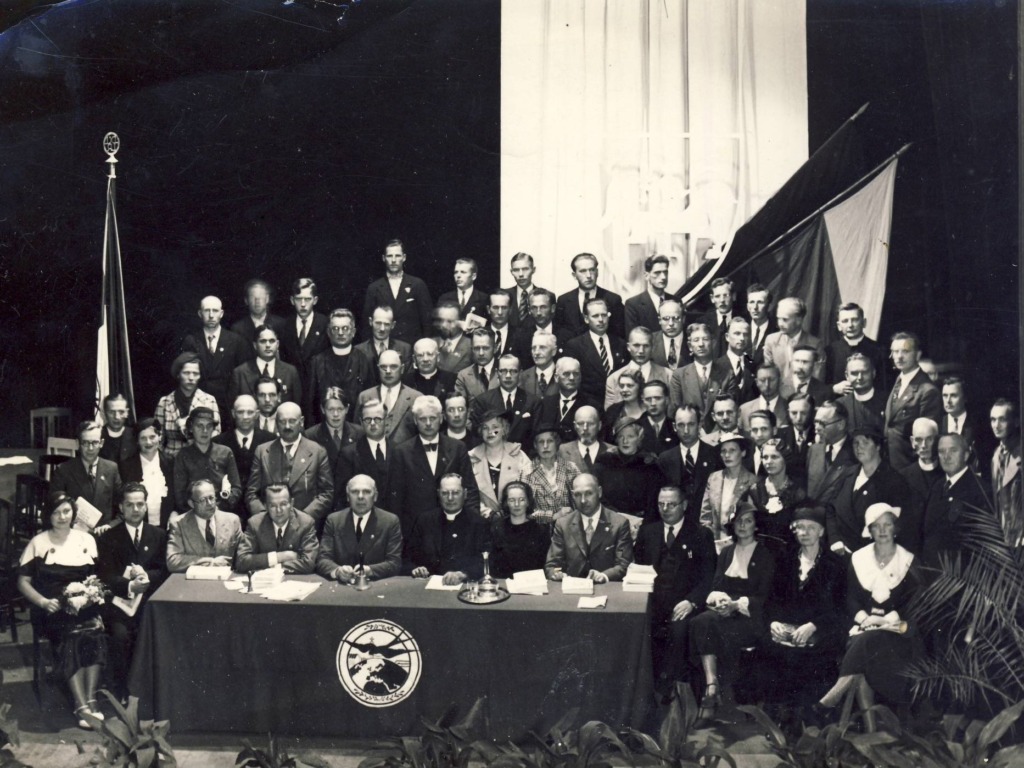
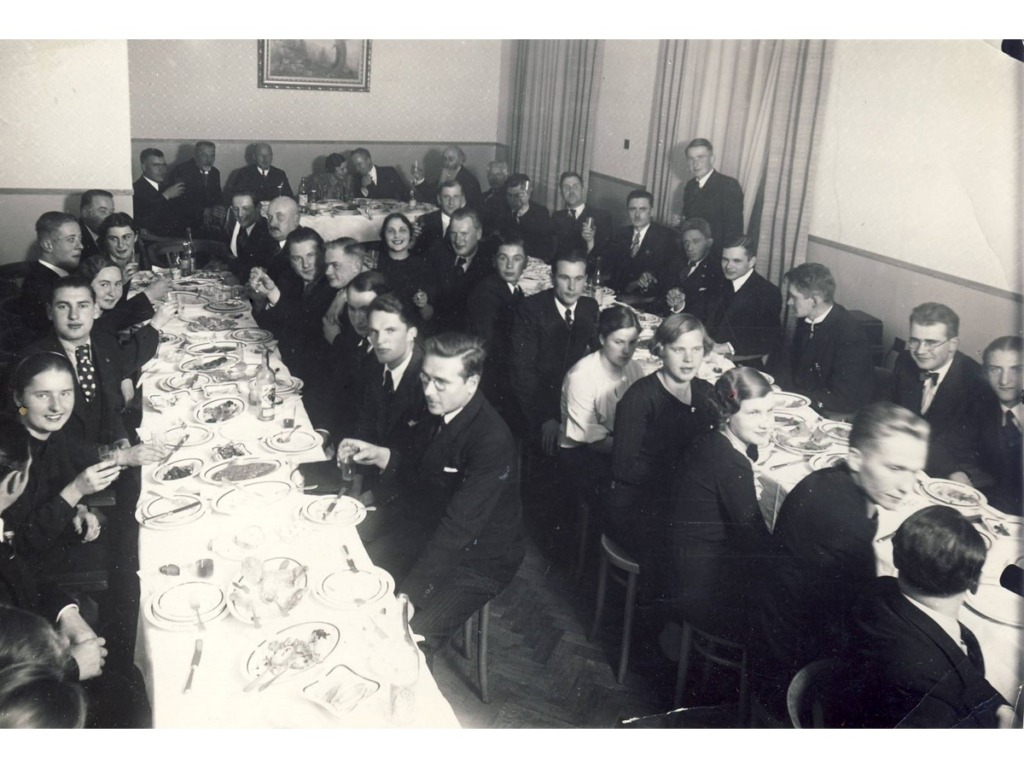
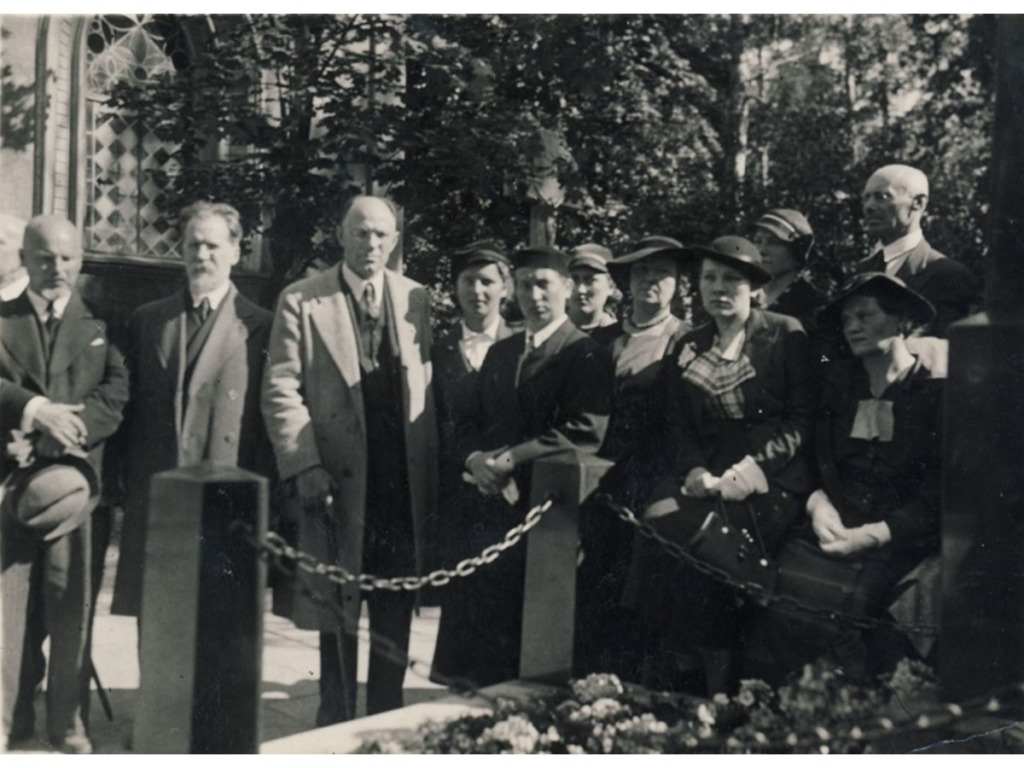
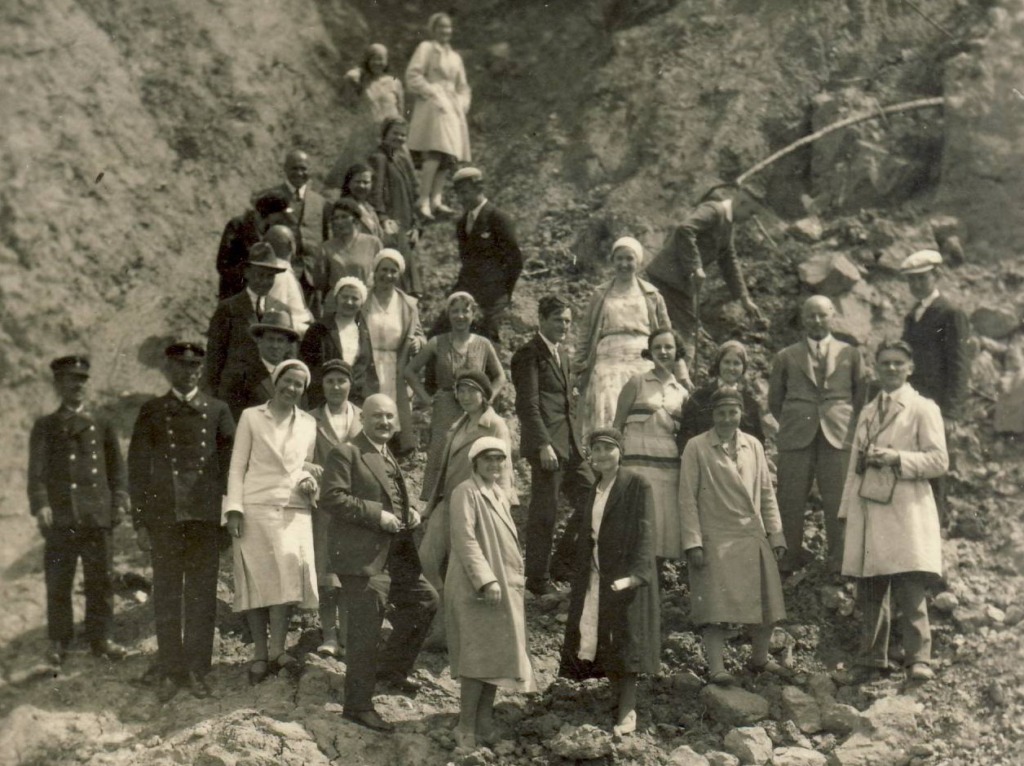
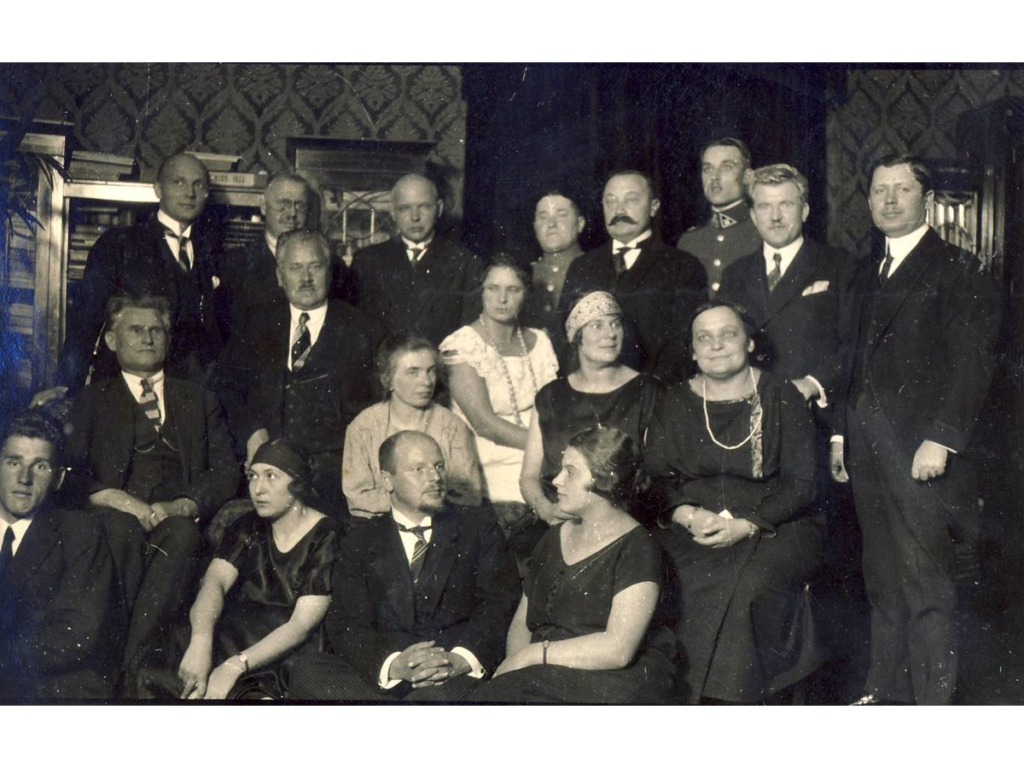
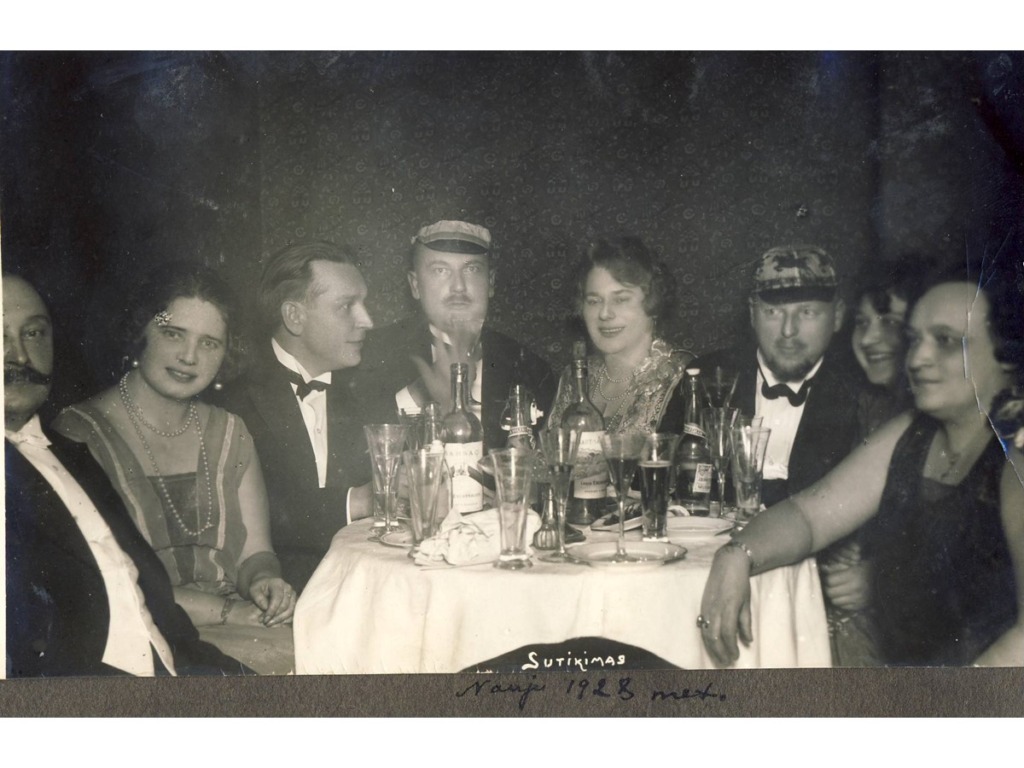
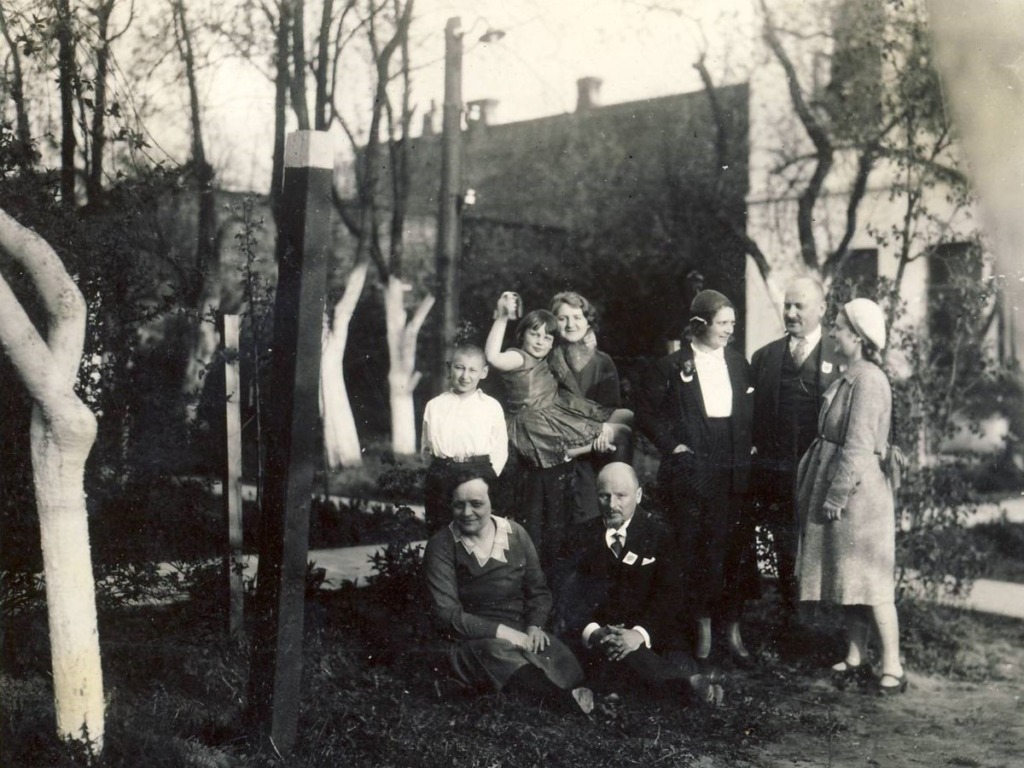
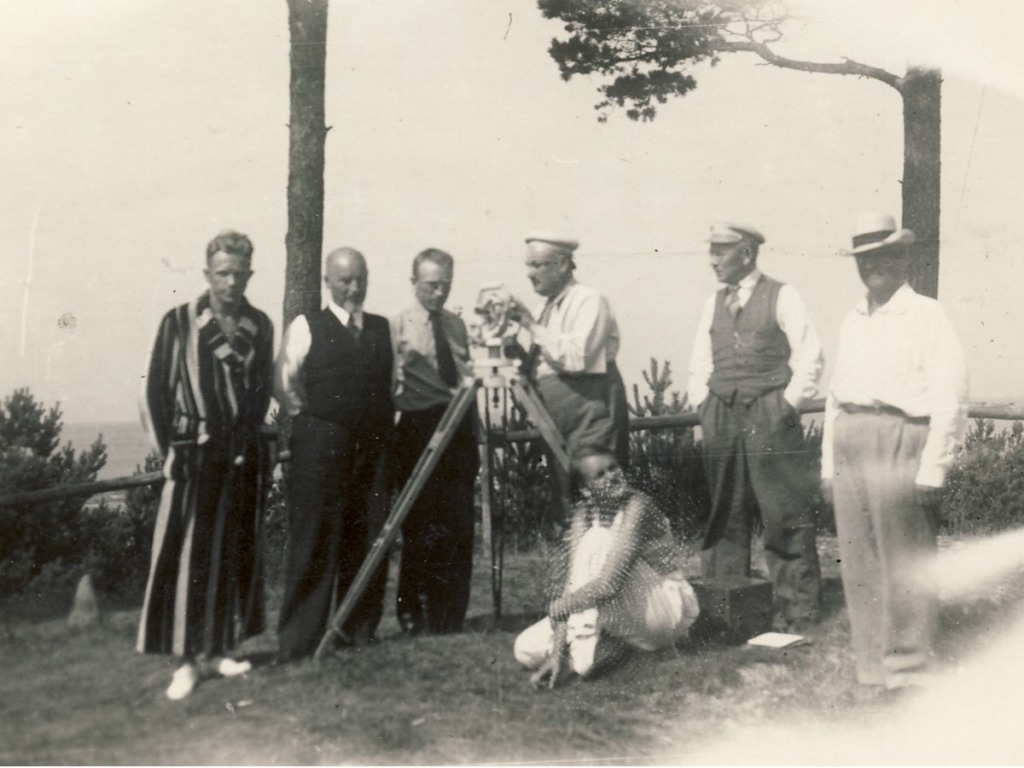
8 November marks the 140th anniversary of Professor Zigmas Žemaitis, the patriarch of Lithuanian mathematicians and the organiser of national higher education, who was born in Švenčionys Region. The main goal in the life of Prof. Z. Žemaitis was the restoration and preservation of Lithuanian statehood and the cultural and economic prosperity of the Lithuanian nation. From his youth, Z. Žemaitis was distinguished by his creativity, diligence, respect for people, friendliness, selflessness and extraordinary organisational skills. Z. Žemaitis gathered around him a nucleus of people who, under extremely difficult conditions, carried out works of extraordinary significance for Lithuania. On the occasion of this anniversary, Head of KTU Museum Dr. Audronė Veilentienė prepared a 2-part virtual exhibition “140th Anniversary of the Organiser of the Lithuanian Higher Education Prof. Zigmas Žemaitis”. The exhibition reflects the work of Prof. Z. Žemaitis in Kaunas, temporary capital of Lithuania. The first part, “The goal is to restore the university”, illustrates the work of Prof. Z. Žemaitis in the establishment of the Higher Courses in Kaunas and the Faculty of Mathematics and Nature at the University of Lithuania. The second part presents his leisure and public activities. The exhibition uses documents, publications and photographs from KTU Museum and KTU Library.

The Goal is to Restore the University

Zigmas Žemaitis was born on 8 November 1884 in Daktoriai Village, Tverečius Volost, into a large peasant family where he was the eighth of nine children. In 1896, he graduated from the three-grade Russian Primary School in Tverečius. With the help of his older brother Ludvikas, Zigmas passed his matriculation examinations and was admitted to Novorossiysk University (Odessa) to study mathematics. After graduating from the university in 1909, he returned to Lithuania and began teaching mathematics in Vilnius gymnasiums. At the beginning of the First World War, having already started a family, he found himself in Voronezh with a large group of Lithuanian refugees, where he taught in a boys’ gymnasium. In 1919, Z. Žemaitis established and headed a Lithuanian Gymnasium in Švenčionys. At the same time, he worked on the commission for the restoration of Vilnius University. In April 1919, after the Bolsheviks withdrew from Švenčionys, he was elected the burgomaster of the town, but when the army of L. Želigovskis occupied Vilnius and Vilnius Region in autumn 1919, Z. Žemaitis and his family moved to Kaunas, where he was elected the director of the Commercial School by the committee of the public Commercial Society.

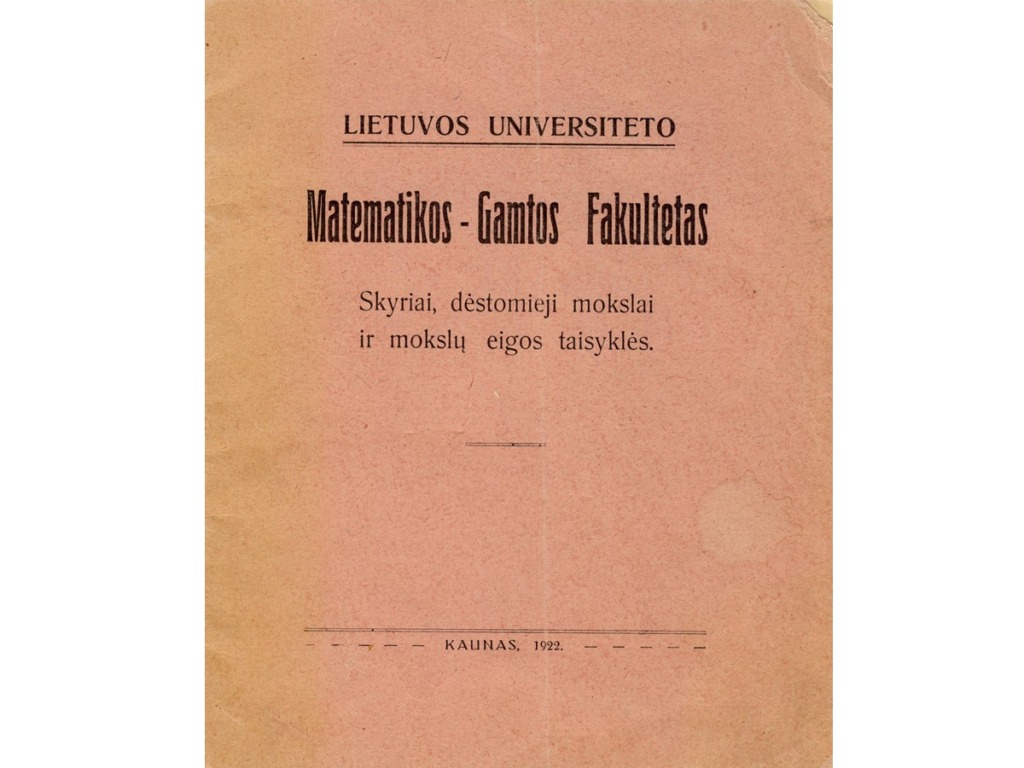
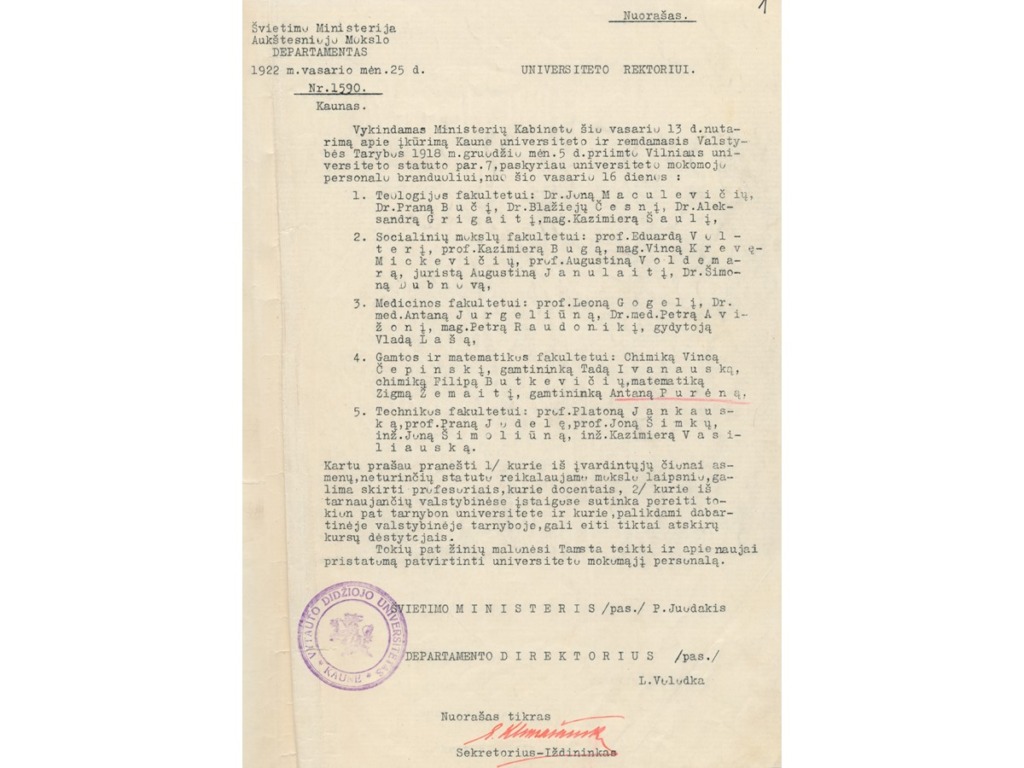
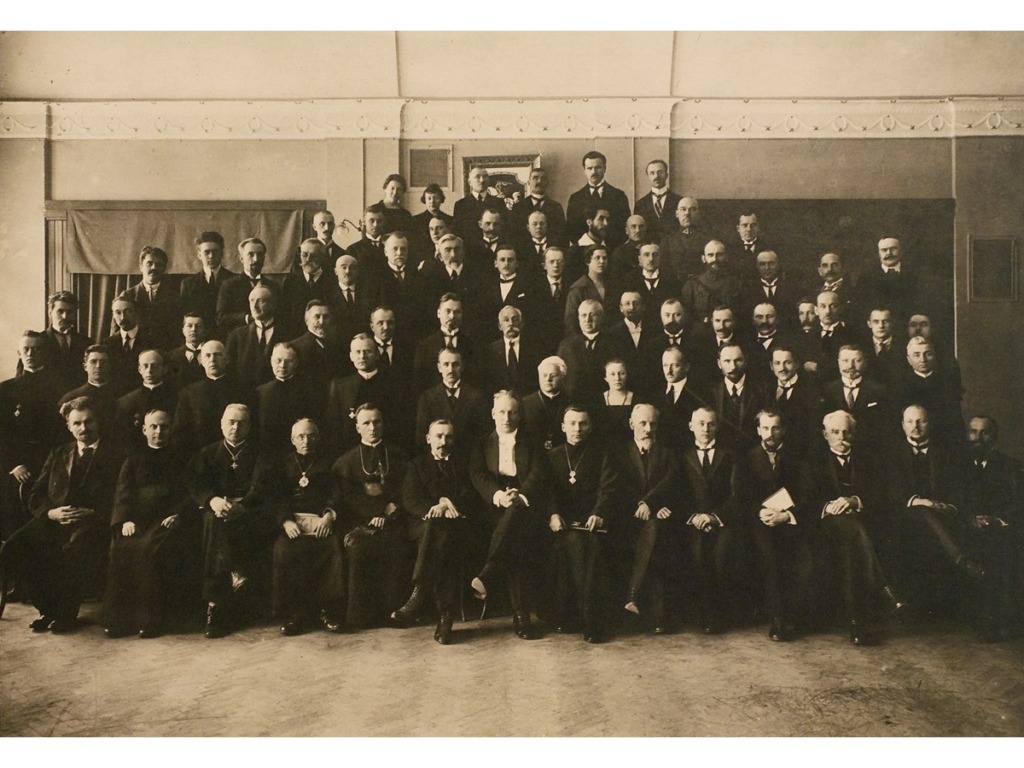
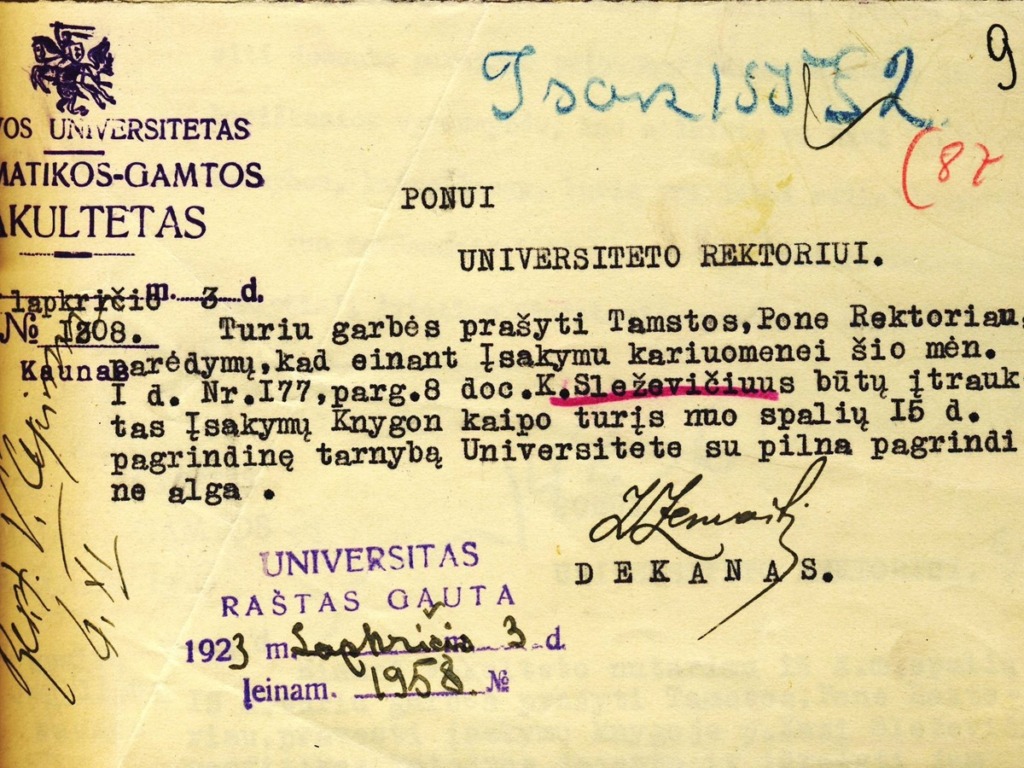
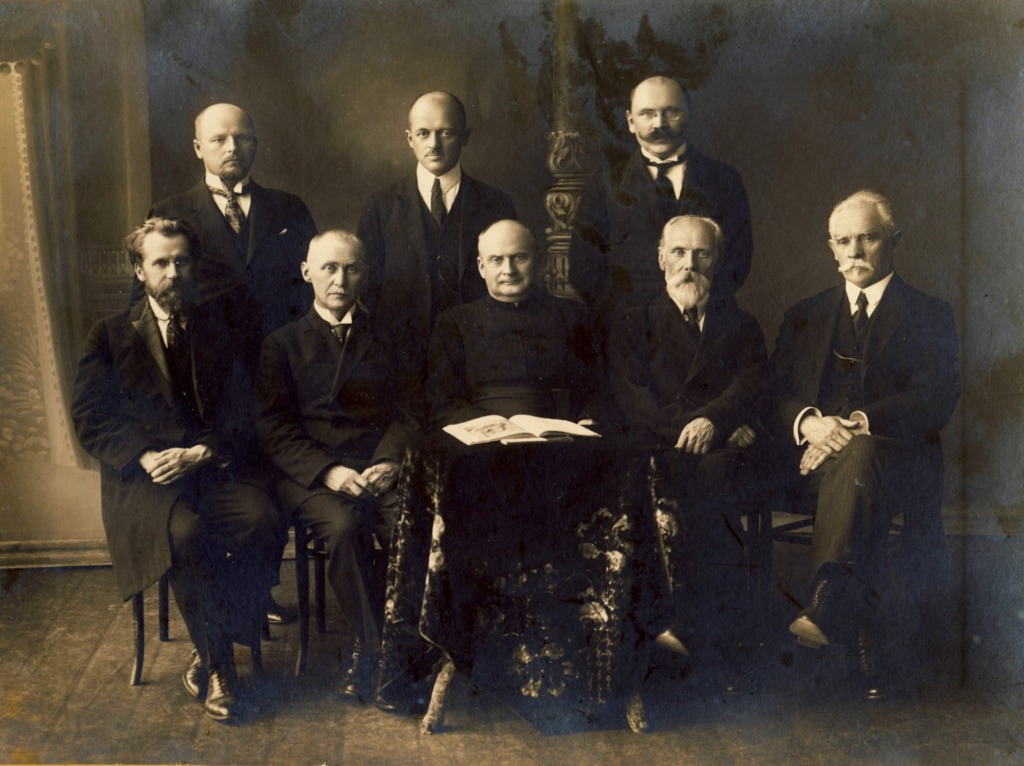
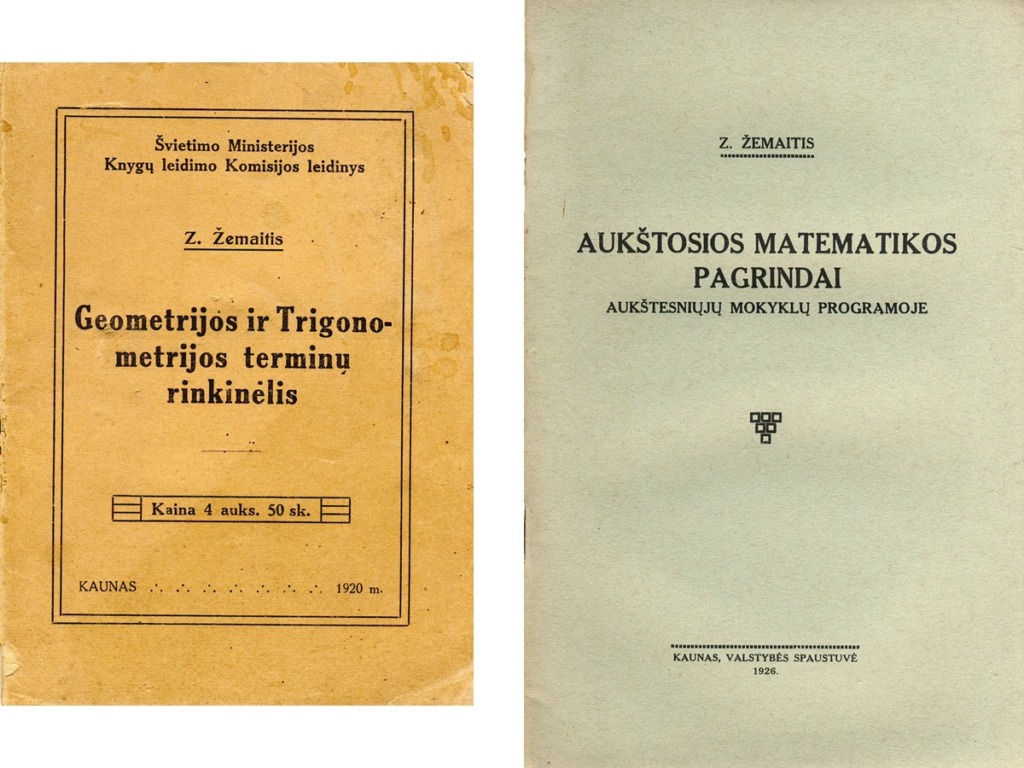
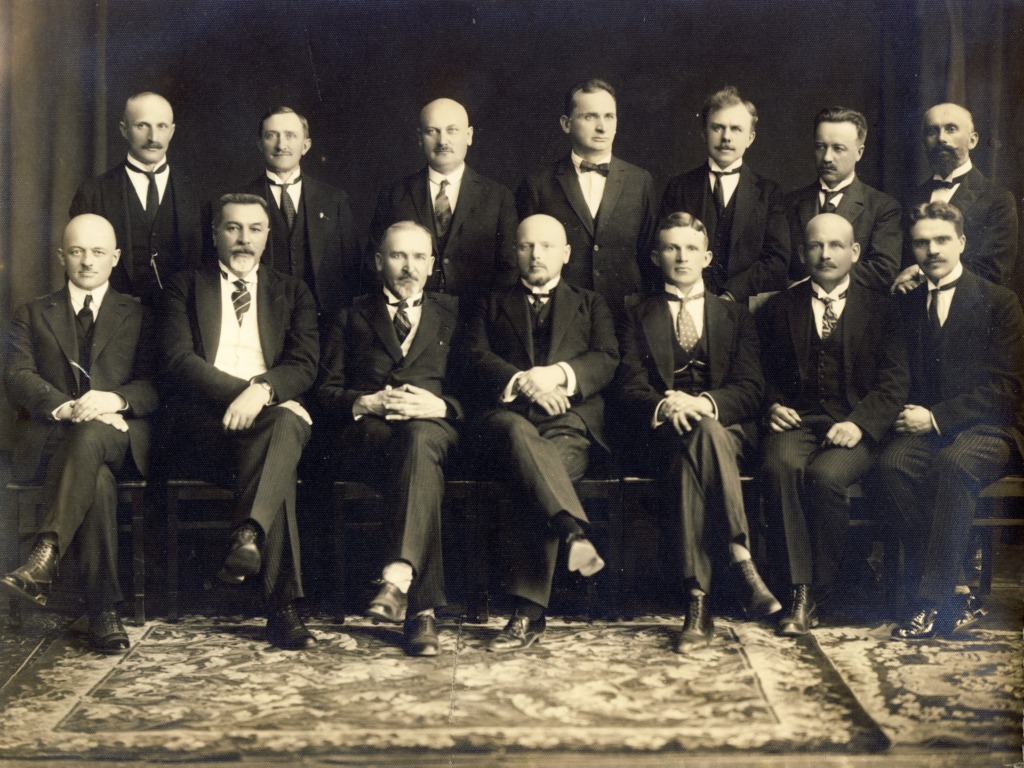
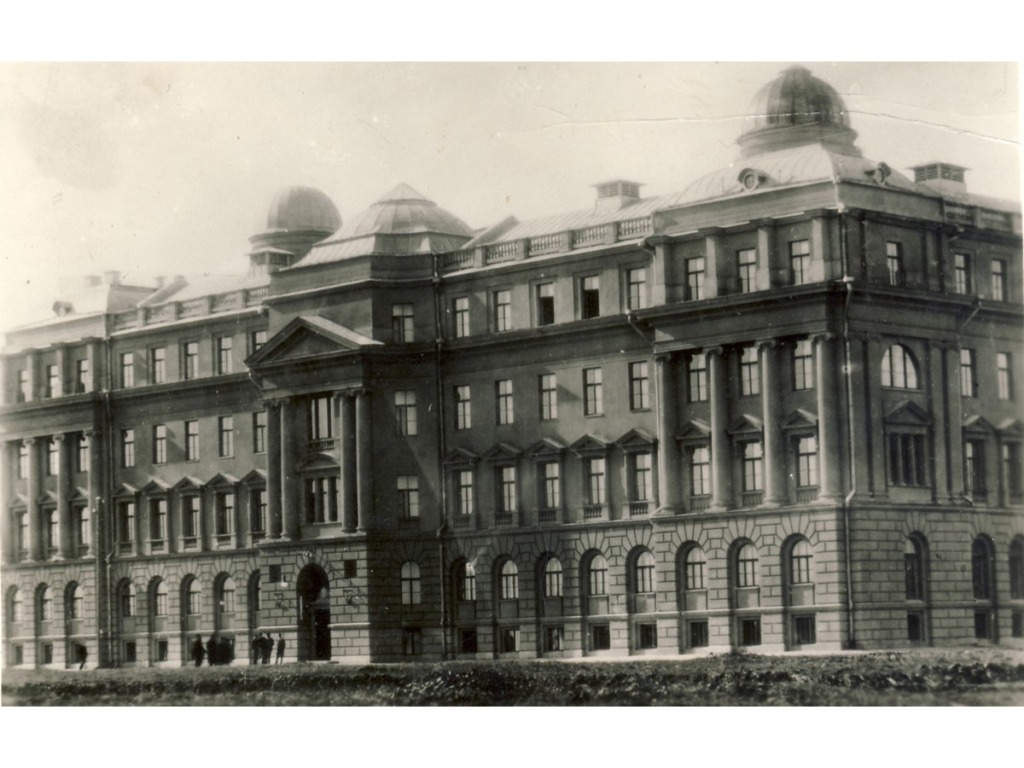
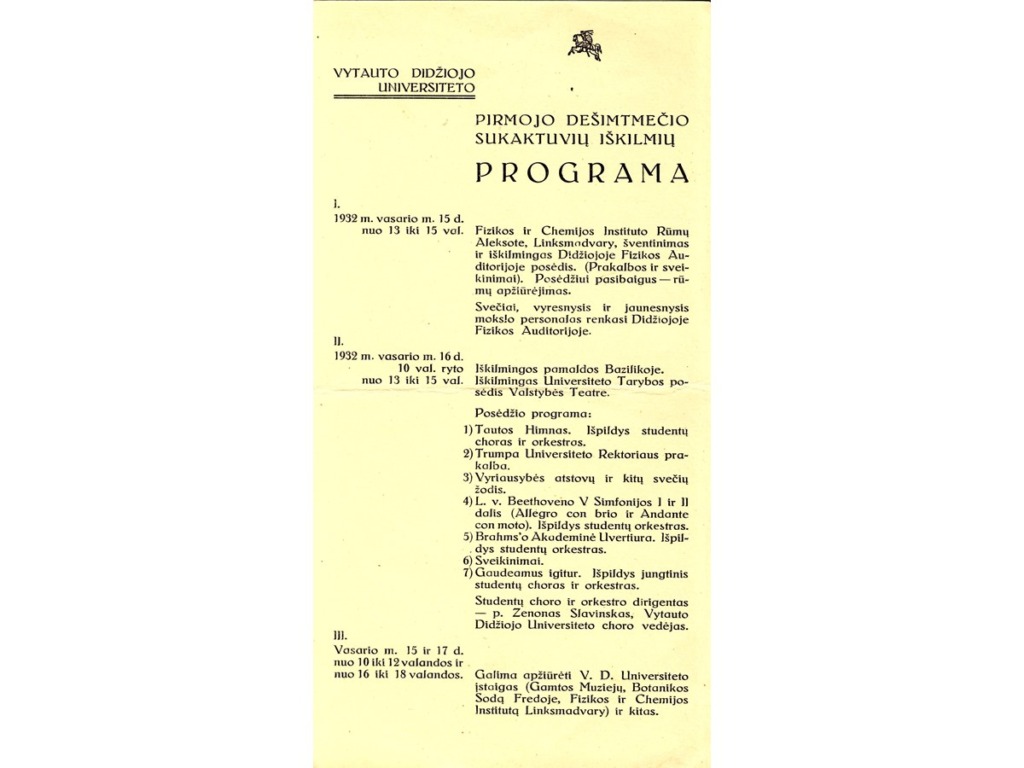
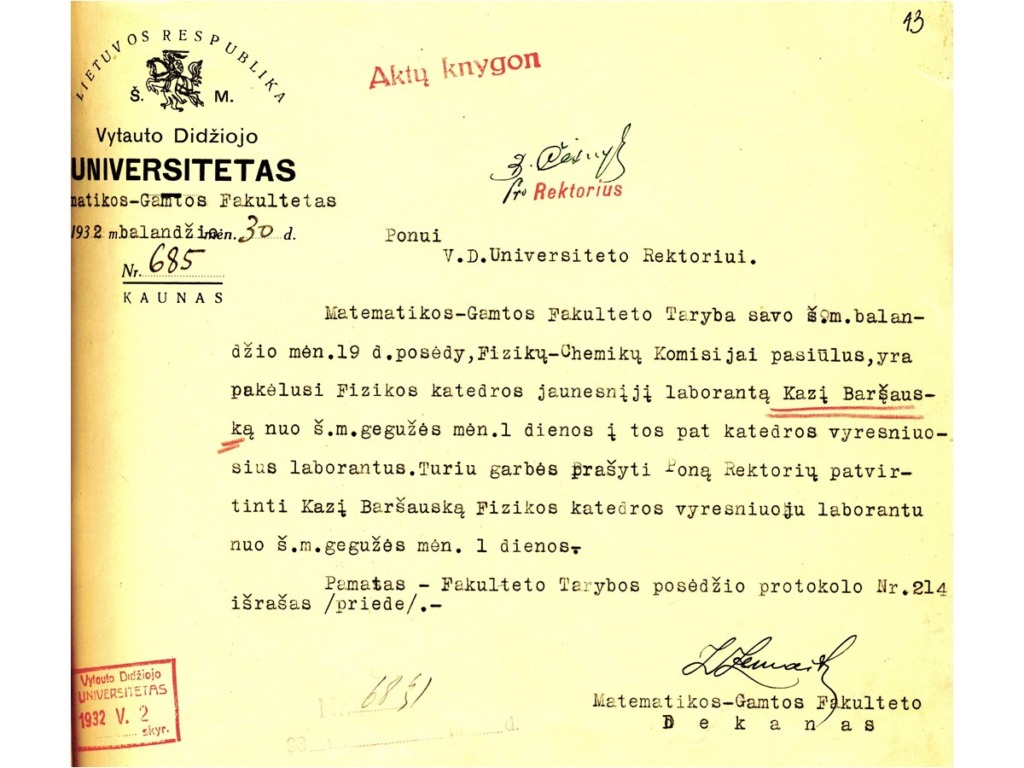
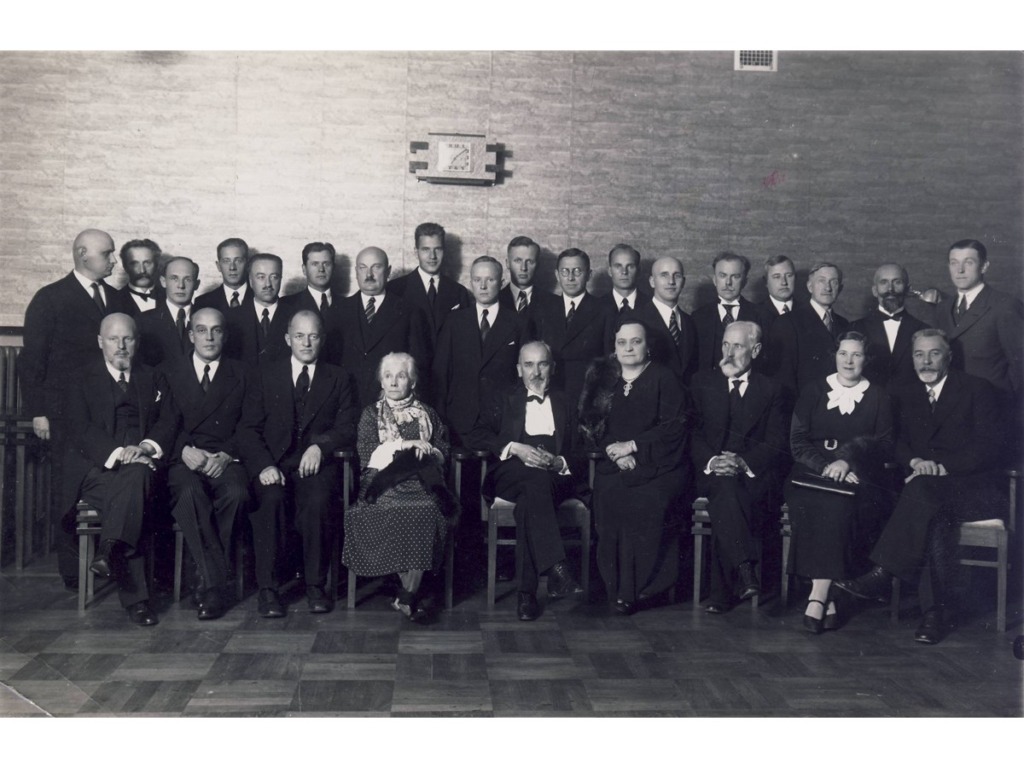
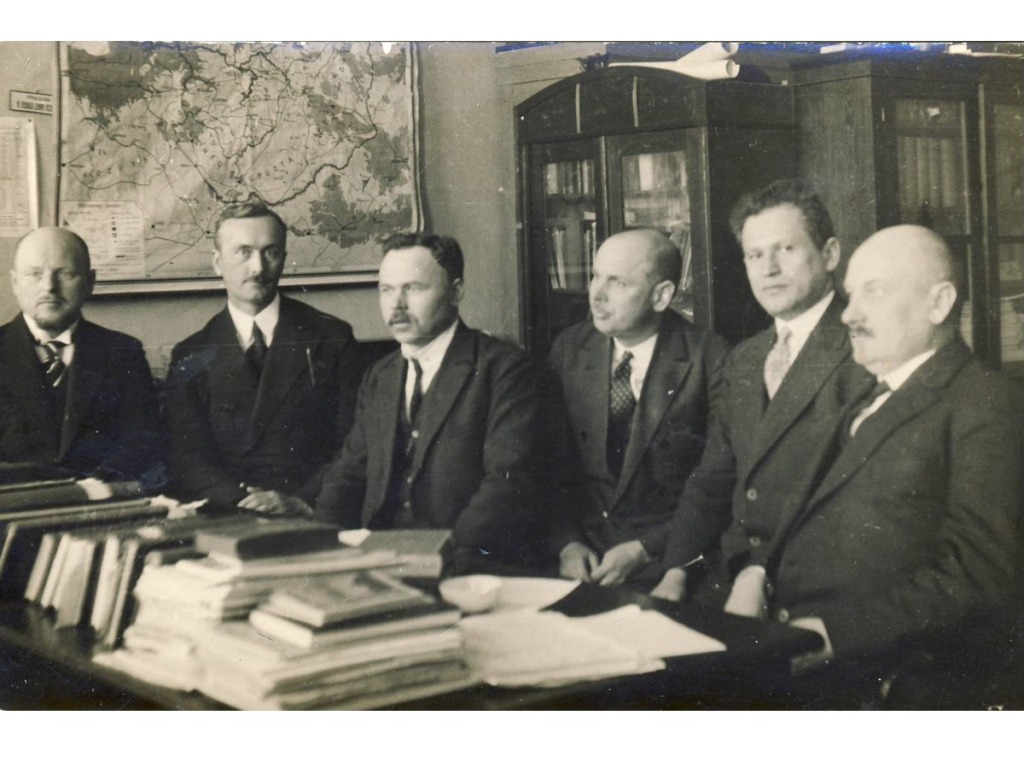
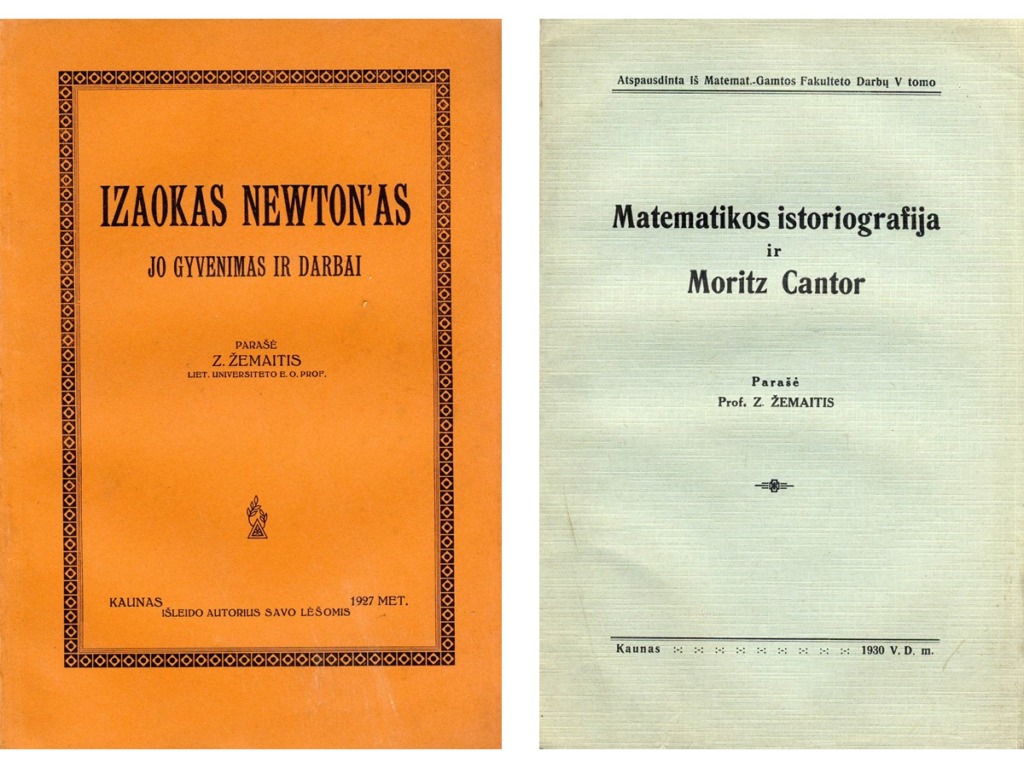
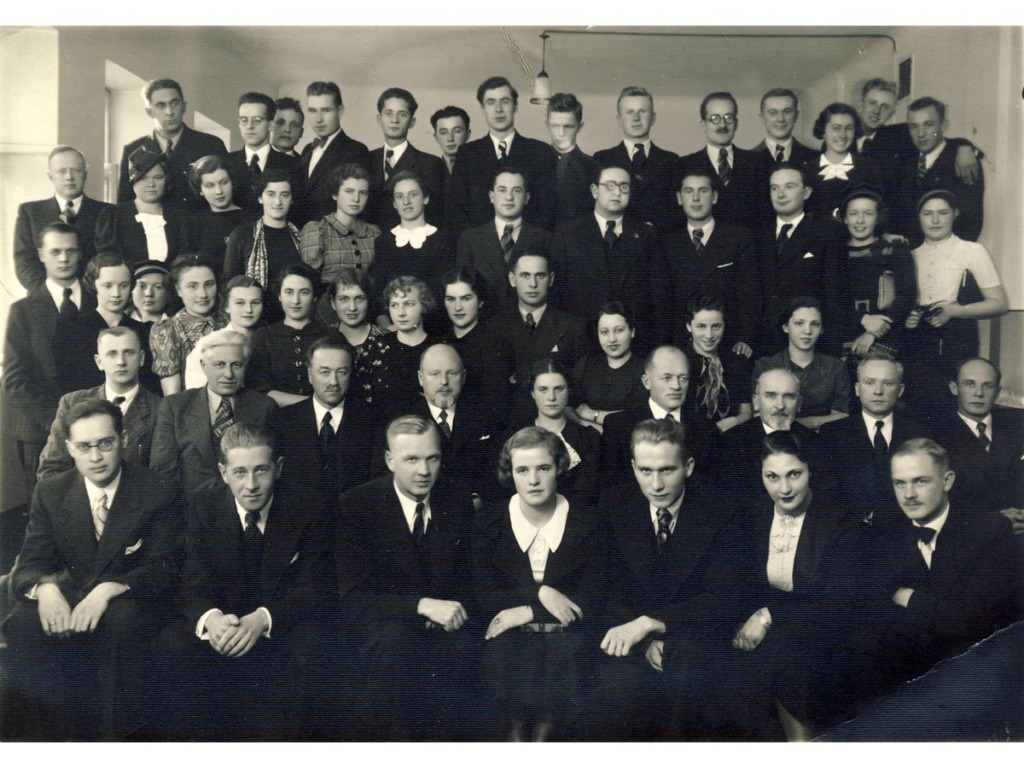
Since Z. Žemaitis was very concerned about the education of the Lithuanian youth, he wrote a memorandum to the Lithuanian government regarding the establishment of a university in Kaunas in 1919. On 8 October 1919, Z. Žemaitis, T. Ivanauskas, A. Janulaitis, J. Vabalas-Gudaitis, L. Vailionis and E. Volteris already convened a meeting of public figures. At the initiative of this meeting, the Higher Education Society was established, which founded the Higher Courses, opened on 27 January 1920. Z. Žemaitis was the first head of the Courses. 16 February 1922 marks the official opening of the University of Lithuania in Kaunas with 5 faculties based on the Higher Courses. By the President’s order, Z. Žemaitis was appointed the dean of the Faculty of Mathematics and Nature. He remained in this position until 1940. From 1922 to 1940, Z. Žemaitis was a professor at this university, and from 1930 to 1940, he was the head of the Department of Geometry. The main fields of activities of Prof. Z. Žemaitis were the teaching methodology of mathematics, the history of mathematics, and the improvement of the terminology of Lithuanian mathematics. The scientist published his work in the collections of scientific papers of Vytautas Magnus University. In 1920, he compiled the “Collection of Terms for Geometry and Trigonometry”, wrote the books “Mathematics Historiography and Moritz Kantor” (1930) and “Differential-Integral Calculus” (part 2, 1935). He wrote articles on Archimedes, Isaac Newton and other famous mathematicians. Mathematicians, physicists, chemists, biologists, geographers and, until 1924, agronomists studied at the Faculty of Mathematics and Nature. During that time, the Chamber of Physics and Chemistry was built in Aleksotas and Botanical Garden and Zoological Museum were established.


Leasure and public activities

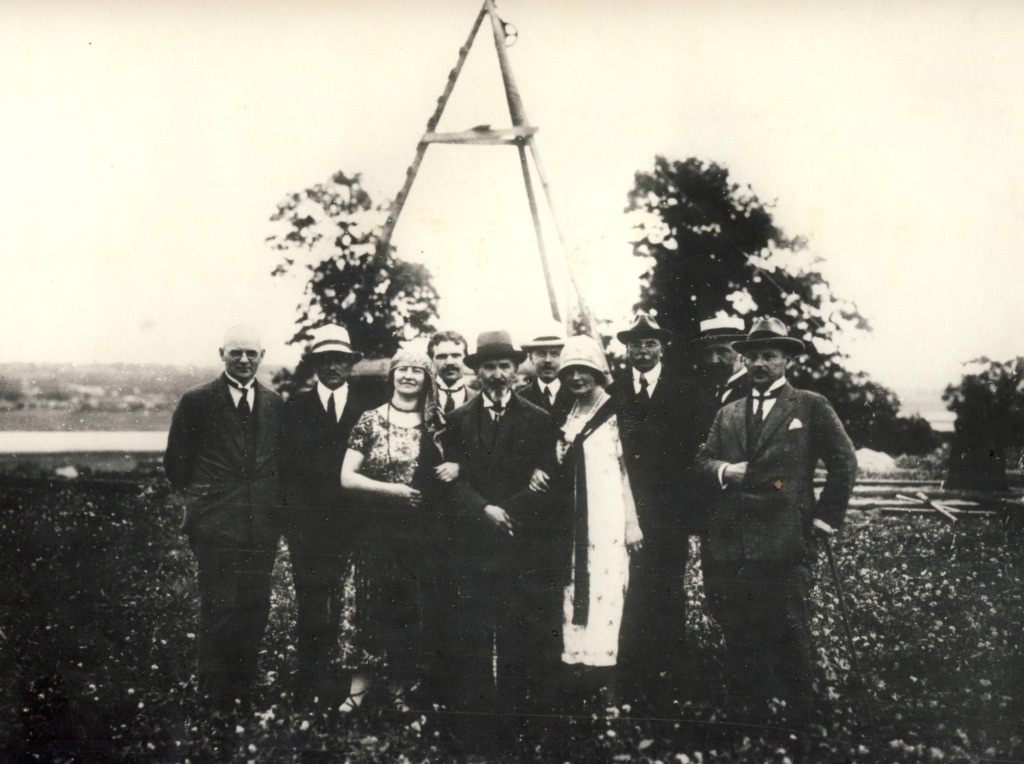
Z. Žemaitis was actively involved in public activities from a young age. While studying, he was actively involved in the social life of Odessa Lithuanians. in 1904, the cultural society “Rūta” was established, where Z. Žemaitis was a leader of the Lithuanian choir, he directed plays and was a lecturer in general education courses. Before World War I in Vilnius, he actively participated in the activities of the Lithuanian Science Society, Lithuanian Art Society and “Rūta” Society and organising the first Lithuanian art exhibitions. Z. Žemaitis was involved in the Lithuanian affairs in the Polish-occupied Vilnius Region: from 1921 to 1926, he was the chairman of the Committee for the Support of Lithuanians in Vilnius Region, in 1926, he was appointed the chairman of the Union of Vilnius Citizens, and he wrote articles and books about the Vilnius Region. In 1928, Prof. Z. Žemaitis was elected the chairman of the Aeroclub of Lithuania. Under his leadership, the aeroclub ranked first among the Baltic Countries in terms of its performance, and second in the world in gliding. Since 1931, Z. Žemaitis was a member of the Lithuanian Society of Naturalists. He was interested in geology and zoology and made a significant contribution to the establishment of the first fur farm in Obelynė (Kaunas District) and the Zoo in Kaunas by Doctor of Biological Sciences, Professor Tadas Ivanauskas. While living in Kaunas, Prof. Z. Žemaitis was actively involved in the activities of student organisations and maintained connections with the families of former Prime Minister Mykolas Sleževičius, his brother Prof. Kazys Sleževičius and former President Kazys Grinius.